Agistri

A sanctuary of dense Aleppo pines and emerald coves, where traditional Arvanite flavors meet the slow rhythm of the Saronic’s most intimate escape.
Intro
Agistri is an island of intimacy and natural immersion, defined by its small scale and the pervasive scent of pine. Unlike its busier neighbors, the island feels like a singular, continuous forest that spills directly into turquoise waters. Life here is concentrated in a few small villages, with movement dictated by quiet forest paths and coastal roads that are easily explored on two wheels. Its proximity to Athens makes it accessible, yet it retains the feel of a hidden retreat where the focus is on the simplicity of the sea and the shade. Agistri is unhurried and approachable, perfect for those seeking a low-key, nature-first escape.
Who It’s Best For
Agistri is the ultimate sanctuary for travelers who prioritize natural beauty and low-impact exploration over bustling tourist sights. It is a dream destination for nature lovers and eco-conscious travelers, as the island is blanketed in thick pine forests that meet the turquoise sea. Because of its compact size and relatively flat terrain, it is a paradise for cyclists and hikers who want to explore on two wheels rather than by car. While it attracts younger crowds and solo adventurers drawn to its famous "wild" beaches like Chalikiada, it remains equally popular with families looking for the safe, shallow sandy shores of Skala. If you want to trade sightseeing for snorkeling, kayaking, and a "slow-living" Greek atmosphere, Agistri is your best bet.
Who It’s Best For: A Quick Breakdown
Traveler Type | Why They’ll Love Agistri |
Nature Lovers | Known as the "Green Island," it offers rare, pristine pine forests and emerald waters. |
Cyclists & Hikers | The small scale (13sq km) makes it easy to navigate entirely by bicycle or on foot. |
Adventure Seekers | Excellent for sea kayaking, scuba diving (including shipwreck sites), and horseback riding. |
Free Spirits | Home to Chalikiada Beach, one of Greece’s most famous spots for wild camping and naturism. |
Budget Travelers | Offers a high-quality Greek experience with generally lower accommodation and food costs than its neighbors. |
Things to Know
The most important thing to know about Agistri is that it has two distinct ports: Skala and Megalochori (also known as Milos). When booking your ferry or "Flying Dolphin," double-check which port your accommodation is closer to, though the two are only a 20-minute walk apart along a beautiful coastal road. Because the island is so small, you do not need a car; in fact, the best way to experience Agistri is by renting a bicycle or an e-bike, which allows you to reach hidden coves like Chalikiada or Dragonera that are inaccessible to larger vehicles. If you plan on visiting the famous Chalikiada Beach, be aware that the final descent involves a steep, rocky path that requires sturdy shoes—this is not a flip-flop-friendly trek. Additionally, while Agistri is a summer paradise, it "quiets down" significantly more than Aegina in the shoulder season, so always check that the local bus and water taxi schedules are active if you are visiting in May or October.
Things To Do
Cycle from Skala to Megalochori along the flat coastal road to enjoy the sea breeze and stop at the small coves along the way.
Swim at Chalikiada Beach by hiking through the pine forest to reach this dramatic white pebble beach with electric blue water.
Relax at Dragonera Beach where the pine trees grow right down to the shore providing natural shade and a peaceful atmosphere.
Rent a kayak or paddleboard to explore the rocky coastline and small caves that are hidden around the island's perimeter.
Enjoy a long lunch in Skala at a seaside taverna to sample fresh grilled octopus and local seafood just steps from the water.
Take a sunset walk to the Church of Agioi Anargyroi to photograph its iconic blue dome against the backdrop of the Saronic Gulf.
These activities reflect how Agistri is experienced through simple outdoor pleasures, easy bicycle exploration, and a relaxed pace of life rather than organized tours or historical sightseeing.
Beaches or Nature
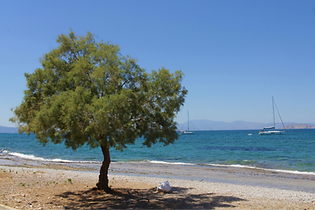
Agistri is defined by its lush, pine-clad landscape that extends all the way to the water's edge, giving the island a vibrant green and turquoise color palette. The coastline is a mix of small, sandy bays like Skala and dramatic, rocky pebble beaches like Chalikiada and Dragonera, which are framed by steep cliffs and dense forest. Unlike its more arid neighbors, Agistri feels like a continuous natural park where the scent of pine needles meets the salt air. The interior is crossed by gentle trails through thick woodlands, making it one of the few Saronic islands where the shade is as much a part of the experience as the sun. Nature on Agistri is experienced as an intimate, forest-to-shore escape that feels wild despite its proximity to Athens.
Areas to Explore
Skala is the primary gateway to the island and its most vibrant hub, featuring a shallow sandy beach, the iconic blue-domed church, and a high concentration of waterfront hotels and tavernas.
Megalochori serves as the quiet administrative capital, where traditional stone houses and narrow alleys offer a more residential feel compared to the bustling tourist center of Skala.
Limenaria is a secluded village on the southern end of the island that remains largely untouched by tourism, providing a peaceful escape surrounded by pine trees and authentic local character.
These areas reflect how Agistri is divided between its lively seaside gateways and its quiet, traditional interior, allowing for a quick transition from social beach life to total seclusion.
Local Cuisine
Agistri’s cuisine is a reflection of its lush environment, heavily featuring aromatic pine honey and wild herbs like oregano and sage gathered from its forested interior. The island is particularly known for its traditional green olives, which are served whole, crushed, or cracked in local extra virgin olive oil. Distinctive local dishes include mousenta (a thin, crispy spinach pie made without phyllo) and laklori (a savory courgette pie), both showcasing the island’s Arvanite culinary roots. Seafood remains a cornerstone of the diet, with daily catches of fresh octopus and squid served alongside local wines made from the Roditis grape. Dining on Agistri is an unpretentious, garden-to-table experience where simple ingredients are elevated by the island's natural bounty.
History
Agistri has a history that is defined by its quiet role as a sanctuary and its close ties to the larger neighboring island of Aegina. In antiquity, it was known as Kekryphaleia, mentioned by Homer as an ally of Aegina during the Trojan War and later serving as a strategic naval base. Unlike islands with massive fortresses, Agistri’s past is largely characterized by small-scale settlements that were often abandoned and resettled due to the threat of piracy in the Saronic Gulf. During the Ottoman period, it became a refuge for Arvanite settlers who integrated into the local culture while maintaining their distinct traditions. Agistri’s history is not one of grand monuments, but rather a resilient story of small communities living in harmony with the forest and sea.
Best Time to Visit
Agistri is a seasonal gem that shines brightest from June through September when the turquoise waters are at their warmest and the island's pine-fringed beaches are fully accessible. During this peak period, the ferry connections from Piraeus and Aegina are most frequent, making it easy to hop between the main villages of Megalochori and Skala.
From November through March, Agistri becomes a very quiet retreat. Many of the beachside hotels and seasonal tavernas close their doors, and the ferry schedule is significantly reduced. This period is less suited for swimming but offers a peaceful atmosphere for nature lovers who want to explore the island's forested hiking trails in total solitude.
Editors Insider Tips
On Agistri, the island is small enough that you can explore almost everything without a car, but choosing between the two main villages of Megalochori and Skala is important for your pace. Skala is better for those who want organized beaches and nightlife right at their doorstep, while Megalochori offers a more traditional, quiet village feel. If you enjoy walking, the pine-shaded coastal road between the two is only about a 20-minute stroll and is beautiful at sunset.
For the best swimming experience, don't just stick to the main harbor beaches. Make the effort to reach Chalikiada, a stunning pebble beach backed by white cliffs; however, be aware that the descent is steep and requires sturdy shoes. If you prefer something easier, Aponisos is a private islet on the far side of Agistri that feels like a natural swimming pool. Since the island is a popular weekend escape for Athenians, try to visit mid-week if you want to have the more secluded coves entirely to yourself.
Frequently Asked Questions
1. How do I get to Angistri?
Angistri is very close to Athens and easy to reach by sea.
From Piraeus: Ferries depart from Gate E8. High-speed hydrofoils (Flying Dolphins or Aero Highspeed) take about 50 to 55 minutes. Conventional ferries take approximately 1 hour and 30 minutes.
Via Aegina: You can take the "Angistri Express" or a sea taxi from the port of Aegina. This is a short 10 to 15 minute hop.
Ports: The island has two ports. Large ferries usually dock at Skala, while high-speed boats typically arrive at Megalochori (Milos).
2. Is Angistri car-free?
While not strictly car-free like Hydra, Angistri is widely considered a "no car needed" island.
Small Size: The island is only about 14 square kilometers. You can walk between the two main villages, Skala and Megalochori, in about 20 minutes.
Walking and Biking: Most visitors explore entirely on foot or by renting a bicycle. Cycling is the most popular way to get around the pine-covered roads.
Public Bus: A local bus runs frequently during the summer, connecting Skala and Megalochori to the more remote beaches like Dragonera and Aponisos.
3. Do I need to rent a car?
Renting a car is not recommended for Angistri.
Logistics: Bringing a car on the ferry is expensive and unnecessary given the island's scale.
Alternatives: Most people rent bicycles or e-bikes. If you want to visit the southern part of the island without biking uphill, a scooter or a local taxi is a better choice than a car.
4. Which are the best beaches on Angistri?
The island is famous for its dense pine forests that reach all the way to the turquoise shoreline.
Chalikiada: A stunning, rugged beach with large white pebbles and deep blue water. It is reached by a forest path and a short, steep climb down the rocks. It is also popular for free camping and is clothing-optional in certain areas.
Aponisos: A private islet connected to Angistri by a small bridge. The water here is incredibly clear and looks like a natural swimming pool. There is a small entry fee which usually includes a sunbed.
Dragonera: A pebbly beach surrounded by thick pine trees. It has a relaxed canteen and offers a more wild, natural feel.
Skala: The most convenient beach, located right by the port. It is sandy with shallow waters, making it the best choice for families.
5. Can you drink the tap water?
As of 2026, most visitors and locals still prefer bottled water for drinking.
While the water is safe for showering and brushing teeth, the taste is often brackish because it comes from a desalination plant or local wells.
Bottled water is widely available at mini-markets in Skala and Megalochori.
6. What are the main villages?
There are four small settlements on the island, each with a different character.
Skala: The tourist hub. This is where most hotels, restaurants, and bars are located, along with the iconic white-domed church of Agioi Anargyroi.
Megalochori (Milos): The administrative capital. It is more traditional and quieter than Skala, featuring stone houses and narrow alleys.
Metochi: A small hillside village located between the two main ports, offering great views of the sea.
Limenaria: A very quiet, traditional village in the south, perfect for those looking to escape the crowds.
7. What should I eat on Angistri?
The local cuisine focuses on fresh seafood and traditional Greek flavors.
Fresh Fish: Because of its proximity to the Saronic fishing grounds, the tavernas in Skala and Megalochori serve excellent octopus and grilled fish.
Galaktoboureko: Many local bakeries are famous for this traditional semolina custard pie in filo pastry.
Pine Honey: The island's forests produce a rich, fragrant honey that makes an excellent local souvenir.
8. Is Angistri good for hiking?
Yes, the island is a paradise for hikers and nature lovers.
The Terrain: Most of the island is covered in Aleppo pines. There are several marked trails that lead through the forest to hidden bays.
The Lake: You can hike to the "Lekani," a small salt lake near Limenaria, which is a peaceful spot for birdwatching.
9. Where is the best place to stay?
Skala: Best for those who want to be close to the sandy beach, the main port, and the evening nightlife.
Megalochori: Best for a more authentic, quiet experience while still being within walking distance of amenities.
Skliri: A small area just past Skala with hotels built into the cliffs, offering the best sea views on the island.
10. How many days should I stay?
Day Trip: Very common for people staying in Athens or Aegina. You can see the main beaches and have a seaside lunch.
3 to 4 Days: The perfect amount of time to slow down, explore the forest trails, and spend a full day at Aponisos.


Discover Beaches on this Island
Discover more Greek Islands in the Saronic