


Evia
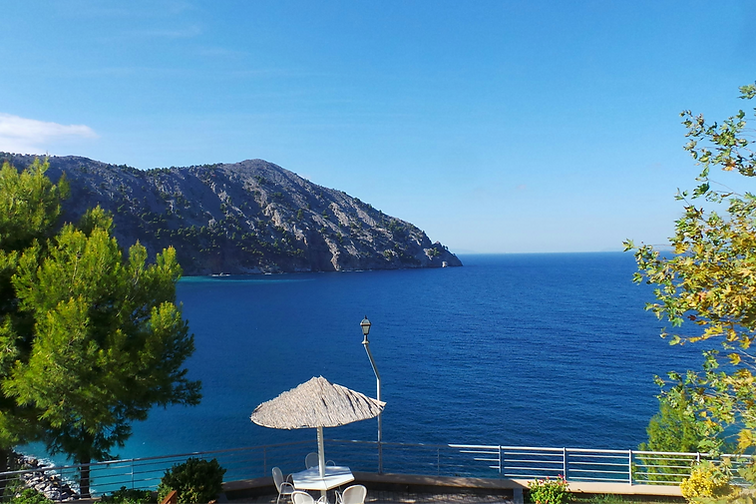
A hidden giant with emerald waters, where ancient thermal springs and alpine peaks offer an authentic escape.
Intro
Evia is the second largest island in Greece and is a hidden giant that stretches along the mainland coast with a diverse wilderness of alpine forests and therapeutic springs. The island is defined by a dramatic duality featuring the lush waterfall filled landscapes of the North and the sun bleached fjord like coastline of the South. From the natural thermal baths of Edipsos that pour directly into the Euboean Gulf to the mysterious megalithic Dragon Houses of Mount Ochi, Evia offers a refined retreat where rugged mountain peaks meet the sea just steps from the mainland.
Who It’s Best For
Evia is a sanctuary for travelers who crave raw natural beauty and a sense of discovery away from the typical tourist trail. It is an exceptional choice for adventure seekers and hikers who want to explore dense alpine forests, deep gorges, and the rugged peaks of Mount Dirfi. Because the island is famous for its natural mineral springs, it also serves as a premier destination for wellness enthusiasts looking for a therapeutic and unpretentious retreat. While it is easily accessible from Athens, its vast scale and secluded coves make it a favorite for road trippers and off-grid explorers who prefer wild landscapes and traditional mountain villages over curated resort experiences.
Who It’s Best For: A Quick Breakdown
Traveler Type | Why They’ll Love Evia |
Wellness Seekers | Home to the historic thermal springs of Edipsos, where mineral-rich waters flow directly into the sea. |
Nature & Adventure Lovers | Offers diverse terrain ranging from the lush Drimona Waterfalls to the challenging trekking paths of the Dikefalo peak. |
Budget-Conscious Explorers | Provides a high-end natural experience and authentic Greek hospitality at a more accessible price point than the Cyclades. |
History & Mystery Fans | Ideal for those intrigued by the ancient Dragon Houses (Drakospita) and the unique tidal phenomenon of the Euripus Strait. |
Road Trippers | Perfect for travelers who enjoy long, scenic drives through changing landscapes, from thick pine forests to turquoise coastal fjords. |
Things to Know
The most unique aspect of Evia is its status as a "drive-on" island, connected to the mainland by two bridges at Chalcis. Because of its massive scale and rugged geography, you should treat your visit as a series of road trips rather than staying in one spot. It is highly recommended to rent a vehicle as the island is vast, and while you can drive across the bridge, taking a short ferry from mainland ports like Rafina or Agia Marina can often save you hours of winding mountain travel.
When planning your route, be aware of the dramatic difference between the North and the South. The northern roads wind through dense pine forests and lead to the world-renowned thermal springs of Edipsos, where mineral water spills directly into the sea. In contrast, the wild South is arid and rocky, home to the mysterious Dragon Houses of Mount Ochi. These ancient megalithic structures require a moderate hike to reach, so bring sturdy shoes and plenty of water as the trails are almost entirely exposed to the sun.
Finally, keep an eye on the Euripus Strait in Chalcis to witness the "crazy waters," a unique natural phenomenon where the tide reverses direction every six hours. It is a local tradition to sit at a waterfront cafe and watch the current change while enjoying fresh seafood. Be mindful that because Evia is a favorite for local Greeks, mountain villages and coastal tavernas can get quite busy during weekends, so booking accommodation in advance is wise if you plan to visit during the summer months.
Things To Do
Soak in the Thermal Springs of Edipsos to experience the healing mineral waters that have drawn visitors since antiquity, where hot springs pour directly into the sea from natural rock formations.
Explore the Mysterious Dragon Houses (Drakospita) by hiking to the summit of Mount Ochi to see massive, mortar-less megalithic structures whose origins remain a prehistoric enigma.
Trek Through the Dimosari Gorge to follow a stunning 10 kilometer trail that winds past waterfalls, ancient stone bridges, and lush vegetation before ending at the secluded Kallianos Beach.
Boat Trip to Lichadonisia to discover a cluster of tiny volcanic islets often called the "Greek Seychelles," known for their turquoise lagoons and vibrant marine life.
Visit the Monastery of Saint David to find spiritual peace in a mountainside sanctuary surrounded by dense forest, famous for its long history and connection to the island’s religious heritage.
Observe the "Crazy Waters" of Chalcis from the old sliding bridge, where the tidal currents of the Euripus Strait change direction every six hours in a rare natural phenomenon.
Discover the Drimona Waterfalls by taking a short, scenic walk through an oak and fir forest to reach a hidden oasis of cascading water and emerald pools.
Relax in the Picturesque Village of Limni to wander through neoclassical waterfront streets that feel more like a traditional Aegean island than the mainland coast.
Swim at the Wild Chiliadou Beach to experience a dramatic shoreline framed by limestone cliffs and chestnut forests, where the deep blue of the Aegean meets rugged mountain terrain.
Step Back in Time at Ancient Eretria to walk among the ruins of an ancient city-state, including its theater and temple, which highlight Evia’s importance in the classical world.
These activities reflect how Evia is a land of dramatic contrasts, where you can move from therapeutic thermal baths and lush alpine forests to mysterious ancient ruins and tropical-style islets all in a single journey.
Areas to Explore
Chalcis (Chalkida) is the island’s vibrant capital and the gateway from the mainland, famous for its lively waterfront promenade and the unique tidal phenomenon of the Euripus Strait.
Edipsos is a world-renowned wellness destination in the north, where historic neoclassical hotels overlook natural thermal springs that have been celebrated for their healing properties since the time of Aristotle.
Limni is a picturesque coastal town in North Evia that captures a true Aegean island feel with its white-washed houses, narrow alleys, and a tranquil harbor lined with traditional fish tavernas.
Karystos serves as the primary hub of the south, a majestic town designed with grand squares and wide streets that sits at the foot of Mount Ochi overlooking a beautiful horseshoe-shaped bay.
Eretria is a significant archaeological site and modern resort town where travelers can explore ancient theaters and temples before relaxing at organized beach clubs along the Euboean Gulf.
Steni is a charming alpine village perched on the slopes of Mount Dirfis, acting as the base for hikers and famous for its cool mountain springs, lush plane trees, and rustic meat-specialty tavernas.
Kymi is known as the "Balcony to the Aegean" due to its elevated position on a verdant cliff, offering panoramic sea views and serving as the main port for ferries to the island of Skyros.
Marmari is a relaxed fishing village in the south that has evolved into a popular summer retreat, providing easy access to the pristine, uninhabited Petalioi islands just offshore.
These areas reflect how Evia is split between its cosmopolitan urban gateway, the lush and forested northern retreats, and the rugged, sun-drenched landscapes of the south.
Beaches or Nature
Evia is a sprawling wilderness that mirrors the diversity of the Greek mainland, offering a dramatic shift from alpine landscapes to coastal fjords. The northern half of the island is a lush paradise of dense fir and pine forests, where mountain springs feed spectacular cascades like the Drimona Waterfalls. This verdant interior creates a cool, scented atmosphere that feels more like Central Europe than the Aegean. In contrast, the southern tip is dominated by the rugged mass of Mount Ochi, featuring sun-scorched peaks and the deep, rocky ravines of the Dimosari Gorge which lead down to the sea.
The coastline of Evia is equally varied, offering over 600 kilometers of shores that remain largely untouched by mass tourism. In the north, you will find the unique thermal sands of Edipsos, where volcanic hot springs bubble up through the seabed. The Aegean-facing east coast is home to the wild, majestic Chiliadou Beach, where turquoise waters meet limestone cliffs and chestnut groves. For those seeking calmer, shallower waters, the Euboean Gulf offers protected coves and the tropical-style sandy islets of Lichadonisia, providing a Caribbean-like escape in the heart of Greece.
Local Cuisine
The gastronomy of Evia is a hearty reflection of its dual identity, blending the rich, earthy flavors of the mountains with the fresh bounty of the Euboean Gulf. In the forested highlands of Steni and Mount Dirfis, the cuisine is centered around succulent grilled meats and traditional Kokoretsi, often enjoyed in rustic tavernas under the shade of ancient plane trees. The island is also famous for its handmade pasta, particularly Goglies—hand-rolled dough shells that are traditionally tossed in browned butter and topped with local grated mizithra cheese, a comforting staple passed down through generations of Arvanite heritage.
As a coastal giant, Evia is equally renowned for its seafood, specifically the shellfish and octopus harvested from the Euripus Strait. The town of Chalcis is a pilgrimage site for foodies who come to sample raw oysters and grilled sea dates, often paired with the island's famous Savvatiano or Retsina wines. For those with a sweet tooth, the region of Kymi produces the world-renowned Sykos Kymis (sun-dried figs), which are so prized for their thin skin and honey-like sweetness that they hold protected designation of origin status.
History
Evia’s history is a mirror of Greece’s own evolution, marked by its strategic location and its unique connection to the mainland. In antiquity, the city-states of Chalcis and Eretria were maritime powerhouses, leading the way in Greek colonization across the Mediterranean and even developing their own alphabet, which later influenced the Latin script. The island was a vital battleground during the Persian Wars, and the Euripus Strait became a site of scientific obsession; legend has it that Aristotle was so frustrated by his inability to explain the strait's reversing currents that he threw himself into the water.
During the Middle Ages, the island fell under the control of the Venetians, who renamed it Negroponte ("Black Bridge"). They transformed Evia into a commercial hub, building the massive Castel Rosso in Karystos and various watchtowers that still dot the landscape. This era left a permanent mark on the island’s architecture, blending Western medieval fortifications with Byzantine foundations. The island was later seized by the Ottoman Empire in 1470 after a brutal siege, remaining under their control until it became one of the first regions to join the Greek War of Independence in the 1820s.
In more recent centuries, Evia has maintained a reputation as a place of retreat and resilience. The northern town of Edipsos became a playground for the Roman elite, including Emperor Hadrian, and later for 20th-century icons like Winston Churchill and Greta Garbo, who frequented its healing springs. Today, the island's history is best felt in its "Dragon Houses" and mountain villages, where a unique cultural blend of Arvanite and Aegean traditions has survived through centuries of isolation and shifting empires.
Best Time to Visit
Evia is best experienced from late spring through autumn, with June and September offering the perfect balance of warm sea temperatures and manageable crowds. Because Evia is a favorite retreat for Athenians, August can see the popular coastal towns like Chalkida, Edipsos, and Karystos become incredibly busy and loud. If you prefer a more peaceful experience, the shoulder months allow you to enjoy the island's famous thermal springs and hiking trails in comfortable temperatures, often with the beaches almost entirely to yourself.
In the winter, Evia transforms into a rugged, alpine escape that feels worlds away from the typical Greek island image. The mountainous interior, particularly around Mount Dirfis, often receives heavy snowfall, making the village of Steni a popular weekend destination for those seeking "winter wonderland" vibes and cozy fireplace dining. While the southern beach towns become very quiet, the thermal spas of Edipsos remain a major draw throughout the colder months, offering a warm sanctuary against the winter chill.
Editor's Insider Tips
Because Evia is so vast and mountainous, your GPS will often underestimate driving times by at least 30 percent. The roads are breathtaking but can be dizzying with hair-pin turns. My best advice is to drive during daylight hours and keep your fuel tank at least half full, as petrol stations in the northern pine forests and southern ravines can be few and far between. If you find yourself in Chalcis, don't just watch the "crazy waters" from the bridge. Grab a table at a tsipouradiko on the waterfront and ask the waiter to point out the exact moment the tide flips. It is a great way to strike up a conversation with locals.
For a hidden wellness hack, skip the crowded public pools in Edipsos and look for the "wild" thermal spots along the coastline where the hot mineral water flows directly over the rocks into the sea. You can sit under a natural hot waterfall while the cool Aegean waves lap at your feet for free. If you are exploring the south, make a stop in the village of Antia. It is one of the few places in the world where some elderly residents still communicate using Sfyria, a rare whistled language used to talk across the deep valleys. Finally, if you are visiting in the summer, always pack a light jacket. The mountain air in villages like Steni stays refreshingly cool even when the rest of Greece is heat-struck.
Frequently Asked Questions
1. How do I get to Evia?
Evia (or Euboea) is the second-largest island in Greece, and its biggest advantage is its accessibility. You don’t even necessarily need a boat to get there.
By Car: The capital, Chalkida, is connected to the mainland by two bridges. You can drive from Athens International Airport to the island in about 60 to 90 minutes.
By Ferry: There are multiple "mini-crossings" from the mainland that save you driving time depending on where you are headed:
Oropos to Eretria: A very popular 20-minute crossing for those going to Central Evia.
Rafina to Marmari: Perfect for reaching South Evia (near Karystos).
Agia Marina to Nea Styra: A short 45-minute hop.
Arkitsa to Edipsos: The main route for those heading to the northern spa towns.
2. Is it a "real" island if it's connected by a bridge?
Locals will tell you it feels like a continent in miniature. While the bridge makes it feel accessible, once you drive 30 minutes away from Chalkida, you enter a world of dense pine forests, rugged alpine mountains, and remote Aegean coves that feel as isolated as any Cycladic island.
3. Do I need to rent a car?
Yes, a car is mandatory. Evia is roughly 180 km long.
The Terrain: The island is divided into North, Central, and South, each with vastly different landscapes.
Public Transport: Buses (KTEL) exist but are designed for locals moving between towns. To see the "hidden" Evia, like the Dimosari Gorge or the mountain peaks of Dirfys, you need your own wheels.
4. Which are the best beaches on Evia?
The island has two distinct sides: the calm, shallow Gulf side facing the mainland and the wild, deep Aegean side.
Chiliadou: A stunning, rocky Aegean beach on the east coast. It is famous for its crystal-clear water and dramatic cliffs.
Thapsa: Often called the "Blue Lagoon" of Evia. It is incredibly hard to reach (4x4 recommended), but it offers Caribbean-style turquoise water.
Agia Anna: One of the longest beaches in Greece, located in the north. It is great for families and has many organized campsites.
Megali Ammos (Marmari): Famous for its "shifting" sandbank that changes shape with the wind and tide. It is a world-class spot for kitesurfing and windsurfing.
5. Can you drink the tap water?
As of 2026, tap water is generally safe for drinking in the main towns like Chalkida and Eretria.
Regional Differences: In smaller villages, the water is often sourced from local springs and is safe and delicious.
Caution: In some coastal tourist resorts, the water can be hard or brackish. It is always best to ask your host "pinete?" (is it drinkable?) just to be sure.
6. What are the "Dragon Houses" (Drakospita)?
These are one of the great archaeological mysteries of Greece.
The Structures: Scattered around South Evia (mostly near Styra and Mt. Ochi), these are ancient buildings made of massive limestone slabs balanced without any mortar.
The Legend: They are called "Dragon Houses" because locals once believed only mythical creatures could move stones that large. Archaeologists still debate whether they were temples to Hera or shelters for ancient quarry workers.
7. What are the Thermal Springs of Edipsos?
Located in the north, Edipsos is one of the most famous spa towns in the world, dating back to antiquity.
The Springs: There are over 80 thermal springs. In many spots, the hot mineral water flows directly out of the rocks and into the sea, allowing you to swim in a natural "hot-and-cold" bath.
History: Legends say Hercules used these waters to regain his strength, and more recently, people like Winston Churchill and Greta Garbo were frequent visitors.
8. What should I eat?
The food on Evia is rustic and mountain-focused compared to other islands.
Tiganopita: A traditional fried cheese pie that is a staple of the island.
Roasted Goat: Especially in the mountain villages of Mt. Dirfys, the spit-roasted meat is legendary.
Seafood in Chalkida: Chalkida is famous across Greece for its unique shellfish and "petro-solines" (razor clams), thanks to the swift currents of the Euripus Strait.
9. What is the "Crazy Water" of Chalkida?
The Euripus Strait, which separates Evia from the mainland, is a global geographical phenomenon.
The Tide: Every six hours, the current changes direction. For a few minutes in between, the water stands perfectly still.
The Mystery: This has fascinated scientists since Aristotle (who allegedly threw himself into the water because he couldn't solve the mystery). The best place to watch it is from the Old Bridge.
10. How many days should I stay?
Weekend Trip: Common for Athenians, but you can only see one small corner (like Chalkida or Eretria).
5 to 7 Days: Allows you to explore either the lush North (Edipsos and Limni) or the rugged South (Karystos and the Dragon Houses).
10+ Days: If you want to drive the entire length of the island and see both the mountain forests and the Aegean coast.
Browse Tours and Activities near Evia




Discover the Beaches on the Island


