


Overview
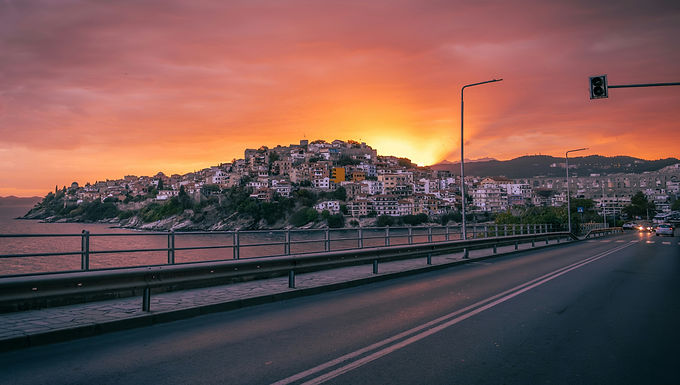
As of 2026, Kavala stands as one of Northern Greece’s most visually striking and economically balanced coastal cities, offering a high-quality lifestyle at approximately 20% less than Athens. Known as the "Blue City," it is built amphitheatrically around a historic port, providing a rare combination of island aesthetics and mainland industrial stability. Because it serves as a major regional administrative and educational hub, the city remains active and fully functional year-round, making it a prime choice for those who want sea views without the "ghost town" winter effect of the islands.
The local economy is notably resident-focused, with a housing market that remains one of the most accessible for a coastal city of its size. Modern one-bedroom apartments in the city center or the popular western suburbs typically rent for €350 to €500, roughly half the price of comparable seaside spots in the capital. While utility costs are in line with the national average, the cost of dining and fresh seafood is significantly lower due to Kavala's status as a major fishing port. For the 2026 resident, the city offers a robust, fiber-connected infrastructure, a local airport with international connections, and a lifestyle defined by easy walkability and a rich, multicultural history.
Average Monthly Living Costs
Accommodation is the most significant part of a Kavala budget and scales based on the neighborhood and apartment condition.
1-bedroom apartment in city center: €350–€550
1-bedroom apartment outside city center: €250–€400
3-bedroom apartment in city center: €600–€850
While units in older, non-renovated buildings offer the lowest rates, modern apartments with energy-efficient windows and heating are in high demand and carry a premium.
Utilities and Internet
In Kavala, utility costs are influenced by the city's coastal topography and northern climate. Heating is a significant winter expense, often managed through autonomous oil systems or natural gas in newer developments, while air conditioning drives costs during the humid summer months.
Electricity, Water, and Garbage (85sqm apartment): €165–€290
Fiber Internet (100–200 Mbps): €24–€35
Mobile Plan (Unlimited Data/Calls): €18–€32
The city has a robust high-speed fiber network, with extensive coverage in the center and the Panagia district. Water services are provided by the local municipal utility (DEYAK), with billing typically occurring on a quarterly basis. As is standard across Greece, the bimonthly electricity bill is a consolidated statement that includes municipal taxes, waste collection fees, and the national public broadcasting levy (ERT).

Groceries and Food
The grocery and dining market in Kavala offers a wide range of prices, spanning from affordable street food and neighborhood farmers' markets to high-end supermarket chains. While inflation has impacted global food prices, the city remains significantly cheaper than other major European capitals for fresh local produce and pantry staples.
Supermarket and Local Market Costs
Shopping at the weekly neighborhood laiki agora (open-air market) is the most effective way for residents to keep costs low. Prices at these markets are typically 30% to 50% lower than in major grocery stores.
Monthly Groceries (Single Person): €185–€270
Monthly Groceries (Family of Four): €515–€715
Fresh Milk (1 Liter): €1.25–€1.50
Loaf of Fresh Bread (500g): €1.00–€1.20
Dozen Eggs: €3.40–€3.90
Feta Cheese (1kg): €10.50–€13.00
Chicken Breast (1kg): €7.20–€9.50
Dining and Casual Food
Kavala has a robust culture of affordable eating out, centered around the ubiquitous souvlaki shop and small tavernas, as well as its renowned seafood spots along the harbor.
Souvlaki or Gyros Wrap: €3.10–€4.10
Meal for One at an Inexpensive Taverna: €12.00–€18.00
Three-Course Dinner for Two (Mid-range): €40.00–€65.00
Freddo Espresso or Cappuccino: €2.80–€4.20
Most households budget for a mix of supermarket shopping and social dining, which is a fundamental part of the local lifestyle. Local products like Eastern Macedonian honey, seasonal vegetables, and fresh fish are consistently high quality and affordable, whereas imported processed goods and luxury items carry a higher price tag.
Transportation
The figures below represent the total all-in cost of living, including rent, utilities, groceries, health insurance, and modest social spending.
Single person (rent outside center): €1,000–€1,350
Couple (rent outside center): €1,650–€2,100
Central apartment lifestyle: €2,250+
These estimates exclude luxury spending and international travel.
Healthcare
Public healthcare is low-cost for residents, while private healthcare remains affordable by international standards.
Private doctor visit: €60–€150 (specialists tend toward the
higher end)
Basic private insurance: €50–€130 per month
Access to the public system (ESY) is available to those with a Greek Social Security Number (AMKA). In Kavala, many expats and locals opt for private insurance to skip the longer waiting lists often found at the Kavala General Hospital, which serves as one of the largest medical units in the Eastern Macedonia and Thrace region.
Estimated Monthly Total
Kavala features an efficient urban bus system that navigates its tiered, amphitheatrical layout, connecting the port and the old town (Panagia) to the modern commercial districts.
Monthly public transport pass: ~€50
Single bus ticket: ~€1.20–€1.60
Taxi start fare: ~€4
Many residents rely on the local bus network to manage the city's steep inclines, as fuel prices in Greece are typically much higher than in the US and the dense urban structure leaves very little room for street parking.
How it Compares
Cheaper than most U.S. cities
Cheaper than Athens and Thessaloniki
More expensive than smaller Eastern Macedonian villages
Kavala offers a balance between affordability and access to a dramatic tiered cityscape, a major northern port, and the emerald beaches of the surrounding coastline.
Seasonal Cost Changes
Kavala sees short-term rental demand push rents higher during peak travel months, particularly in central neighborhoods. Utility costs rise in summer due to air-conditioning use, while winter brings higher heating bills for residents.
Who This Place is Best For
Kavala suits:
Seafood lovers and foodies
Photography and urban history buffs
Wine enthusiasts and travelers
Off-the-beaten-path explorers
It is ideal for those who value an amphitheatrical city layout with stunning Aegean views, a rich tobacco-trading heritage, and a "Blue City" charm that combines Ottoman monuments with modern coastal energy.
Locals Insider Tip
Skip the pricey seafood restaurants right next to the ferry terminal and walk up into the Old Town (Panagia) district instead. While the walk is steep, you will find hidden traditional tavernas tucked away in the narrow alleys that serve the same fresh Aegean catch for a fraction of the cost you will see on the waterfront. If you want a panoramic view of the city and the northern sea, skip the expensive hotel bars and head to the Kavala Fortress or sit along the old Byzantine walls at dusk; it is the perfect free spot to watch the sun go down over the harbor. For a cheap and authentic lunch, do what the local workers do and grab a bougatsa or a handmade pie from one of the bakeries near the Kamares Aqueduct rather than sitting at a tourist cafe. When you need a break from the city, use the local blue bus to reach the nearby beaches of Palio or Nea Iraklitsa for just a couple of euros; you can find plenty of "unorganized" sections of sand where you can lay your towel for absolutely free and enjoy the crystal-clear water without paying for a sunbed.
Related Articles
Frequently Asked Questions
Is it safe to live in Kavala?
Kavala is frequently described as one of the safest and most livable cities in Northern Greece. It has a very low crime rate, and the local culture is built on a "neighborly" foundation where people look out for each other. You can walk through the picturesque harbor area or the historic Panagia district late at night with a high degree of confidence. While you should use common sense in crowded bus terminals or the central port—where minor petty theft can occasionally happen—Kavala offers a peaceful, secure environment that is perfect for families and solo expats.
Can I get by only speaking English?
Yes, you can manage your daily life in Kavala using only English without much trouble. Because the city is a growing destination for international travelers and home to several higher education institutes, English proficiency is high among the younger population and service workers. You will find that staff in pharmacies, central banks, and cafes are generally very comfortable communicating in English. However, since it is a working Greek city rather than a pure tourist resort, learning basic Greek will definitely help you navigate local bureaucracy and will earn you plenty of warm smiles from the "Kavaliotes."
How is the internet speed for remote work?
Kavala is well-equipped for remote work, with digital infrastructure that has significantly improved over the last few years. In the city center, fiber-optic and VDSL connections are standard, with speeds typically ranging from 100 Mbps to 200 Mbps. The city’s thriving cafe culture means you will find plenty of "laptop-friendly" spots with reliable Wi-Fi, especially along the waterfront. If you choose a home in the steep, older parts of the city, fixed-line speeds can vary, but the 5G mobile coverage is excellent and serves as a robust backup for video calls and heavy data use.
Do I need a car to live in Kavala?
If you live in the city center, you can definitely live car-free. Kavala is built amphitheatrically around the sea, and most daily essentials are clustered within a walkable distance. The city also has a reliable local bus network. However, the terrain is quite steep in many neighborhoods, so be prepared for a daily leg workout if you’re walking. A car becomes very useful if you want to explore the incredible beaches of Ammolofoi or the nearby ancient site of Philippi. Most residents find that a small car or a scooter is the best way to handle the city’s narrow, hilly streets and limited parking.
What should I know about the "Think before you flush" rule?
The plumbing rule in Kavala is the same as in the rest of Greece: the sewage pipes are narrow and will clog almost instantly if paper is introduced. This is particularly true in the older, historic houses of the Panagia district. To avoid an embarrassing and expensive plumbing disaster, you should never flush toilet paper. Every bathroom is equipped with a small, lidded bin for paper disposal. It is a minor adjustment that quickly becomes a second-nature habit, ensuring the local infrastructure remains functional and your home stays mess-free.


