


Overview
As of 2026, Santorini remains one of Greece’s most visually iconic yet economically complex locations for residents. While the island is synonymous with luxury tourism, a dual-market system exists that allows year-round residents to live at a cost approximately 10% higher than Athens, though still significantly lower than Mykonos. The 2026 completion of the electrical interconnection project has stabilized utility costs, while the expansion of Fiber-to-the-Home (FTTH) in hubs like Fira and Pyrgos has made the island a viable, high-speed base for remote professionals.
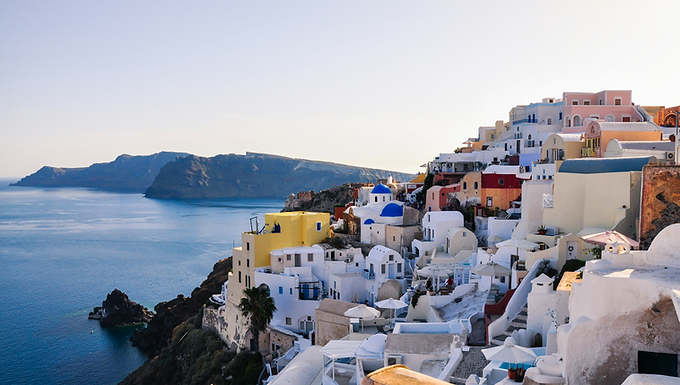
The "real" cost of Santorini is heavily dictated by geography; living on the Caldera edge carries a massive premium, but moving just a few kilometers inland to villages like Emporio or Karterados reveals a different reality. In these local enclaves, modern one-bedroom apartments rent for €600 to €900, a steep drop from the four-figure prices in Oia. While dining at sunset-view restaurants is a high-cost luxury, daily essentials and local tavernas in the island's interior remain surprisingly accessible. For the 2026 resident, Santorini offers a world-class aesthetic and a vibrant winter community, providing a high quality of life for those who navigate the island like a local rather than a visitor.
Average Monthly Living Costs
Accommodation is the most significant part of a Santorini budget and scales based on the neighborhood and apartment condition.
1-bedroom apartment in city center: €1,100–€1,700
1-bedroom apartment outside city center: €600–€900
3-bedroom apartment in city center: €1,800–€3,200
While units in older, non-renovated buildings offer the lowest rates, modern apartments with energy-efficient windows and heating are in high demand and carry a premium.
Utilities and Internet
In Santorini, utility expenses are influenced by the island's unique infrastructure requirements, specifically the energy-intensive desalination process used for the water supply. Electricity is the most significant monthly cost, especially during the summer for air conditioning.
Electricity, Water, and Garbage (85sqm apartment): €170–€310
Fiber Internet (100–200 Mbps): €26–€45
Mobile Plan (Unlimited Data/Calls): €20–€35
High-speed fiber is available in major hubs like Fira and Oia, though speeds may be more variable in the smaller cliffside settlements. The bimonthly electricity bill is a consolidated statement that includes municipal waste collection fees and the national public broadcasting levy. Water is managed by the local municipal utility (DEYAS) and typically follows a tiered pricing model to encourage conservation during the peak dry season. Natural gas is not available on the island; therefore, heating and cooking are powered by electricity or bottled gas.

Groceries and Food
The grocery and dining market in Santorini offers a wide range of prices, spanning from affordable street food and neighborhood farmers' markets to high-end supermarket chains. While inflation has impacted global food prices, the island remains significantly cheaper than other major European capitals for fresh local produce and pantry staples, despite being one of Greece’s premium destinations.
Supermarket and Local Market Costs
Shopping at the local markets is the most effective way for residents to keep costs low. Prices at these markets are typically 30% to 50% lower than in major grocery stores, which often reflect the higher logistics costs of island distribution.
Monthly Groceries (Single Person): €230–€330
Monthly Groceries (Family of Four): €600–€820
Fresh Milk (1 Liter): €1.45–€1.75
Loaf of Fresh Bread (500g): €1.25–€1.55
Dozen Eggs: €4.10–€4.70
Feta Cheese (1kg): €11.00–€14.00
Chicken Breast (1kg): €9.20–€11.00
Dining and Casual Food
Santorini has a robust culture of affordable eating out, centered around the ubiquitous souvlaki shop and small tavernas, though prices in caldera-view locations are notably higher than in inland villages like Messaria or Emporio.
Souvlaki or Gyros Wrap: €3.80–€5.00
Meal for One at an Inexpensive Taverna: €15.00–€22.00
Three-Course Dinner for Two (Mid-range): €60.00–€95.00
Freddo Espresso or Cappuccino: €3.50–€5.00
Most households budget for a mix of supermarket shopping and social dining, which is a fundamental part of the local lifestyle. Local products like Santorini cherry tomatoes, fava beans, and white eggplants are consistently high quality and affordable, whereas imported processed goods and luxury items carry a higher price tag.
Transportation
The figures below represent the total all-in cost of living, including rent, utilities, groceries, health insurance, and modest social spending.
Single person (rent outside center): €1,800–€2,700
Couple (rent outside center): €2,900–€4,200
Central apartment lifestyle: €5,500+
These estimates exclude luxury spending and international travel.
Healthcare
Public healthcare is low-cost for residents, while private healthcare remains affordable by international standards.
Private doctor visit: €60–€150 (specialists tend toward the higher end)
Basic private insurance: €50–€130 per month
Access to the public system (ESY) is available to those with a Greek Social Security Number (AMKA). In Santorini, many expats and locals opt for private insurance to skip the longer waiting lists often found at the island’s hospital, particularly during the tourist season when the local facilities handle a high volume of visitors alongside the permanent population.
Estimated Monthly Total
Santorini relies on a centralized bus network based in Fira, offering frequent connections to Oia, the black sand beaches, and the main ferry port.
Monthly public transport pass: ~€60
Single bus ticket: ~€1.80–€2.50
Taxi start fare: ~€5
Many residents and long-term expats utilize the bus system to navigate the island, as fuel prices in Greece are typically much higher than in the US and the dramatic caldera terrain makes both driving and finding a parking spot a daily challenge.
How Santorini Compares
Cheaper than most U.S. cities
Cheaper than London, Paris, and Zurich
More expensive than nearly all other Greek islands and Athens
Santorini offers a balance between affordability and access to world-famous caldera views, volcanic landscapes, and a high-end luxury lifestyle.
Seasonal Cost Changes
Santorini sees short-term rental demand push rents higher during peak travel months, particularly in central neighborhoods. Utility costs rise in summer due to air-conditioning use, while winter brings higher heating bills for residents.
Who Santorini is Best For
Santorini suits:
Honeymooners and romantic couples
Photography and sunset enthusiasts
Luxury travelers seeking high-end caldera-view suites
Wine lovers interested in volcanic vineyards
It is ideal for those who value jaw-dropping geological vistas, world-famous golden sunsets, and the sophisticated charm of villages perched on the edge of a dramatic volcanic crater.
Locals Insider Tip
Instead of paying for a overpriced cocktail just to see the sunset in Oia, grab a couple of local donkey beers from a supermarket and hike out to the Byzantine Castle ruins or find a spot along the Fira-Oia walking trail at dusk; the view is even more spectacular and it costs you nothing. When it comes to eating, skip any restaurant with "Caldera View" in the name and head inland to the traditional villages of Messaria or Pyrgos. You will find authentic tavernas where local favorites like fava and tomato keftedes are served at normal Greek prices rather than tourist rates. For a beach day, avoid the expensive transfers and take the local KTEL bus to Perissa or Kamari; once there, skip the front-row sunbeds with high minimum spends and look for the sections of black sand beach where you can lay your own towel under the trees for free. If you are staying long-term, do your grocery shopping at the larger supermarkets on the road to Messaria rather than the mini-markets in Fira, as the price difference for basic essentials can be as much as fifty percent.
Frequently Asked Questions
Is it safe to live in Santorini?
Santorini is an exceptionally safe place to live, with violent crime being almost unheard of among the local and expat communities. Because the island's economy relies so heavily on its reputation, there is a strong collective effort to keep the environment peaceful. During the high season, the main concern is petty pickpocketing in the extremely crowded walkways of Oia and Fira. Once the cruise ships leave and the winter sets in, the island transforms into a very quiet, tight-knit community where residents look out for one another and personal safety is rarely a concern.
Can I get by only speaking English?
English is the dominant language of commerce on the island. You will find that nearly everyone, from the local landlord to the supermarket clerk, speaks English with ease. Because Santorini is a global bucket-list destination, the infrastructure is designed to be entirely accessible to English speakers. While you can easily manage your residency paperwork and daily life without Greek, the locals are incredibly warm; a few words of Greek will quickly turn you from a "tourist" into a welcome member of the village.
How is the internet speed for remote work?
The internet on Santorini has improved by leaps and bounds to meet the demands of high-end tourism and digital nomads. In major hubs like Fira, Mesaria, and Karterados, fiber-optic connections are common, offering speeds of 100 Mbps to 200 Mbps. If you choose a traditional "cave house" carved into the caldera cliffs, the thick volcanic stone can block Wi-Fi signals, so you may need specialized boosters or mesh systems. Fortunately, the island has excellent 5G mobile coverage, providing a rock-solid backup for video calls and remote tasks.
Do I need a car to live in Santorini?
While the local bus system (KTEL) is reliable and connects the main villages to the airport and port, having your own transport is highly recommended for long-term residents. Santorini’s geography is unique and spread out; a car or a sturdy scooter allows you to escape the crowded tourist zones and reach the quieter beaches of Perissa or the vineyards of Pyrgos. Be prepared for narrow roads and steep inclines. Most residents find that a small, rugged car is the best way to navigate the island’s volcanic terrain and carry groceries up the hills.
What should I know about the "Think before you flush" rule?
The plumbing rule is non-negotiable on Santorini. The island’s infrastructure is built on complex terrain and narrow pipes that cannot handle paper products. To prevent a catastrophic blockage that could be very difficult to repair in a traditional cliffside home, you must never flush toilet paper. Use the small, lidded bin provided in every bathroom. It is a minor adjustment that residents make quickly, and it is the single best way to avoid a plumbing emergency in your beautiful island home.


