


Asclepieion of Athens: The Healing Sanctuary of the Acropolis
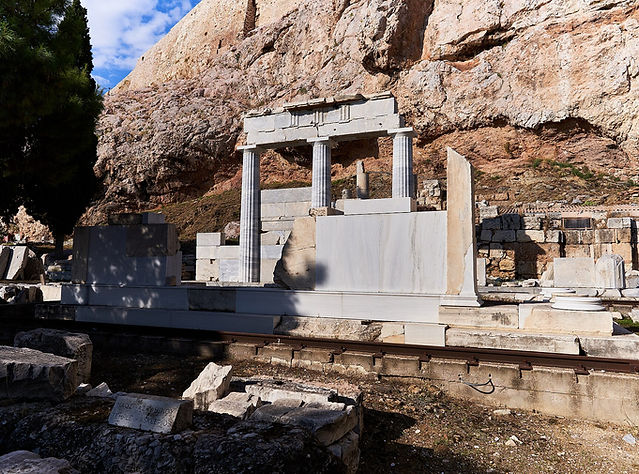

The Story of the Asclepieion of Athens
In 420 BC, Athens was a city in need of healing. It had been at war with Sparta for more than a decade and had been ravaged by a terrible plague that killed many thousands, including the statesman Pericles. That year, a private citizen named Telemachus brought to Athens the cult of Asclepius, the god of medicine, whose great sanctuary at Epidaurus was already famous across Greece. He founded a new healing sanctuary on the south slope of the Acropolis, just west of the Theatre of Dionysus.
Asclepius was the son of Apollo and a mortal woman, and he became so skilled at healing that he was said to bring the dead back to life. That alarmed the gods, and Zeus struck him down with a thunderbolt, but he was later honored as a god. He was usually shown as a kindly bearded man leaning on a staff with a snake coiled around it, a symbol of medicine that is still used today. His daughter Hygieia, whose name gave us the word hygiene, was worshipped beside him.
The arrival of the god in Athens is remembered with a touching story. While the sanctuary was being prepared, the god, in the form of a sacred snake, was said to have been welcomed into the home of the playwright Sophocles. After his death Sophocles was honored as a hero for his role in receiving the god. Telemachus recorded the founding of the sanctuary on a carved marble monument, parts of which survive and tell this story in stone.
Healing at an Asclepieion followed a ritual called incubation. Patients purified themselves with water, offered prayers and sacrifices, and then spent the night sleeping in a special hall. The god was believed to appear in their dreams, offering advice or performing a cure. Those who recovered often left offerings in thanks, such as small models of the body part that had been healed, including hands, legs, eyes and ears. Many such offerings and inscriptions have been found at the site.
The sanctuary was built around a sacred spring that flows from a small cave in the rock of the Acropolis. Water was essential to the rituals of purification and healing. Over time the site grew to include a small temple, an altar, and long colonnaded buildings called stoas. One of them, a two storey stoa built in the 4th century BC, provided the hall where patients slept while they waited for the god.
The healing tradition did not end with the ancient gods. In the early Christian period, a basilica was built on the site of the sanctuary, and the sacred spring continued to be revered. Traditions of healing are still connected with the cave, which contains a small chapel. The continuity is striking: people came to this spot for help and comfort for many centuries, under very different beliefs.
Today the Asclepieion is part of the archaeological site on the south slope of the Acropolis. Its remains are more modest than the great monuments on the rock above, but it is a peaceful place to pause, with restored columns of the stoa and views across the theater and the city. Walk past the foundations of the temple and the sacred spring, and imagine the patients who once lay here through the night, waiting for a god to bring them a cure in their dreams.
Gods Worshipped at the Asclepieion of Athens
Frequently Asked Questions About the Asclepieion of Athens
Who was worshipped at the Asclepieion of Athens?
The sanctuary honored Asclepius, god of medicine and healing, together with his daughter Hygieia, goddess of health.
When was the Asclepieion of Athens founded?
It was founded in 420 BC by an Athenian citizen named Telemachus, who brought the cult of Asclepius from Epidaurus during the Peloponnesian War.
What was incubation?
Incubation was a healing ritual in which patients slept in a special hall at the sanctuary, hoping that Asclepius would visit them in a dream and cure them or tell them how to recover.
What does Sophocles have to do with the sanctuary?
According to tradition, the playwright Sophocles welcomed the sacred snake of Asclepius into his home while the sanctuary was being prepared, and he was honored as a hero after his death.
Where is the Asclepieion of Athens?
It is on the south slope of the Acropolis in Athens, just west of the Theatre of Dionysus and close to the Acropolis Museum.
Can you visit the Asclepieion of Athens?
Yes. It is part of the archaeological site on the south slope of the Acropolis, and visitors can walk among the remains of its temple, stoa and sacred spring.
