


Sanctuary of Asclepius at Epidaurus: The Healing Center of Ancient Greece

The Story of the Sanctuary of Asclepius at Epidaurus
In the green hills of the Argolid, not far from the sea, lies the sanctuary that made Asclepius famous across the ancient world. People suffering from all kinds of illness traveled to Epidaurus hoping for a cure, and the stories of their recoveries spread far and wide. From here, the cult of the healing god spread to Athens, Kos, Rome and hundreds of other places.
The people of Epidaurus told their own version of the god's birth. Asclepius was the son of Apollo and Coronis, a mortal princess. According to the local legend, she gave birth to him secretly on a mountain near the sanctuary, where the baby was fed by a goat and guarded by a dog. A shepherd who found him saw a brilliant light shining around the child and knew he was divine. Asclepius grew up to become a healer so gifted that he could even raise the dead.
The sanctuary grew from an older cult of Apollo, and in the 4th century BC it entered its golden age. The Epidaurians built a Doric temple to Asclepius, which held a gold and ivory statue of the god seated on a throne, with a dog at his feet. Beside it rose a beautiful round building known as the Tholos or Thymele, whose basement contains a mysterious maze of circular walls. Its purpose is still debated, and some scholars believe it was linked to the god's sacred snakes or to underground rituals.
Patients came to the sanctuary to undergo incubation. After purifying themselves and making offerings, they slept in a long hall called the Abaton, hoping the god would appear in their dreams. Stone tablets found at the site record dozens of miraculous cures, describing people who arrived blind, lame or in pain and left healed. The treatment was not only divine, as the sanctuary also offered baths, a gymnasium and places for rest, rather like an ancient spa.
The most famous monument at Epidaurus is its theater, built in the late 4th century BC. The travel writer Pausanias praised it as the most beautiful of all theaters and credited it to the architect Polykleitos. It is exceptionally well preserved, and its acoustics are legendary: a coin dropped or a match struck in the center of the orchestra can be heard far up in the seats. Performances of drama and music were part of the god's festivals, offering healing for the soul as well as the body.
The sanctuary's fame reached Rome in 293 BC, when a plague struck the city. According to legend, the Romans sent an embassy to Epidaurus and returned with a sacred snake of the god, which slipped off their ship onto an island in the Tiber River, where a temple to Asclepius was built. The sanctuary at Epidaurus itself declined in late antiquity, after it was plundered and as Christianity spread.
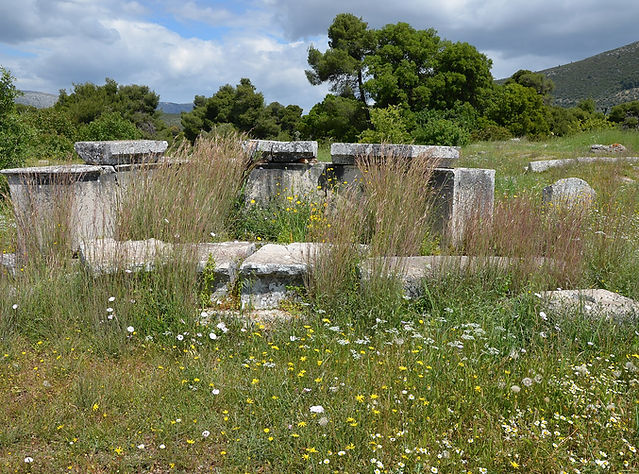
Today the sanctuary and theater of Epidaurus form a UNESCO World Heritage Site. You can explore the foundations of the temple, the restored parts of the Tholos and the Abaton, and visit the small museum filled with inscriptions and architectural fragments. Climb to the top row of the theater to test its famous acoustics, and if you come in summer, look out for the Epidaurus Festival, when ancient dramas are once again performed under the stars.
Gods Worshipped at the Sanctuary of Asclepius at Epidaurus
Frequently Asked Questions About the Sanctuary of Asclepius at Epidaurus
Who was worshipped at Epidaurus?
The sanctuary was dedicated mainly to Asclepius, the god of medicine, and earlier to his father Apollo.
What happened at the Sanctuary of Asclepius?
Sick pilgrims purified themselves, made offerings and slept in a hall called the Abaton, hoping Asclepius would heal them in their dreams. Stone tablets record many claimed cures.
Why is the theater of Epidaurus famous?
Built in the late 4th century BC, it is one of the best preserved ancient theaters and is renowned for its remarkable acoustics. It still hosts performances during the summer festival.
What is the Tholos at Epidaurus?
The Tholos is a round building of the 4th century BC with a labyrinth of circular walls in its basement. Its exact purpose is still debated.
Is Epidaurus a UNESCO World Heritage Site?
Yes. The Sanctuary of Asclepius at Epidaurus, including its theater, is listed as a UNESCO World Heritage Site.
Where is Epidaurus?
The sanctuary is in the Argolid region of the Peloponnese, inland from the coastal town of Epidaurus.
