Where Are Australia's Biggest Greek Communities? How Your City Ranks
Ask most people where the Greeks live in Australia, and you'll hear Melbourne. That's true, but it's not the whole story. Sydney isn't far behind, Adelaide has a Greek share close to Melbourne's, and Darwin has a Greek community out of all proportion to its size.
We looked at the 2021 Australian Census and ranked Australia's cities and towns three ways: by Greek share among cities with at least 5,000 residents, by Greek share among cities with at least 1,000 Greek residents, and by the total number of Greek residents. Each one tells a different story, and together they show how far Greek Australia reaches.

How many Greeks are in Australia?
So, how many Greeks are in Australia? In the 2021 Census, 424,744 Australians reported Greek ancestry, about 1.7% of the population. Of those, 92,314 were born in Greece and 229,643 speak Greek at home. More than three quarters live in just three cities: Melbourne (170,544), Sydney (121,345) and Adelaide (37,602).
Most Greek cities in Australia per capita (5,000+ residents)
This ranking shows the cities and towns where people of Greek ancestry make up the largest share of the population, among places with at least 5,000 total residents (everyone who lives there, not just Greeks). It uses the ABS's urban areas, which means a city or town plus its suburbs.
Rank | City | Greek share |
1 | Melbourne, VIC | 3.5% |
2 | Darwin, NT | 3.1% |
3 | Adelaide, SA | 2.7% |
4 | Sydney, NSW | 2.5% |
5 | Wollongong, NSW | 1.5% |
6 | St Georges Basin - Sanctuary Point, NSW | 1.2% |
7 | Canberra - Queanbeyan, ACT/NSW | 1.2% |
8 | Mildura - Buronga, VIC/NSW | 1.2% |
9 | Whyalla, SA | 1.1% |
10 | Shepparton - Mooroopna, VIC | 1.1% |
Why Melbourne?
Melbourne has 170,544 residents of Greek ancestry out of about 4.8 million people, or 3.5%. That's more Greeks than any other city in Australia, and the highest share too. Darwin comes second at 3.1%, ahead of Adelaide (2.7%) and Sydney (2.5%). Further down, smaller places get in: St Georges Basin - Sanctuary Point on the NSW South Coast, Mildura - Buronga on the Murray, Whyalla in South Australia and Shepparton - Mooroopna in regional Victoria are each between 1.1% and 1.2% Greek.
Most Greek cities in Australia per capita (1,000+ Greek residents)
This ranking also goes by share, but with a different rule: a city needs at least 1,000 residents of Greek ancestry. That focuses on places with a sizable Greek community. Only 15 Australian cities clear that bar.
Rank | City | Greek share |
1 | Melbourne, VIC | 3.5% |
2 | Darwin, NT | 3.1% |
3 | Adelaide, SA | 2.7% |
4 | Sydney, NSW | 2.5% |
5 | Wollongong, NSW | 1.5% |
6 | Canberra - Queanbeyan, ACT/NSW | 1.2% |
7 | Geelong, VIC | 0.9% |
8 | Brisbane, QLD | 0.8% |
9 | Hobart, TAS | 0.8% |
10 | Gold Coast - Tweed Heads, QLD/NSW | 0.8% |
Why are the top five the same?
Melbourne, Darwin, Adelaide, Sydney and Wollongong top both share rankings. Each has well over 1,000 Greek residents, so the second rule doesn't remove any of them. Darwin is #2 again with 3,957 Greek residents out of about 127,000 people. The difference is further down. Smaller towns like Mildura - Buronga (641 Greek residents) and Whyalla (243) drop out, and bigger cities take their place: Geelong (2,555 Greek residents, 0.9%), Brisbane (19,800, 0.8%), Hobart (1,826, 0.8%) and Gold Coast - Tweed Heads (5,502, 0.8%).
What does "per capita" mean?
"Per capita" means per person. When we rank cities per capita, we're asking: out of everyone who lives there, what share is Greek? We're not asking how many Greeks live there in total.
Here's an example:
Melbourne has 170,544 residents of Greek ancestry, more than anywhere else in Australia. But the city has close to 5 million people, so Greeks make up about 3.5% of it.
Darwin has only 3,957 Greek residents. But the whole city has about 127,000 people, so Greeks make up 3.1% of it, almost as much as in Melbourne.
So Melbourne has the most Greeks and the highest share, while Darwin has far fewer Greeks but nearly the same share. Both are true. They're just answers to different questions.
Biggest Greek communities in Australia (total population)
This ranking is the simplest: it counts how many residents of Greek ancestry live in each city. No percentages. "Sydney" here means Greater Sydney, including Earlwood, Kogarah and Marrickville. "Melbourne" includes Oakleigh, Northcote and Reservoir.
Rank | City | Greek residents |
1 | Melbourne, VIC | 170,544 |
2 | Sydney, NSW | 121,345 |
3 | Adelaide, SA | 37,602 |
4 | Brisbane, QLD | 19,800 |
5 | Perth, WA | 14,531 |
6 | Canberra - Queanbeyan, ACT/NSW | 5,994 |
7 | Gold Coast - Tweed Heads, QLD/NSW | 5,502 |
8 | Wollongong, NSW | 4,687 |
9 | Darwin, NT | 3,957 |
10 | Newcastle - Maitland, NSW | 3,578 |
Why does Darwin punch above its weight?
Darwin ranks ninth by numbers, but it has the second highest Greek share of any Australian city (3.1%, just behind Melbourne's 3.5%), and the highest share of people who speak Greek at home (2.5%). Most of its Greeks trace their roots to one island: Kalymnos. Kalymnian crews first came to Darwin and Broome in the 1950s to work the pearl shell beds, and many stayed on for land-based work, much of it in construction. Darwin and Kalymnos became sister cities in 1982. ABC News describes Darwin as home to "the largest Kalymnian expat community in the world."
Greek neighborhoods worth a shout-out
Our rankings only cover cities and towns, so Australia's best-known Greek neighbourhoods don't show up on their own. Their Greeks are counted inside their city's total instead. These places deserve a mention of their own.
Oakleigh, Melbourne
Oakleigh is 16.3% Greek, and 13.3% of residents speak Greek at home. Its Eaton Mall is lined with Greek cafes, patisseries and tavernas. The local history society calls it "an Australian variant of the Greek village square."
Northcote, Thornbury and Brunswick, Melbourne
Melbourne's inner north has long been home to Greek families, with Greek bakeries and cafes along its main roads. Thornbury is 10.9% Greek, Northcote 8.8% and Brunswick 6.4%. Further out, Reservoir, Preston, Mill Park and Bundoora each have more than 1,800 Greek residents.
Lonsdale Street, Melbourne
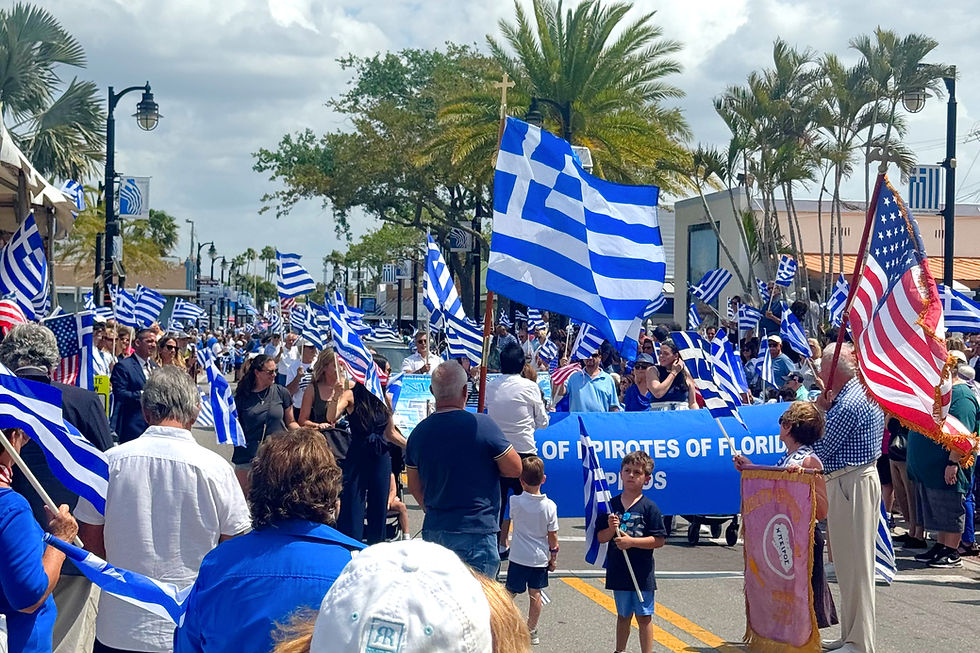
The original centre of Greek Melbourne is still home to Greek businesses and community offices, and every year it hosts the Antipodes Festival, Melbourne's big Greek street party.
Marrickville, Sydney
Marrickville is 8.8% Greek, and 7.0% of residents speak Greek at home. In 2021 the Inner West Council named a stretch of the Marrickville and Dulwich Hill area "Little Greece" in recognition of the Greek community.
Earlwood, Kogarah and the St George area, Sydney
In Earlwood, 22.3% of residents have Greek ancestry, more than one in five. Kogarah is 6.7% Greek, and nearby Kingsgrove, Sans Souci, Blakehurst and Brighton-Le-Sands are each more than 17% Greek.
Thebarton, Torrensville and Mile End, Adelaide
Adelaide's Greek heartland is in its inner west. Torrensville is 14.8% Greek, Thebarton 13.9% and Mile End 12.7%. Greek migrants settled here in large numbers in the 1950s and 1960s, and the Saint George church in the area opened in 1966.
South Brisbane and Highgate Hill, Brisbane
Highgate Hill is 6.6% Greek. Nearby Musgrave Park hosts Paniyiri, the Greek festival that started in 1976 and turned 50 this year.
Northbridge, Perth
Perth's Greek story started in Northbridge, where the Hellenic Community of Western Australia, founded in 1923, built the Saints Constantine and Helene church, consecrated in 1937. Today Mount Hawthorn is 3.3% Greek and Stirling 3.2%.
Beyond the capitals
Greek Australia isn't only a big-city story. In South Australia's Riverland, Greek migrants worked as fruit pickers and growers in the citrus, stone fruit and dried fruit industries around Renmark and Berri. These towns are too small for our city tables, but the wider Berri Barmera council area is 4.8% Greek and Renmark Paringa 4.6%, a higher share than Melbourne's 3.5%.
Regional cities in the rankings include Wollongong (4,687 Greek residents, 1.5%), Geelong (2,555, 0.9%), Mildura - Buronga (1.2%), Whyalla (1.1%) and Shepparton - Mooroopna (1.1%).
How much of Greek Australia lives in Melbourne and Sydney?
Together they have 291,889 residents of Greek ancestry, more than two thirds of Australia's 424,744. Add Adelaide's 37,602 and the three cities account for more than three quarters.
Why the 5,000 minimum?
Without a minimum, tiny places could take over a share ranking, since a handful of Greek families can make up a big share of a small town. In practice, every urban area the ABS counts already has more than 10,000 residents, so the 5,000 minimum keeps the focus on real cities and towns.
About the data
All figures come from the Australian Bureau of Statistics (ABS) 2021 Census. "Greek" means anyone who reported Greek ancestry. People can list up to two ancestries, so someone who is Greek and Irish counts as Greek.
A few things worth knowing:
In total, 424,744 Australians reported Greek ancestry in 2021. Of those, 92,314 people were born in Greece, and 229,643 speak Greek at home.
Victoria has the largest Greek community in Australia, with 181,184 people of Greek ancestry.
The ABS makes small random adjustments to protect privacy, so small-area figures can be off by a few people. Places close together in the rankings are basically tied.
Ancestry is self-reported. Each generation is a little less likely to list "Greek" on the form, even when the family is proudly Greek.
Greek roots? You may be eligible for Greek citizenship
More than 400,000 Australians report Greek ancestry, and many don't realize their heritage can be more than a line on a Census form. If you have a Greek parent or grandparent, you may be eligible for Greek citizenship by descent. Both Greece and Australia allow dual citizenship, so you don't have to give up your Australian passport. If you'd like help getting your Greek citizenship, GetGreece can handle the process for you.
Greek citizenship comes with real benefits:
A European Union passport. You can live, work and study in Greece and across the EU.
A lasting link to your family's history. Your name is recorded in the Greek municipal registry, often in the same town your family came from.
A gift to your children. Citizenship can pass down to the next generation.
The process usually means tracking down family records, such as birth and marriage certificates, and linking them to your Greek ancestor's registration in Greece. Here's a guide to who qualifies for Greek citizenship.

The bottom line
Highest Greek share: Melbourne, at 3.5%.
Highest share outside Melbourne: Darwin, at 3.1%, #2 in both share rankings.
Most Greeks in total: Melbourne, with 170,544.
Most Greek-speaking city: Darwin, thanks to its Kalymnian community.
There's no single Greek capital of Australia. It depends on whether you're counting heads or looking at share. Either way, Greek Australia runs from Melbourne and Sydney to Adelaide, Wollongong, the Riverland and the Top End.
👉 Check out the biggest Greek communities in America.
Wherever your family landed, your Greek story doesn't have to end there. Learn more about Greek citizenship at GetGreece.
Sources
Photo: Philip Mallis via Wikimedia Commons (CC BY-SA 2.0). Crowds on Lonsdale Street during the 2024 Antipodes Festival, Melbourne.