



Introduction
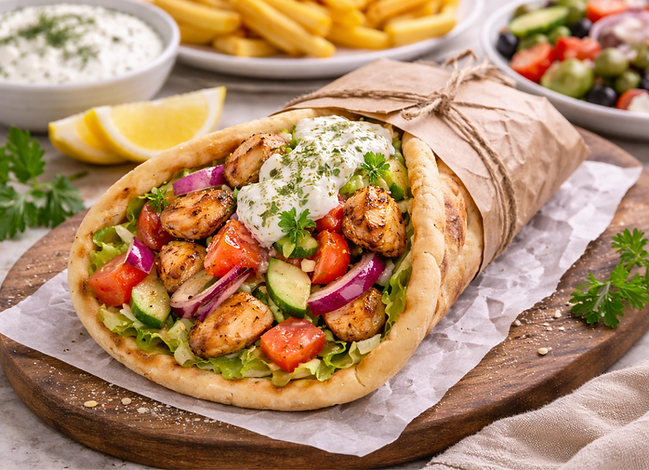
Chicken Gyro is the quintessential Greek street food, consisting of succulent shavings of seasoned chicken wrapped in a warm, lightly grilled pita. The name comes from the Greek word gyros, meaning "turn," which refers to the vertical rotisserie where stacked layers of marinated chicken thighs are slowly roasted until the exterior becomes caramelized and crisp. To assemble the classic wrap, the meat is tucked into the bread along with ripe tomato slices, red onions, and a generous dollop of cool, garlicky tzatziki. In a move that often surprises visitors, an authentic Greek gyro almost always includes a handful of crispy French fries stuffed directly inside the pita, adding a salty crunch and making it a complete, portable meal. While the chicken version is a popular lighter alternative to the traditional pork, both are defined by the aromatic blend of Mediterranean spices like oregano, garlic, and paprika that infuse the meat with its signature bold flavor.
Ingredients
The Chicken Marinade
1 kg chicken thighs, boneless and skinless
1/4 cup Greek yogurt
1/4 cup extra virgin olive oil
3 cloves garlic, minced
2 tbsp lemon juice
1 tbsp red wine vinegar
2 tbsp dried oregano
1 tsp ground cumin
1 tsp smoked paprika
1 tsp salt
1/2 tsp black pepper
The Assembly
4 to 6 Greek pita breads
Homemade Tzatziki
1 red onion, thinly sliced
2 ripe tomatoes, sliced
Fresh parsley, chopped
Fried potatoes (French fries), tucked inside the wrap
The Finishing Touches
A sprinkle of dried oregano
A dusting of sweet paprika
Extra lemon wedges on the side
Preperation
Meat: Slice the chicken thighs into thin, bite sized strips to ensure they cook quickly and stay juicy.
Marinade: Whisk together the Greek yogurt, olive oil, lemon juice, and minced garlic with plenty of dried oregano and paprika.
Vegetables: Thinly slice the red onion and tomatoes and shred the lettuce for the fresh filling.
Bread: Lightly brush the pita breads with olive oil and have a griddle pan ready to warm them until pliable.
Sauce: Prepare a batch of thick tzatziki and keep it chilled until the moment of assembly.
Step by Step
The Marinade: Whisk together Greek yogurt, olive oil, lemon juice, minced garlic, dried oregano, salt, and black pepper in a large bowl. Add a touch of paprika or cumin for a warm, smoky depth that complements the poultry.
The Chicken: Slice boneless, skinless chicken thighs into thin strips or bite-sized pieces. Toss the meat in the marinade, ensuring every piece is well coated, and refrigerate for at least two hours or overnight to tenderize the meat.
The Cooking: Heat a large cast iron skillet or griddle over high heat with a splash of oil. Sear the chicken in batches to avoid crowding the pan, cooking until the edges are charred and crispy while the inside remains juicy.
The Pita: Lightly brush Greek pita breads with olive oil and warm them in a pan until they are soft and pliable. Avoid over-toasting, as the bread needs to be flexible enough to wrap around the filling without breaking.
The Assembly: Spread a generous dollop of tzatziki down the center of each warm pita. Layer on the cooked chicken followed by thin slices of red onion, ripe tomato wedges, and a handful of crisp lettuce.
The Tradition: Add a few hot, salted french fries inside the wrap before folding. Roll the pita tightly and wrap the bottom in parchment paper or foil to hold everything together.
Finishing: Serve immediately while the meat is hot and the vegetables are cool. Offer extra lemon wedges on the side for a final bright squeeze of acidity.
Origin:
Pan-Hellenic
Diet
High-Protein
Equipment Needed:
Mixing bowl, Baking sheet or roasting rack.
Cultural History
Chicken Gyro is a modern evolution of the traditional rotating spit-roasted meats of the Eastern Mediterranean, adapted to satisfy the global demand for a leaner alternative to pork or lamb. The preparation relies on thinly sliced chicken thigh or breast meat that has been marinated in a blend of yogurt, lemon, and aromatic herbs like oregano and thyme to ensure the meat remains succulent during the intense vertical roasting process. As the outer layers crisp to a deep golden brown, they are shaved off and tucked into a pillowy pita bread alongside tomatoes, onions, and fried potatoes. Unlike its pork counterpart which is almost exclusively paired with tzatziki, the chicken version is frequently served with a signature yellow mustard-mayonnaise sauce, creating a distinct flavor profile that has become a staple of contemporary Greek fast-food culture and a favorite among younger generations.
Yiayias Secret
The secret to an authentic Chicken Gyro at home is the thinness of the meat and the intensity of the marinade. Use boneless, skinless chicken thighs rather than breasts, as the higher fat content keeps the meat juicy during the high-heat cooking process. Slice the chicken into very thin strips and marinate them for at least four hours in a mixture of Greek yogurt, lemon juice, garlic, and plenty of dried oregano. The lactic acid in the yogurt acts as a natural tenderizer, breaking down the fibers to ensure the meat is succulent.
To replicate the texture of a vertical rotisserie, cook the chicken in a searing hot cast iron skillet or under a high broiler. Do not overcrowd the pan; you want the meat to char and crisp on the outside rather than steam in its own juices. Once the chicken is cooked, let it rest for a few minutes before piling it onto warm, fluffy pita bread that has been lightly brushed with olive oil and grilled. The final touch is the assembly: a thick dollop of cool Tzatziki, crisp red onions, ripe tomatoes, and a few salty French fries tucked right inside the wrap for that classic street food crunch.
Substitution Notes
The Meat: Traditionally made with thinly sliced chicken thigh, which stays juicy during high-heat roasting. If you use chicken breast, marinate it for at least four hours in yogurt and lemon juice to prevent it from drying out. For a vegetarian swap, halloumi cheese or grilled oyster mushrooms offer a similarly hearty texture.
The Marinade: The signature flavor comes from a blend of garlic, dried oregano, thyme, and smoked paprika. If you lack these spices, a poultry seasoning or lemon-pepper blend can work. Adding a splash of white wine vinegar helps tenderize the protein.
The Bread: Greek pita is distinct because it is soft, thick, and usually lacks a pocket. If you can only find pocket pita, do not open it; simply warm it and wrap it around the fillings. In a pinch, a flour tortilla or naan can be used, though the texture will be less chewy.
The Sauce: Tzatziki is the classic choice. If you want a "street style" variation, many Greek shops use a yellow mustard-mayo sauce (made with honey, mustard, and mayonnaise). For a dairy-free option, a tahini-lemon dressing provides a creamy, nutty alternative.
The Fillings: A true Greek wrap almost always includes fried potatoes (fries) inside the bread. You can substitute these with roasted potato wedges for a lighter version. Red onions, sliced tomatoes, and crisp lettuce are the standard fresh toppings.
The Technique: To get the "vertical rotisserie" effect at home, stack the marinated chicken tightly on skewers and bake them upright, or simply sear the pieces in a cast iron skillet over high heat to achieve charred, crispy edges.
Wine Pairings
The Chicken Gyro is a vibrant street food classic that balances the savory, charred flavor of rotisserie-style chicken with the cool tang of tzatziki, fresh tomatoes, and red onions, all wrapped in a soft, grilled pita.
White Wine (The Traditional Choice): A crisp, high-acid white is the best match to cut through the garlic of the tzatziki and the richness of the meat. A Greek Assyrtiko provides a mineral and lemon profile that brightens the entire wrap, while a Sauvignon Blanc offers a zesty herbal quality that complements the oregano and fresh vegetables.
Red Wine: A light-bodied, fruit-forward red with minimal tannins is preferred to ensure it doesn't clash with the yogurt or the char on the chicken. A chilled Agiorgitiko or a Grenache provides juicy red berry notes that enhance the savory seasonings without overwhelming the palate.
The Contrast: A dry Rosé from Provence or the Peloponnese offers a delicate balance of acidity and red fruit that acts as a bridge between the creamy sauce and the roasted meat, providing a clean and refreshing finish.
Storage Instructions
Refrigeration: Store the chicken, pita, and toppings separately to prevent the wrap from becoming soggy. The cooked chicken will stay fresh in an airtight container for up to 3 to 4 days. Fresh components like tomatoes, onions, and tzatziki should also be stored in individual containers.
Freezing (Cooked): You can freeze the cooked chicken meat for up to 3 months. Place the meat in a freezer safe bag and remove as much air as possible. It is not recommended to freeze the assembled wrap, as the fresh vegetables and pita will not hold up well to the freezing and thawing process.
Freezing (Unbaked): If you are using raw marinated chicken, you can freeze it for up to 6 months. Raw pita bread can also be frozen for up to 3 months. Do not freeze the assembled wrap or the yogurt based tzatziki sauce.
Reheating: Reheat the chicken in a pan over medium high heat with a splash of water or oil to keep it juicy. Warm the pita separately in a dry skillet for 30 seconds per side until pliable. Assemble the wrap with fresh toppings and cold tzatziki only after the chicken and pita are warm. Avoid microwaving the assembled wrap, as it will make the vegetables limp and the pita rubbery.


