



Introduction
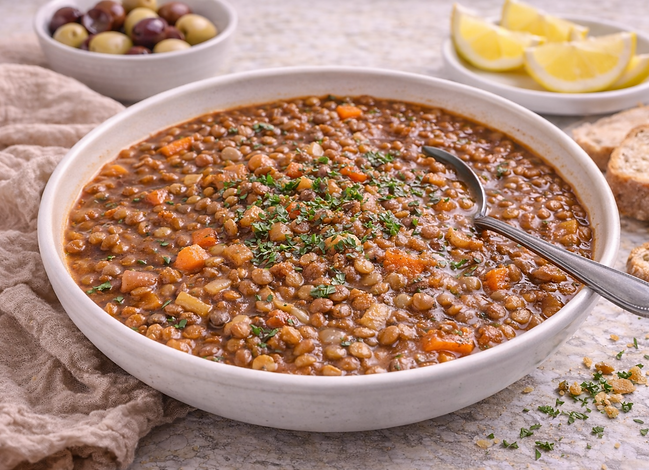
Fakes is a cornerstone of the Greek kitchen, consisting of a hearty and nutritious brown lentil soup that has been a staple of the Mediterranean diet since ancient times. The lentils are typically simmered with onions, garlic, carrots, and celery in a base of water or vegetable stock, seasoned with bay leaves and a generous amount of extra virgin olive oil added toward the end of the cooking process to preserve its flavor and nutrients. A defining characteristic of the Greek preparation is the addition of a splash of red wine vinegar just before serving, which brightens the earthy flavors and aids in the absorption of iron from the pulses. Often enjoyed during periods of fasting or as a comforting winter meal, it is traditionally served with a side of salty feta cheese, brined olives, or smoked herring to provide a savory contrast to the thick and savory soup.
Ingredients
The Lentil Base
500g brown or green lentils, rinsed
1 large red onion, finely chopped
2 to 3 cloves garlic, minced
2 medium carrots, diced
2 stalks celery, sliced (optional)
1/2 cup extra virgin olive oil
1 tbsp tomato paste
2 bay leaves
The Liquid and Seasoning
1.5 liters water or vegetable stock
1 tsp dried oregano
Salt and freshly ground black pepper to taste
The Finishing Touches
2 tbsp red wine vinegar (added at the end)
A generous drizzle of extra virgin olive oil per bowl
100g Feta cheese, crumbled (for serving)
Crusty bread or sourdough
Kalamata olives and salted sardines on the side
Preperation
Lentils: Rinse the small brown or green lentils thoroughly under cold water and pick through them to remove any small stones.
Aromatics: Finely dice the red onion and carrots, and mince the garlic to create a flavorful base for the soup.
Liquid: Measure out the water or vegetable stock and have a bottle of extra virgin olive oil ready for both cooking and finishing.
Tomato: Prepare a small amount of tomato paste or a grated fresh tomato to add depth and a slight reddish hue to the broth.
Finish: Keep a bottle of red wine vinegar nearby to stir in at the very end, which balances the earthiness of the lentils.
Step by Step
The Lentils: Rinse small brown or green lentils thoroughly under cold water. Place them in a large pot with enough water to cover them and bring to a boil for a few minutes, then drain and discard the first water to ensure a cleaner taste.
The Aromatics: Return the lentils to the pot with fresh water. Add finely chopped red onion, minced garlic, and sliced carrots. Drop in two bay leaves to provide a deep, earthy foundation for the soup.
The Tomato: Stir in a small amount of tomato paste or a few grated fresh tomatoes. This adds body and a subtle acidity without overpowering the natural flavor of the lentils.
The Simmer: Bring the pot to a boil, then reduce the heat to low. Cover and simmer for about 30 to 45 minutes until the lentils are tender and the soup has naturally thickened.
The Oil: Only add the extra virgin olive oil toward the end of the cooking process. Stirring it in at the finish preserves the oil's flavor and creates a silkier texture.
The Seasoning: Season with salt and black pepper after the lentils are soft, as adding salt too early can toughen the skins.
Finishing: Serve the soup hot with a generous splash of red wine vinegar in each bowl. The vinegar is essential to brighten the dish and balance the richness of the lentils and oil.
Origin:
Pan-Hellenic
Diet
Vegan, Gluten-Free
Equipment Needed:
Large pot, Wooden spoon.
Cultural History
Fakes is the quintessential Greek lentil soup and a cornerstone of the Mediterranean diet, valued for its nutritional density and humble origins. The dish features small brown or green lentils simmered slowly with onions, garlic, and carrots in a rich tomato base, often enhanced by the deep earthiness of bay leaves. Unlike many international lentil stews, the Greek version is defined by its finish, where a generous pour of extra virgin olive oil and a sharp splash of red wine vinegar are added just before serving to brighten the savory flavors. Historically a staple during fasting periods and in rural households, this soup remains a beloved weekly ritual in Greek homes, representing a soulful and warming comfort food that elevates simple legumes into a balanced and flavorful masterpiece.
Yiayias Secret
The secret to a rich, earthy Fakes is the slow simmer and the timing of the acidity. You should start by sautéing your onions, carrots, and garlic in olive oil until they are soft before adding the lentils and water. This builds a flavor base that water alone cannot provide.
To achieve a thick, creamy consistency without adding starch, allow the lentils to cook until some of them naturally break down. The most important step happens at the very end: never add your red wine vinegar until the lentils are completely soft. Adding acid too early can toughen the skins and prevent them from softening properly. Finish each bowl with a generous swirl of raw extra virgin olive oil to brighten the deep, savory notes of the legumes.
Substitution Notes
The Lentils: Brown or green lentils are traditional as they hold their shape during long simmering. If you use red lentils, they will break down into a smooth puree rather than a chunky soup. For a firmer bite, Puy lentils (French lentils) can be used, though they are not traditional.
The Aromatics: A base of finely chopped onion, carrots, and garlic is essential. Many regional variations also include celery or bay leaves. For a deeper flavor, sauté the vegetables in olive oil until soft before adding the lentils and water.
The Tomato: Most recipes call for a small amount of tomato paste or a grated fresh tomato to give the broth body and a reddish hue. If you prefer a "white" version (Lefkes Fakes), omit the tomato entirely and increase the amount of garlic and herbs.
The Acid: Red wine vinegar is added at the very end of cooking or at the table. This is the defining characteristic of the dish, as the acidity balances the earthiness of the lentils. Fresh lemon juice can be used as a substitute, but it offers a brighter, less sharp finish than vinegar.
The Fat: High-quality extra virgin olive oil is stirred in at the end of the cooking process or drizzled over the individual bowls. Do not substitute with butter or neutral oils, as the flavor of the olive oil is a primary component of the dish.
The Sides: Fakes is traditionally served with salted sardines, anchovies, or feta cheese on the side to provide a salty contrast. Kalamata olives and crusty bread are also standard accompaniments.
Wine Pairings
Fakes is a hearty and earthy lentil soup enriched with olive oil, onions, and garlic, traditionally finished with a generous splash of vinegar to brighten the deep, savory flavors.
White Wine (The Traditional Choice): A white wine with high acidity and a touch of body is needed to stand up to the earthy legumes and the vinegar. A Greek Assyrtiko provides the necessary structure and sharp citrus notes, while a Pinot Grigio offers a clean, crisp finish that complements the simple, rustic ingredients.
Red Wine: A medium-bodied red with high acidity and moderate tannins is the classic pairing for lentil dishes. A Xinomavro is excellent here, as its natural tomato and olive notes mirror the savory profile of the soup, while a Chianti provides a bright cherry acidity that cuts through the richness of the olive oil.
The Contrast: A dry Rosé from Agiorgitiko grapes offers a vibrant fruitiness and a crisp backbone that lightens the dense texture of the lentils. Its refreshing acidity acts as a counterpoint to the earthy tones, providing a bright, clean finish to each spoonful.
Storage Instructions
Refrigeration: Store the lentil soup in an airtight container in the refrigerator for up to 4 to 5 days. The flavor often improves the next day as the garlic, onion, and bay leaf further infuse the broth. If the soup thickens too much, simply stir in a little water or broth when reheating.
Freezing (Cooked): Fakes freeze exceptionally well for up to 3 months. Store in freezer safe containers or heavy duty freezer bags. Leave a little space at the top of the container as the liquid will expand when frozen. Thaw overnight in the refrigerator before reheating.
Freezing (Unbaked): While you can't freeze the "soup" unbaked, you can prep and freeze a "mirepoix" of chopped onions, carrots, and garlic to speed up future cooking. Dry lentils should be stored in a cool, dark pantry rather than the freezer.
Reheating: Reheat the soup in a pot over medium heat, stirring occasionally, until it reaches a gentle simmer. You can also use a microwave, heating in 1 to 2 minute intervals and stirring in between. Add a fresh drizzle of olive oil and a splash of red wine vinegar after reheating to brighten the flavors.


