



Introduction
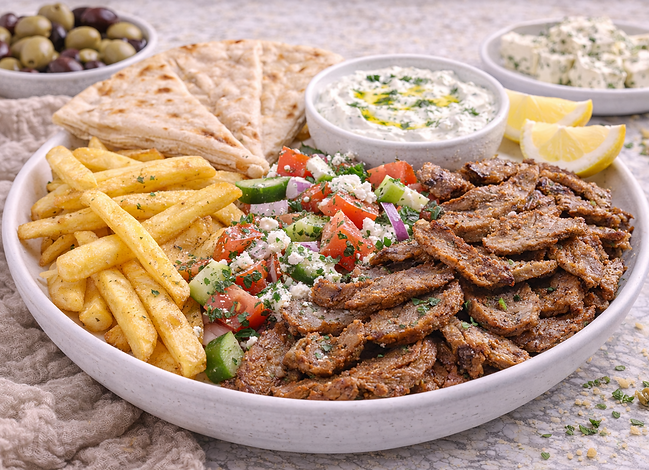
Gyro Merida is the deconstructed, plate-style version of the world-famous Greek wrap, offering a more formal and substantial way to enjoy the classic flavors of rotisserie meat. The dish features a generous heap of thinly sliced pork or chicken gyro, which has been slow-roasted on a vertical spit until the edges are crispy and deeply seasoned. Instead of being rolled inside a pita, the meat is arranged on a large platter alongside quarters of warm, grilled pita bread and a heap of golden, salt-dusted fried potatoes. A fresh side of horiatiki ingredients, typically tomatoes, onions, and parsley, provides a crisp contrast to the rich meat, while a large dollop of cool, garlic-heavy tzatziki serves as the essential dipping component.
Ingredients
The Platter Components
300g sliced Gyro meat (Lamb/Beef blend or Pork)
2 fluffy pita breads, lightly grilled and cut into triangles
1 large scoop of Tzatziki
A generous portion of fried potatoes (French fries)
The Salad Garnish
1 medium tomato, sliced into wedges
1 small red onion, thinly sliced into half-moons
A handful of fresh parsley, chopped
A sprinkle of sweet paprika and dried oregano over the meat and onions
The Plating Essentials
The Arrangement: Place the sliced Gyro meat in the center or on one side of a large round plate.
The Sides: Position the fries and the pita triangles around the meat.
The Dip: Place the Tzatziki in a small heap or a separate small bowl on the plate.
The Finish: Top the onions and tomatoes with the parsley and a drizzle of extra virgin olive oil.
The Finishing Touches
Extra lemon wedges on the side for squeezing over the meat
A cold Mythos or Alpha beer
Best eaten by hand, using the pita triangles to scoop up the meat and dip
Preperation
Meat: Prepare the shaved gyro meat, ensuring it is seared on a griddle or in a pan until the edges are crispy and golden brown.
Bread: Lightly brush Greek pita breads with olive oil and toast them on a grill until they are warm and pliable.
Vegetables: Thinly slice red onions, ripe tomatoes, and crisp cucumbers to serve as the fresh component of the plate.
Potatoes: Peel and cut potatoes into batons, then fry them in hot oil until they are crunchy on the outside and fluffy inside.
Sides: Prepare a bowl of thick tzatziki and gather a few Kalamata olives and peperoncini peppers to complete the platter.
Step by Step
The Presentation: Unlike the hand-held wrap, a "merida" (portion) is served as a deconstructed feast on a large platter. This style allows for larger quantities of each component and a more formal dining experience.
The Meat: Shave the hot, crispy gyro meat (pork or chicken) and pile it high in the center of the plate. The meat should be the focal point, glistening with its own juices and seasoned heavily with oregano and paprika.
The Pita: Take two or three Greek pitas, brush them with olive oil and a pinch of salt, and grill them until they are soft and slightly charred. Cut each pita into four wedges and arrange them around the edge of the plate.
The Vegetables: Place a fresh salad on the side of the platter, typically consisting of thick slices of ripe tomato, rings of red onion (often dusted with sumac or parsley), and occasionally a few slices of cucumber or a pickled pepperoncini.
The Tzatziki: Serve a generous scoop of thick, garlicky tzatziki in a separate small bowl on the plate or directly next to the meat to prevent the bread from getting soggy.
The Fries: Add a large heap of golden, hand-cut french fries. In a merida, the fries are usually seasoned with sea salt and a generous dusting of dried Greek oregano.
The Finishing: Drizzle the meat with a little extra virgin olive oil and a final squeeze of fresh lemon juice to cut through the richness of the fats.
Origin:
Pan-Hellenic
Diet
High-Protein
Equipment Needed:
Large serving platter, Small bowls for dips.
Cultural History
The Gyro Merida is the deconstructed, platter version of the classic Greek wrap, offering a more substantial and seated dining experience. Instead of being tucked into a handheld pita, the thinly sliced, spit-roasted meat is served as a generous heap in the center of a large plate. This presentation allows the diner to appreciate the textures of the meat, which features a combination of succulent interiors and crispy, caramelized edges from the vertical rotisserie.
The platter is traditionally organized with several distinct components that allow for a customizable meal. It includes a stack of grilled and sliced pita bread, a large dollop of cool and garlicky tzatziki, and a side of golden fried potatoes. A fresh salad of sliced tomatoes, red onions, and sometimes a few spicy pickled peppers provides a bright and acidic contrast to the rich proteins. Gyro Merida is a staple of Greek psistaries and taverns, representing a hearty and social way to enjoy the country's most famous street food in a more relaxed, communal setting.
Yiayias Secret
The secret to a professional Gyro Merida is the art of the "deconstructed" assembly. Unlike a wrap, a plate requires the pita bread to be cut into triangles and lightly charred in the meat drippings or olive oil so they remain pliable but sturdy enough to scoop. The meat should be piled high in the center, ensuring the thin, crispy shavings stay hot and separate from the cold components.
The balance of the plate relies on the separation of temperatures and textures. The tzatziki must be served in a cold mound or separate ramekin to prevent its moisture from making the fries or pita soggy. A true Merida also features a specific onion and parsley salad dusted with sumac or paprika, which provides a sharp, acidic crunch that cuts through the richness of the meat. By keeping the tomatoes and onions on the side, you preserve the integrity of the hot, seasoned fries and the savory gyro meat until the very last bite.
Substitution Notes
The Presentation: Unlike a wrap, a merida is served as a deconstructed plate. The gyro meat is piled in the center or to one side, allowing the individual components to stay distinct rather than steaming together inside a pita.
The Meat: The traditional blend of beef and lamb remains the focal point. For a lighter plate, chicken gyro is a common substitute. Because the meat is not compressed in a wrap, it is often served in larger, crispier shavings to provide more texture.
The Bread: The pita is typically cut into triangles and lightly grilled with olive oil and oregano. If you are avoiding wheat, corn tortillas or gluten-free flatbreads can be used as a substitute, though they are less traditional for scooping up the meat and dips.
The Sides: A fresh horiatiki (village salad) or a simple mix of sliced tomatoes and onions is essential. Sliced cucumbers or a cabbage-carrot slaw are great substitutes if you want extra crunch without the acidity of tomatoes.
The Potatoes: A generous portion of fried potatoes is a mandatory component of a merida. For a healthier alternative, oven-roasted lemon potatoes or even a side of rice pilaf can be used to soak up the juices from the meat.
The Sauce: A large dollop of tzatziki is placed on the side. If you want to vary the flavor, a spicy feta dip (tirokafteri) or a mild honey-mustard sauce are popular substitutes that pair well with the seasoned meat.
The Garnish: The plate is usually dusted with sweet paprika and dried oregano. For a bit of heat, you can substitute the paprika with crushed red pepper flakes or serve with a few pickled pepperoncini on the side.
Wine Pairings
Gyro Merida is the deconstructed "plate" version of the classic wrap. It features a larger portion of rotisserie-shaved meat (pork, chicken, or a lamb/beef blend) served alongside open pita bread, a mound of fries, fresh salad, and a bowl of tzatziki. Because the elements are separate, the pairing needs to handle both the richness of the meat and the tangy, garlic-heavy sauce.
White Wine (The Traditional Choice): A high-acid white with enough structure to bridge the gap between meat and salad is essential. A Greek Assyrtiko remains the champion here; its volcanic salinity and citrus power cut through the fat of the gyro meat while refreshing the palate after a bite of garlicky tzatziki. An Off-dry Riesling is also an excellent choice, as its slight sweetness balances the savory spices and the cooling yogurt.
Red Wine: Since the plate often features more meat than a wrap, a medium-bodied red with bright acidity is a great match. A Xinomavro is the classic Greek red for this, offering tomato-leaf and olive notes that harmonize with the Mediterranean seasonings. Alternatively, a Spanish Tempranillo or a Sangiovese provides the red fruit and acidity necessary to complement the grilled meat without being weighed down by heavy tannins.
The Contrast: A Dry Rosé from Agiorgitiko or a Provençal Rosé offers a versatile middle ground. Its crispness handles the fresh vegetables and tzatziki, while the subtle red fruit flavors support the seasoned meat. For a textural contrast, a Sparkling Rosé provides bubbles that effectively "scrub" the palate of the rich olive oil and fried potato notes.
Storage Instructions
Refrigeration: Store the components of the Gyro Merida separately in airtight containers in the refrigerator for up to 3 to 4 days. It is important to keep the meat, pita bread, and tzatziki in different containers; if stored together, the pita will become soggy from the dip and the tomatoes, while the meat will lose its distinct texture.
Freezing (Cooked): The meat portion of the plate can be frozen for up to 2 to 3 months in a freezer safe bag. You can also freeze plain pita bread for up to 3 months. Do not freeze the tzatziki, fresh onions, tomatoes, or fried potatoes, as their textures will be completely ruined upon thawing.
Freezing (Unbaked): If you are preparing the meat blend from scratch, the raw mixture can be frozen for up to 2 months. Ensure it is wrapped tightly to prevent freezer burn. Thaw it slowly in the refrigerator before cooking to maintain the fat distribution and flavor.
Reheating: For the best results, reheat the meat in a pan over medium high heat for 2 to 3 minutes to crisp the edges. Warm the pita bread in a separate dry pan or directly over a low flame for 30 seconds per side. Fried potatoes are best refreshed in an air fryer or oven at 200°C for 5 minutes. Never reheat the tzatziki or fresh salad components.


