Trikala

Trikala threads canals through town on the way to Meteora.
Intro
Trikala is a lively city in Thessaly, built along the Lithaios River and surrounded by fertile plains, mountain landscapes, historic villages, and some of central Greece’s most impressive destinations. Known for its pedestrian-friendly center and extensive cycling culture, Trikala combines everyday Greek city life, history, food, and easy access to the countryside. The city’s Byzantine fortress, Ottoman-era landmarks, riverside paths, and old neighborhoods provide plenty to explore, while its location makes it a natural base for visiting Meteora, Kalambaka, Pyli, Elati, Pertouli, and the mountains of western Thessaly.
Who It’s Best For
Trikala is particularly well suited for travelers interested in road trips, food, history, mountain escapes, and experiencing a smaller Greek city. Couples and families can enjoy the walkable center and riverside areas, while outdoor travelers have access to forests, mountains, hiking routes, and traditional villages nearby. History and culture travelers can explore Byzantine and Ottoman landmarks before continuing to Meteora. Trikala is also appealing for travelers who want a city with plenty of restaurants, cafés, and local activity without the scale and crowds of Greece’s largest urban centers.
Who It’s Best For: A Quick Breakdown
Traveler Type | Why They’ll Love Trikala |
Road Trippers | Trikala provides easy access to Meteora, mountain villages, and western Thessaly. |
Food Lovers | Tavernas, local meats, cheeses, pies, and Thessalian specialties provide plenty to experience throughout the city and surrounding region. |
History Travelers | The Byzantine fortress, Ottoman monuments, historic neighborhoods, and nearby Meteora provide layers of history and architecture. |
Outdoor Travelers | Mountains, forests, rivers, hiking routes, and traditional villages are easily incorporated into a stay. |
Families | Pedestrian areas, cycling paths, parks, riverside walks, and nearby attractions make the city easy to explore at a relaxed pace. |
Things to Know
Trikala is known as one of Greece’s more pedestrian and bicycle-friendly cities. Much of the center can be explored comfortably on foot, while bicycles are a common part of everyday transportation and the city has invested heavily in cycling infrastructure.
The Lithaios River passes directly through the center and is an important part of Trikala’s character. Bridges connect different parts of the city, while walking and cycling routes along the river provide a quieter contrast to the surrounding commercial streets.
If you want to venture into the mountains and smaller communities surrounding Trikala, having your own car gives you far more flexibility. Travelers can rent a car for trips to Meteora, Pyli, Elati, Pertouli, mountain villages, and other destinations throughout western Thessaly.
Things To Do
Walk Along the Lithaios River to experience the bridges, pathways, greenery, cafés, and everyday activity surrounding the river through central Trikala.
Explore the Trikala Fortress to visit the city's Byzantine castle and enjoy elevated views across Trikala and the surrounding Thessalian landscape.
See the Trikala Clock Tower to visit one of the city's most recognizable landmarks within the historic fortress.
Explore Varousi to walk through Trikala's historic neighborhood of narrow streets, traditional houses, churches, and architecture beneath the fortress.
Visit Manavika to experience one of the liveliest areas of Trikala for tavernas, restaurants, cafés, and evening activity.
See the Koursoum Mosque to visit one of the city's most significant Ottoman monuments, designed by the renowned architect Mimar Sinan.
Visit the Tsitsanis Museum to learn about Vassilis Tsitsanis, one of the most influential figures in Greek popular and rebetiko music, who was born in Trikala.
Cycle Through Trikala to experience a city where bicycles are genuinely integrated into everyday transportation and local life.
Take a Day Trip to Meteora to explore its extraordinary rock formations, historic monasteries, viewpoints, and surrounding landscapes.
Visit Kalambaka to explore the town directly beneath Meteora and spend time among its restaurants, shops, museums, and dramatic rock formations.
Explore Pyli to discover a mountain community west of Trikala known for its historic stone bridge, Byzantine church, river, and surrounding scenery.
Visit Elati to experience one of the region's most popular mountain villages, surrounded by fir forests and peaks.
Explore Pertouli to discover mountain meadows, forests, hiking opportunities, and one of the most beautiful highland landscapes in Thessaly.
These experiences allow travelers to combine a lively regional city with some of central Greece’s most impressive mountain and cultural destinations. Trikala can be explored comfortably on its own, but the surrounding villages, mountains, and Meteora add considerably more to a longer stay.
Areas to Explore
Trikala City Center contains pedestrian shopping streets, cafés, restaurants, squares, and much of the city's everyday activity.
Lithaios River passes through the heart of Trikala and provides bridges, walking areas, cycling routes, greenery, and waterfront cafés.
Varousi is the historic quarter beneath the fortress, known for traditional houses, narrow streets, churches, and architecture from earlier periods of the city's history.
Manavika is one of Trikala's best-known dining and entertainment districts, particularly popular for tavernas and evening meals.
Trikala Fortress rises above the historic center and provides one of the best viewpoints over the city.
Pyli lies west of Trikala at the entrance to the mountainous interior and provides access to villages and landscapes deeper in the Pindus region.
Elati sits among fir-covered mountains and is one of the region's most established destinations for mountain escapes.
Pertouli lies farther into the mountains and is known for forests, meadows, outdoor activities, and alpine scenery.
Together, these areas take travelers from a walkable riverside city into traditional neighborhoods, mountain villages, forests, and the landscapes of western Thessaly.
Beaches or Nature
Trikala is inland, so the surrounding region is defined by rivers, mountains, forests, valleys, and dramatic geological landscapes rather than beaches. The Lithaios River introduces that relationship with nature directly inside the city, while much larger landscapes begin as you travel west and north.
The mountains around Elati and Pertouli are covered with forests and provide opportunities for hiking, mountain drives, winter activities, and time in traditional villages. The Pertouli Meadows are particularly distinctive, with broad open grasslands surrounded by forested mountain slopes.
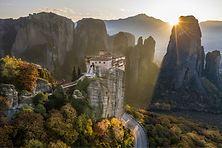
To the north, the enormous rock formations of Meteora rise abruptly above the Thessalian plain. The combination of geology, monasteries, cliffs, and mountain views creates one of the most recognizable landscapes in Greece and places it within easy reach of Trikala.
Local Cuisine
Trikala's cuisine reflects the agricultural and pastoral traditions of Thessaly, a region known for livestock farming, dairy products, grains, vegetables, and produce from the fertile Thessalian plain. Traditional tavernas feature grilled meats, slow-cooked dishes, pies, cheeses, and seasonal ingredients.
Meat and dairy products play an especially important role in the wider region. Lamb, pork, sausages, feta and other cheeses are common, while handmade pies filled with cheese, greens, meat, or other ingredients reflect the culinary traditions found throughout inland Thessaly.
The mountain villages around Trikala add another dimension to the region's food culture. Taverns in places such as Elati and Pertouli often emphasize hearty mountain cooking, including grilled meats, stews, pies, mushrooms, cheeses, and locally produced ingredients.
History
Trikala occupies the site of ancient Trikka, an important city of Thessaly with particularly strong associations with Asclepius, the ancient Greek god of medicine. Ancient traditions regarded Trikka as one of the most important centers connected with his worship.
The city continued to develop through the Byzantine period, when its fortress became an important defensive structure. The historic Varousi neighborhood beneath the castle preserves part of the urban character that developed around this fortified center.
During centuries of Ottoman rule, Trikala remained an important regional city. The Koursoum Mosque, designed by Mimar Sinan in the 16th century, is one of the most significant surviving monuments from this period.
Trikala became part of the modern Greek state in 1881, along with much of Thessaly. During the 20th and 21st centuries, the city developed into an important commercial and agricultural center and gained a reputation for experimenting with cycling infrastructure, technology, and urban development.
Best Time to Visit
Trikala can be visited throughout the year, with spring and autumn providing especially comfortable conditions for exploring the city, Meteora, archaeological sites, and surrounding mountain villages. The Thessalian landscape is particularly green during spring.
Summer can become hot on the plain, but the higher elevations around Elati and Pertouli provide cooler conditions and opportunities for mountain escapes. Early mornings and evenings are generally the most comfortable times to explore Trikala itself during periods of intense heat.
Winter is an important travel season for the region. Mountain villages become popular for snow, fireplaces, traditional tavernas, and winter weekends, while Trikala hosts the Mill of the Elves, one of Greece's largest Christmas attractions, drawing visitors from across the country during the holiday season.
Editor's Insider Tips
Spend time along the Lithaios River and in Varousi rather than limiting yourself to the commercial center. These areas provide a better sense of Trikala's character and history.
If you are visiting Meteora, consider spending time in Trikala rather than treating the entire region as a quick stop. The combination of Trikala, Meteora, and the mountain villages to the west creates a much more varied central Greece itinerary.
Head toward Elati and Pertouli if you have an extra day. The transition from the flat Thessalian plain into forests and mountain landscapes happens quickly, and the villages provide a completely different experience from the city.
Finally, experience Trikala on foot or by bicycle when you are in the center. Its river, bridges, pedestrian streets, and cycling culture are central to the city's identity and make it one of the easier regional Greek cities to explore without a car.
Frequently Asked Questions
1. How do I get to Trikala?
Trikala is located in Thessaly in central Greece and is accessible from Athens, Thessaloniki, and other cities throughout the country.
By Car: The drive from Athens takes approximately 3.5 to 4 hours, while Thessaloniki is around 2.5 hours away.
By Train: Rail connections serve the Thessaly region, although services and routes can change, so current schedules should be checked before traveling.
By Bus: Intercity KTEL buses connect Trikala with Athens, Thessaloniki, and other destinations throughout Greece.
2. What is Trikala known for?
Trikala is known for its riverfront, cycling culture, historic neighborhoods, and location near Meteora and the mountains of western Thessaly.
Litheos River: The river passes directly through the center and is crossed by several bridges.
Cycling: Trikala is one of Greece's most bicycle-friendly cities, with cycling playing a significant role in everyday transportation.
Location: The city is well positioned for exploring Meteora, mountain villages, and other destinations across western Thessaly.
3. What are the must-see attractions in Trikala?
Many of Trikala's main attractions are concentrated around the city center and can easily be explored on foot.
Trikala Fortress: The Byzantine fortress overlooks the city and contains a clock tower with panoramic views.
Varousi: The historic neighborhood beneath the fortress is known for traditional houses, narrow streets, and old churches.
Litheos River: Walking along the river and across its bridges is one of the best ways to experience central Trikala.
Asclepieion: Ancient Trikka was associated with Asclepius, the Greek god of medicine, and archaeological remains can be found within the modern city.
4. Is Trikala worth visiting?
Yes. Trikala offers a different experience from Greece's major tourist destinations and works particularly well as part of a trip through Thessaly.
City Life: The pedestrian center, riverfront, cafés, restaurants, and cycling culture give Trikala a relaxed atmosphere.
History: Byzantine landmarks and archaeological remains are integrated into the modern city.
Surrounding Region: Meteora and the mountains west of Trikala add considerably more to what you can experience while staying in the area.
5. Do I need to rent a car in Trikala?
You can comfortably explore Trikala itself without a car, but having one gives you considerably more freedom once you leave the city.
City Center: Much of central Trikala is pedestrian-friendly, and cycling is also a popular way to get around.
Outside the City: Mountain villages, monasteries, natural areas, and smaller destinations are spread throughout the surrounding region.
Road Trips: Your own transportation is particularly useful if you plan to combine Trikala with several destinations across western Thessaly.
6. Can I visit Meteora from Trikala?
Yes. Meteora is close enough to Trikala to visit easily during your stay.
Distance: Kalambaka, the town beneath Meteora, is approximately 20 kilometers northwest of Trikala.
Monasteries: The famous monasteries are built on and among enormous rock formations overlooking Kalambaka and Kastraki.
Day Trip: You can spend the day exploring Meteora and return to Trikala in the evening.
7. What are the best day trips from Trikala?
Trikala is surrounded by mountains, villages, historical sites, and some of Thessaly's most impressive landscapes.
Meteora: Explore the monasteries, rock formations, viewpoints, Kalambaka, and Kastraki.
Elati: A mountain village surrounded by forests and a popular destination throughout the year.
Pertouli: Known for its mountain scenery, meadows, forests, and outdoor activities.
Pyli: Located at the entrance to the mountains west of Trikala and known for its historic stone bridge and surrounding landscape.
8. What is the best time to visit Trikala?
Trikala is a year-round destination, with the surrounding mountains giving each season a different character.
Spring: Mild temperatures and green landscapes make it an excellent time for exploring both the city and countryside.
Summer: Warm weather works well for city sightseeing and trips into the cooler mountain areas.
Autumn: Cooler temperatures and changing mountain scenery make this a particularly attractive season for road trips.
Winter: Trikala becomes especially popular during the Christmas season, while the nearby mountains attract visitors for winter escapes.
9. What should I eat in Trikala?
Trikala's cuisine reflects the agricultural and pastoral traditions of Thessaly, with meat, cheeses, pies, and locally produced ingredients featuring prominently.
Local Meats: Grilled and roasted meats are common throughout Trikala and the surrounding mountain villages.
Pies: Traditional pies filled with cheese, greens, vegetables, or meat are an important part of Thessalian cooking.
Local Cheeses: Feta and other cheeses produced throughout Thessaly appear frequently in local dishes.
Mountain Cuisine: Tavernas in the villages west of Trikala often specialize in hearty dishes suited to the region's mountain environment.
10. How many days should I stay?
Trikala itself can be explored relatively quickly, but its location makes it a useful base for discovering western Thessaly.
1 Day: Enough to explore the riverfront, fortress, Varousi, and central Trikala.
2 to 3 Days: Gives you time to add Meteora or some of the nearby mountain villages.
4 Days or More: Works well if you want to explore Trikala, Meteora, and several destinations throughout the surrounding mountains.
Browse Tours and Activities near Trikala