


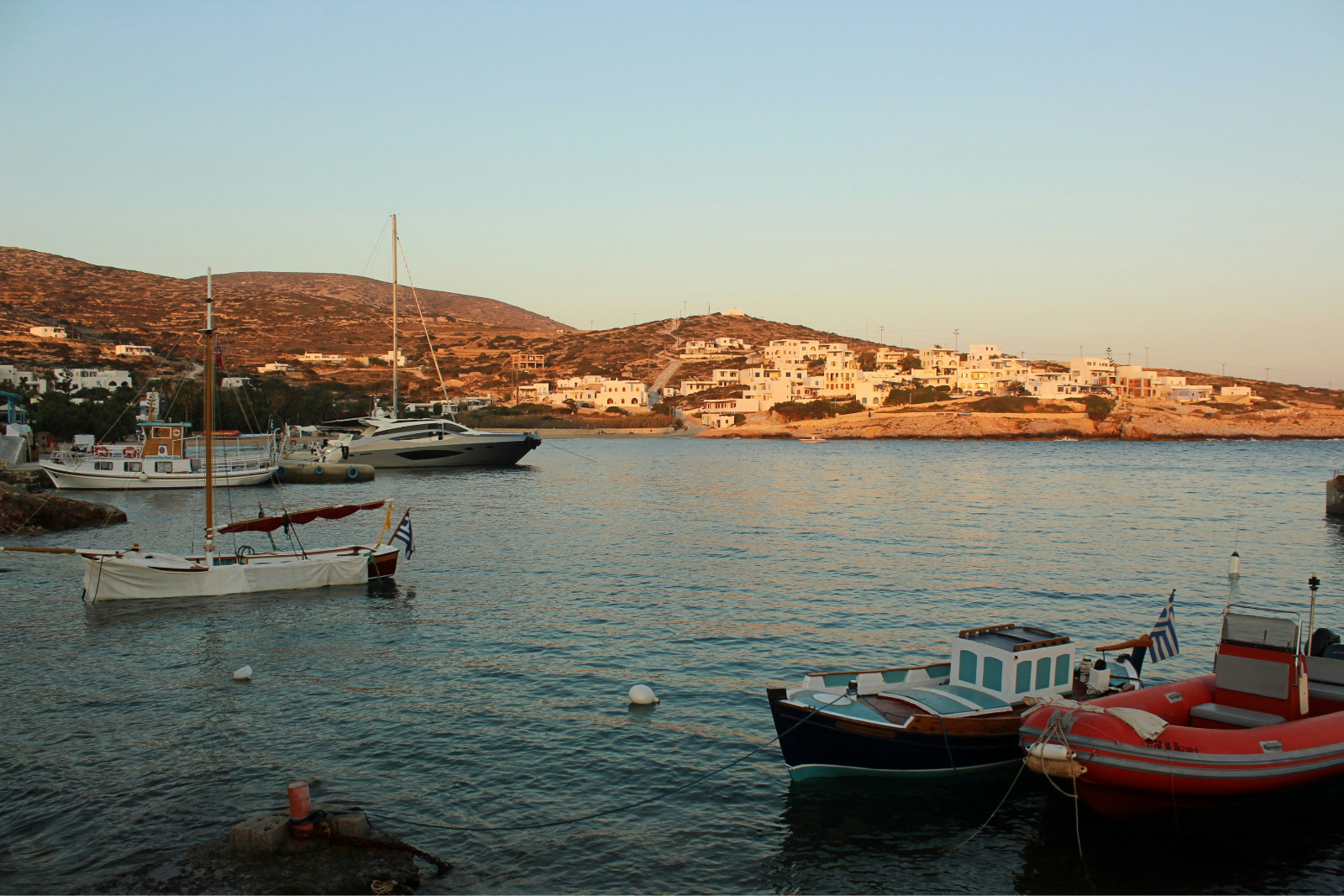
Weather in Donoussa in January
January is the heart of winter in Donoussa: cool and often wet. Temperatures typically peak at around 14°C / 58°F in the afternoon and fall to about 10°C / 50°F at night. Rain falls on around 9 days, with about 79 mm in total, usually in bursts rather than all-day drizzle. The sea averages about 17°C / 63°F, cold enough that only hardy swimmers go in. Donoussa is a small, remote island east of Naxos, exposed to the wind on most sides. Strong northerly and southerly winds are common, and the sea can stay rough for days at a time. Days bring around 10 hours of daylight, so plan sightseeing for the middle of the day. Bring a warm coat, layers, an umbrella and shoes that can cope with rain. Weather can change quickly at this time of year, so check the forecast before a long day out. Plan outdoor time around the middle of the day, when it's at its warmest.
Swimming in Donoussa in January
The sea around Donoussa averages about 17°C / 62°F in January, which is cold for swimming, though a few hardy locals still take a dip. The best time for swimming is July, August and September, with August usually the warmest. Beaches like Kedros and Livadi are still worth a visit for the scenery and a walk along the shore. Beaches are empty and unstaffed in winter, so swim only in calm conditions. If you do go in, a wetsuit is a good idea.
Crowds & Prices in Donoussa in January
You'll have Donoussa largely to yourself in January. Rooms are cheap, but only a handful stay open. With so few visitors, the atmosphere is genuinely local, and people have time to chat. Tavernas that stay open cater mainly to locals, which is often when the food is best. Check that your accommodation is open before you travel, as many places close for winter.
What's Open in Donoussa in January
In January, ferries between Piraeus and Rafina and Donoussa run on a reduced winter timetable, and storms sometimes cause cancellations. Only a handful of rooms and one or two tavernas stay open, and some days almost nothing is. Archaeological sites and museums keep shorter winter hours. Most sites close on 1 January. Cash is useful, as smaller places may not take cards.
Festivals & Holidays in Donoussa in January
New Year's Day is a public holiday, celebrated with family meals and vasilopita, a cake with a lucky coin baked inside. On 6 January, Epiphany, priests bless the waters, and young swimmers dive in to retrieve a cross thrown into the sea. Locals in Donoussa mark these dates in the traditional way, and visitors are welcome to join in. Beyond that, it's a month of everyday life, with locals filling the cafés and tavernas in the evenings.
Is January a Good Time to Visit Donoussa?
January is only worth it if you want total peace. Expect highs of around 14°C / 58°F and lows near 10°C / 50°F. Donoussa is at its quietest, with most rooms and tavernas closed, fewer ferries and changeable weather. It suits travelers who want to experience island life at its most local and don't mind simple comforts. For almost everyone else, June, September or October would be a far better time to visit.
Frequently Asked Questions
What time does the sun set in Donoussa in January?
Sunset in Donoussa is at around 5:10 pm at the start of January, around 5:20 pm in mid-January and around 5:40 pm by the end of the month, in Greek local time. With short days, plan outdoor sightseeing for the morning and early afternoon.
Is the sea rough in Donoussa in January?
It can be. January is one of the stormiest months in the Aegean, and strong northerly or southerly winds regularly whip up rough seas. On the worst days, ferries and small boats are delayed or cancelled, so leave a spare day before any flight home. Calm, sunny spells between storms are common too.
Is January a good time for walking on Donoussa?
Yes, on dry days. Walking in January can be very rewarding, with clear air and empty paths, but days are short, trails can be muddy after rain and the wind can be strong on exposed ground. Start early, carry a warm layer and check the forecast. Waymarked paths link the villages with the beaches.
Do I need a car on Donoussa in January?
No. Donoussa is small enough to explore on foot, and the distances between the harbor, village and beaches are short. In January, seasonal minibuses and beach boats usually don't run, so be ready to walk and bring sturdy shoes.
Is January or February better for visiting Donoussa?
There's little between them. Both are the heart of the off-season, with cool, changeable weather and a quiet, local feel. February brings slightly longer days, the first almond blossom and often the start of carnival season, while January has Epiphany on 6 January. Choose by your dates, and keep ferry plans flexible.

Donoussa Weather by Month
