


Greece's Oldest Land Registry Goes Digital: What Property Owners Abroad Need to Know

For almost a century, two seaside districts of southern Athens lived under their own property rules. This week that chapter closed. On Wednesday, October 7, 2026, Kallithea and the surveyed part of Palaio Faliro moved fully onto the national digital system of the Hellenic Cadastre (Ktimatologio), as eKathimerini reported on October 9.
If your family has an apartment near Syngrou Avenue, a plot your grandparents bought in Faliro, or a share of an inherited home anywhere in Greece, this is more than a local story. It is a reminder that Greek property records now live online, and that the record attached to your family's property may need your attention, even if you live in New York, Melbourne or Toronto.
Here is what changed, why it matters to Greeks abroad, and what you can do about it from home.
Greece's oldest land registry finally joins the national system
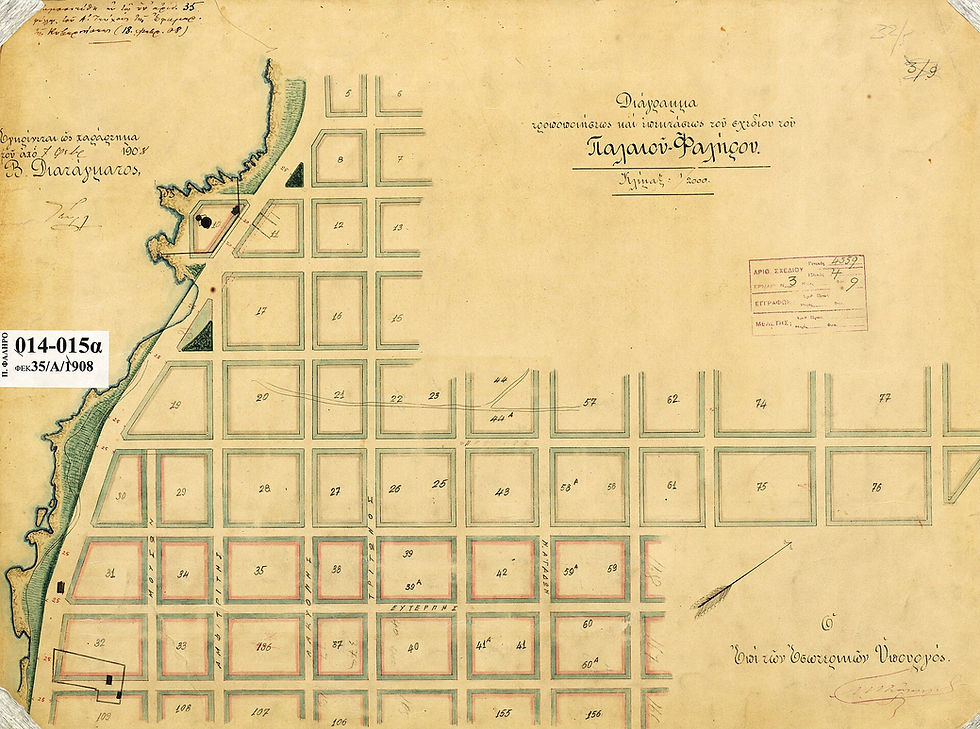
Kallithea and part of Palaio Faliro were unusual. Back in 1923 the state set up the so-called Capital Cadastre there, the country's first organized attempt to map urban property. While the rest of Greece relied on the old transcription and mortgage offices (the ypothikofylakeia), these neighborhoods kept their own separate register. According to Kathimerini's Greek edition, owners at the time paid two drachmas per square meter to have their land recorded.
A move into the modern national cadastre was announced as far back as 2008, but it only happened now. The Hellenic Cadastre says in its October 8 press release (in Greek) that the switch adds 162,301 properties and 269,097 property rights to its database. With that, every municipality in the Southern Athens regional unit is now fully on the system.
The old transcription-and-mortgage system in these two areas has been abolished and replaced by the cadastral system under Law 2664/1998, as Lawspot summarized. Kallithea properties are now handled by the Kallithea branch of the Athens Cadastral Office, and Palaio Faliro properties by the Palaio Faliro branch of the Piraeus & Islands office.
What 'fully digital' means in practice
For owners, the biggest change is that you no longer need to stand in a queue at a land registry office. Based on the Cadastre's announcement:
Notarial deeds, court documents (via bailiffs) and filings from public bodies such as the tax authority (AADE) are submitted electronically.
Lawyers handle registrations such as pre-notations of mortgage and the deletion of encumbrances online.
Searches of the cadastral database happen over the internet, and applications for corrections, obvious-error fixes, certificates and copies can be filed 24 hours a day.
The old revenue stamps on applications and certificates are gone, and payments are made only by e-banking or card (POS).
Where an in-person search is still needed, offices nationwide now share the same hours: 08:30 to 13:30, Athens time.
Two online tools are worth bookmarking. The digital map lets you locate a property and see whether anything in its record needs correcting. The metavoles platform, live since September, lets owners, engineers and bailiffs correct boundaries and surface areas on cadastral diagrams entirely online.
The bigger picture: almost all of Greece by early 2027
Kallithea and Faliro are a symbolic milestone, not the finish line. Nationwide, about 76% of the country already operates on the digital system, and officials are aiming for 99% by the end of 2026, according to eKathimerini. The last pieces, including the Dodecanese areas that were mapped under Italian rule, such as Rhodes and Kos, are expected to follow in early 2027.
That matters for the diaspora because the old excuse, 'our village isn't in the cadastre yet,' is quickly disappearing. Once an area goes live, the cadastral record becomes the reference point for any sale, inheritance, mortgage or dispute. If that record is wrong or incomplete, fixing it tends to get slower and costlier the longer it waits.
Why this matters if you own property in Greece from abroad
Many Greeks abroad hold property they have never formally dealt with: a parent's apartment, a share of a family house, a field in the village. Common problems we see include properties registered to a grandparent who passed away decades ago, inheritances that were never formally accepted and registered, wrong surface areas, and plots recorded under an 'unknown owner.' Each of these can block a future sale or transfer.
A digital, all-online registry is good news here. Most steps can now be handled remotely through a Greek lawyer or engineer acting under a power of attorney, without flying to Athens. You will usually need a Greek tax number (AFM) and, for the online services, access to the government's TAXISnet credentials.
A practical checklist for Greeks abroad
Find out where your family's property is and pull its cadastral record, including the KAEK, the unique property code.
Check that the owners, ownership shares and surface area match your deeds and your family's understanding.
If someone has passed away, confirm the inheritance was formally accepted and registered. If not, start the process. Our Greek property inheritance guide walks through the steps.
Make sure you have an AFM and that your tax affairs are in order, since property and ENFIA obligations follow the record. See our ENFIA explainer.
Use the digital map to spot errors early, and correct them before a sale or transfer forces the issue.
How GetGreece can help
If you're not sure what's registered in your family's name, or you'd rather not chase Greek offices from another time zone, GetGreece can help. We work with trusted lawyers and engineers in Greece to check cadastral records, settle and register inheritances, and get your tax file in order, all remotely by power of attorney. Learn more about our property inheritance service and our tax representation service, or reach out at info@getgreece.com.
The 1923 Capital Cadastre was ahead of its time. A century later, the rest of Greece is catching up, and the families who check their records now will be the ones with the fewest surprises later.
Sources: eKathimerini, Hellenic Cadastre press release (Greek, PDF), Kathimerini (Greek), Lawspot (Greek).
Cover image: 1908 urban plan of Palaio Faliro, public domain, via Wikimedia Commons. This article is general information, not legal advice.


