


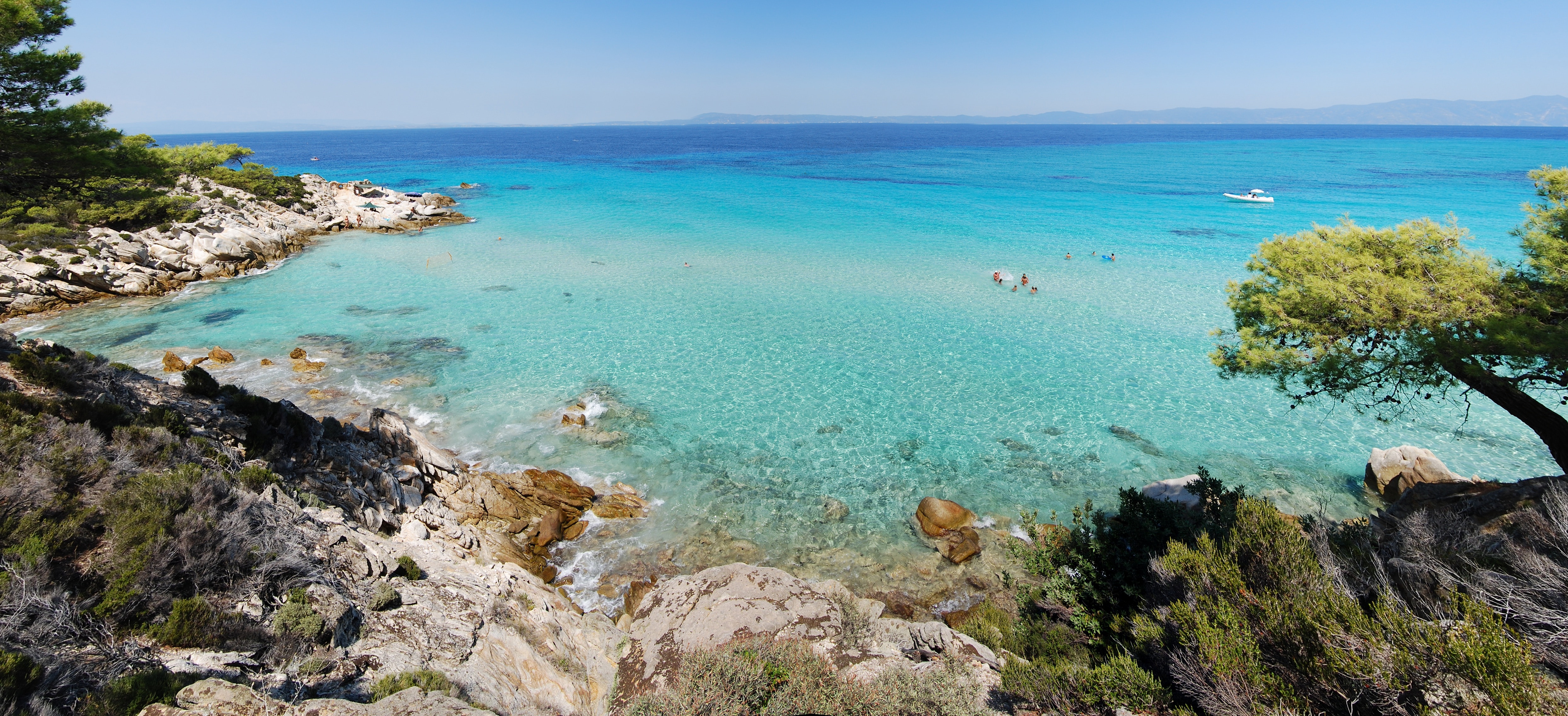
Weather in Chalkidiki in January
January is the heart of winter in Chalkidiki: cold and fairly changeable. Average highs reach 10°C / 49°F, with lows of around 2°C / 36°F. Nights are chilly, so bring something warm for the evenings. The sea averages about 14°C / 57°F, cold enough that only hardy swimmers go in. Rain falls on around 5 days, adding up to about 28 mm over the month. Chalkidiki's three peninsulas are lined with pine forests and sandy beaches, and their shallow bays warm up quickly in summer. Cold snaps from the north can bring frost, icy winds and a dusting of snow. Days bring around 9½ hours of daylight, so plan sightseeing for the middle of the day. Bring a warm winter coat, a hat, gloves and sturdy, waterproof footwear. Weather can change quickly at this time of year, so check the forecast before a long day out. Plan outdoor time around the middle of the day, when it's at its warmest.
Swimming in Chalkidiki in January
Swimming isn't really on the cards in Chalkidiki in January, with the water at around 14°C / 57°F. For warm-water swimming, aim for July and August, when the sea is at its best. Beaches like Karydi and Kavourotrypes on Sithonia are still worth a visit for the scenery and a walk along the shore. Beaches are empty and unstaffed in winter, so swim only in calm conditions. A wetsuit makes a big difference if you want to get in.
Crowds & Prices in Chalkidiki in January
You'll have Chalkidiki largely to yourself in January. Rates for rooms and car hire drop to their yearly lows. It's a good time to see everyday life, away from the summer bustle. Tavernas that stay open cater mainly to locals, which is often when the food is best. With so few visitors, the atmosphere is genuinely local, and people have time to chat. You can usually book at short notice.
What's Open in Chalkidiki in January
Buses run from Thessaloniki to Chalkidiki all year, including in January, though less often in winter. Most hotels, restaurants and bars close for the winter, and only a few places stay open for locals. Museums and archaeological sites are open on winter hours. Most sites close on 1 January. Cruises around Mount Athos stop for the winter. Cash is useful, as smaller places may not take cards.
Festivals & Holidays in Chalkidiki in January
New Year's Day is a public holiday, celebrated with family meals and vasilopita, a cake with a lucky coin baked inside. On 6 January, Epiphany, priests bless the waters, and young swimmers dive in to retrieve a cross thrown into the sea. Locals in Chalkidiki mark these dates in the traditional way, and visitors are welcome to join in. Outside these dates, it's a good time to experience ordinary Greek life, from the weekly market to the evening stroll.
Is January a Good Time to Visit Chalkidiki?
Yes, if you're after a quiet, local-feeling trip. Expect highs of around 10°C / 49°F, lows near 2°C / 36°F and rain on around 5 days. In January, Chalkidiki is ideal for exploring its three peninsulas, museums and long lunches, with few other visitors around. Don't come for swimming or nightlife, though. For sun and sea with fewer crowds than summer, choose June, September or October.
Frequently Asked Questions
What time does the sun set in Chalkidiki in January?
In early January, the sun sets in Chalkidiki at around 5:10 pm. By mid-month it's around 5:20 pm, and by the end of January around 5:40 pm. All times are Greek local time. With short days, plan outdoor sightseeing for the morning and early afternoon.
Does it snow in Chalkidiki in January?
Sometimes. Northern Greece has proper winters, and cold northerly winds can bring snow for a day or two, although it rarely settles for long near the coast. The nearby mountains are usually snow-covered. Pack a warm coat, gloves and waterproof shoes.
Can I take a boat cruise along Mount Athos in January?
Probably not. Boat trips to the Mount Athos cruise mostly run from late spring to autumn, so in January there are few or no regular departures, and rough seas can stop small boats anyway. If it's a must, ask locally about a private boat on a calm day. Cruises leave from Ouranoupoli and stay offshore, since only men with a special permit may enter the monastic state.
Do I need a car in Chalkidiki in January?
Yes. Chalkidiki spreads over three long peninsulas, and buses from Thessaloniki mainly serve the bigger resorts, so a car is by far the easiest way to get around. In January, many resorts are closed and buses are infrequent, so a car is essential.
Is January or February better for visiting Chalkidiki?
There's not much in it. Both are quiet winter months with cool, changeable weather. February has slightly longer days and often the start of carnival season, while January is the quietest month of the year. Either works for a relaxed, local-feeling trip.

Chalkidiki Weather by Month
