


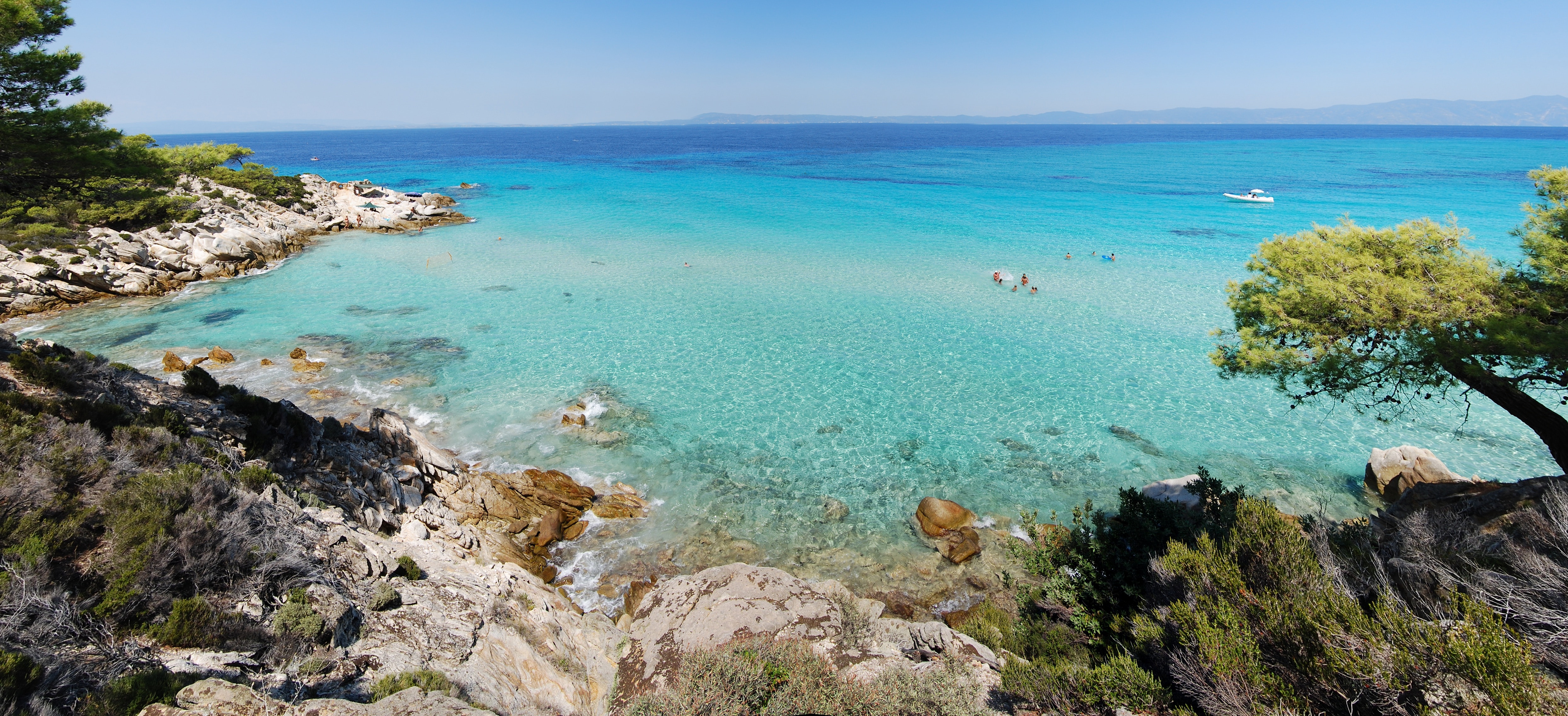
Weather in Chalkidiki in March
March in Chalkidiki means early-spring conditions: cool and often wet. Temperatures typically peak at around 15°C / 59°F in the afternoon and fall to about 5°C / 41°F at night. Nights feel cold, so warm layers matter. Expect rain on around 7 days and about 47 mm over the month, often in heavy bursts with dry spells between them. The sea averages about 14°C / 57°F, too cold for most people to swim. Chalkidiki's three peninsulas are lined with pine forests and sandy beaches, and their shallow bays warm up quickly in summer. Spring arrives later here than in southern Greece, and the weather can change quickly. Daylight lasts about 12 hours. Bring a warm coat, layers, an umbrella and shoes that can cope with rain. The weather can change from one day to the next, so check the forecast before planning a long day out. Plan outdoor time around the middle of the day, when it's at its warmest.
Swimming in Chalkidiki in March
The sea around Chalkidiki averages about 14°C / 57°F in March, which is cold for swimming, though a few hardy locals still take a dip. Save swimming plans for July and August, when the water is much warmer. Beaches such as Karydi and Kavourotrypes on Sithonia are lovely for a walk, even when the water is too cold to swim. Beaches are empty and unstaffed in winter, so swim only in calm conditions. A wetsuit makes a big difference if you want to get in.
Crowds & Prices in Chalkidiki in March
Tourism in Chalkidiki slows right down in March. It's the cheapest time to visit, with the best deals on accommodation. Tavernas that stay open cater mainly to locals, which is often when the food is best. It's a good time to see everyday life, away from the summer bustle. With so few visitors, the atmosphere is genuinely local, and people have time to chat. You can usually book at short notice.
What's Open in Chalkidiki in March
In March, towns in Chalkidiki like Polygyros and Nea Moudania carry on as normal. Most hotels, restaurants and bars close for the winter, and only a few places stay open for locals. Archaeological sites and museums keep shorter winter hours. Most sites close on 25 March. Cruises around Mount Athos stop for the winter. Check opening days before setting out, as some places open only at weekends.
Festivals & Holidays in Chalkidiki in March
If Clean Monday falls in March, expect kite flying on hillsides and beaches, and meatless picnics. 25 March is Independence Day, a national holiday with school and military parades, and it's traditional to eat fried salt cod with garlic sauce. In Chalkidiki, these occasions are celebrated much as they are across the rest of Greece. Beyond that, it's a month of everyday life, with locals filling the cafés and tavernas in the evenings.
Is March a Good Time to Visit Chalkidiki?
Yes, as long as you don't expect beach weather. In numbers: highs of about 15°C / 59°F, lows of 5°C / 41°F and rain on around 7 days in a typical March. March in Chalkidiki brings fresh, spring conditions that are ideal for exploring on foot, with few visitors around. Some hotels and tavernas may still be closed. If warm water is a priority, June, September or October would be a better choice.
Frequently Asked Questions
What time does the sun set in Chalkidiki in March?
In early March, the sun sets in Chalkidiki at around 6:15 pm. Clocks go forward an hour on the last Sunday of March, so by the end of the month sunset is around 7:50 pm. All times are Greek local time. Evenings cool quickly after sunset, so bring a layer.
Is it warm in Chalkidiki in March?
Not yet. March is still cool in northern Greece, and a late cold snap is possible, although the days get longer and milder as the month goes on. Pack a warm jacket for the evenings and a waterproof layer for showers.
Can I take a boat cruise along Mount Athos in March?
Probably not. Boat trips to the Mount Athos cruise mostly run from late spring to autumn, so in March there are few or no regular departures, and rough seas can stop small boats anyway. If it's a must, ask locally about a private boat on a calm day. Cruises leave from Ouranoupoli and stay offshore, since only men with a special permit may enter the monastic state.
Do I need a car in Chalkidiki in March?
Yes. Chalkidiki spreads over three long peninsulas, and buses from Thessaloniki mainly serve the bigger resorts, so a car is by far the easiest way to get around. In March, many resorts are closed and buses are infrequent, so a car is essential.
Is March or April better for visiting Chalkidiki?
April is the better bet for weather, with warmer, sunnier days and spring in full bloom. It often includes Greek Easter, a highlight of the year but a busy time. March is quieter and cheaper, but still cool and changeable.

Chalkidiki Weather by Month
