


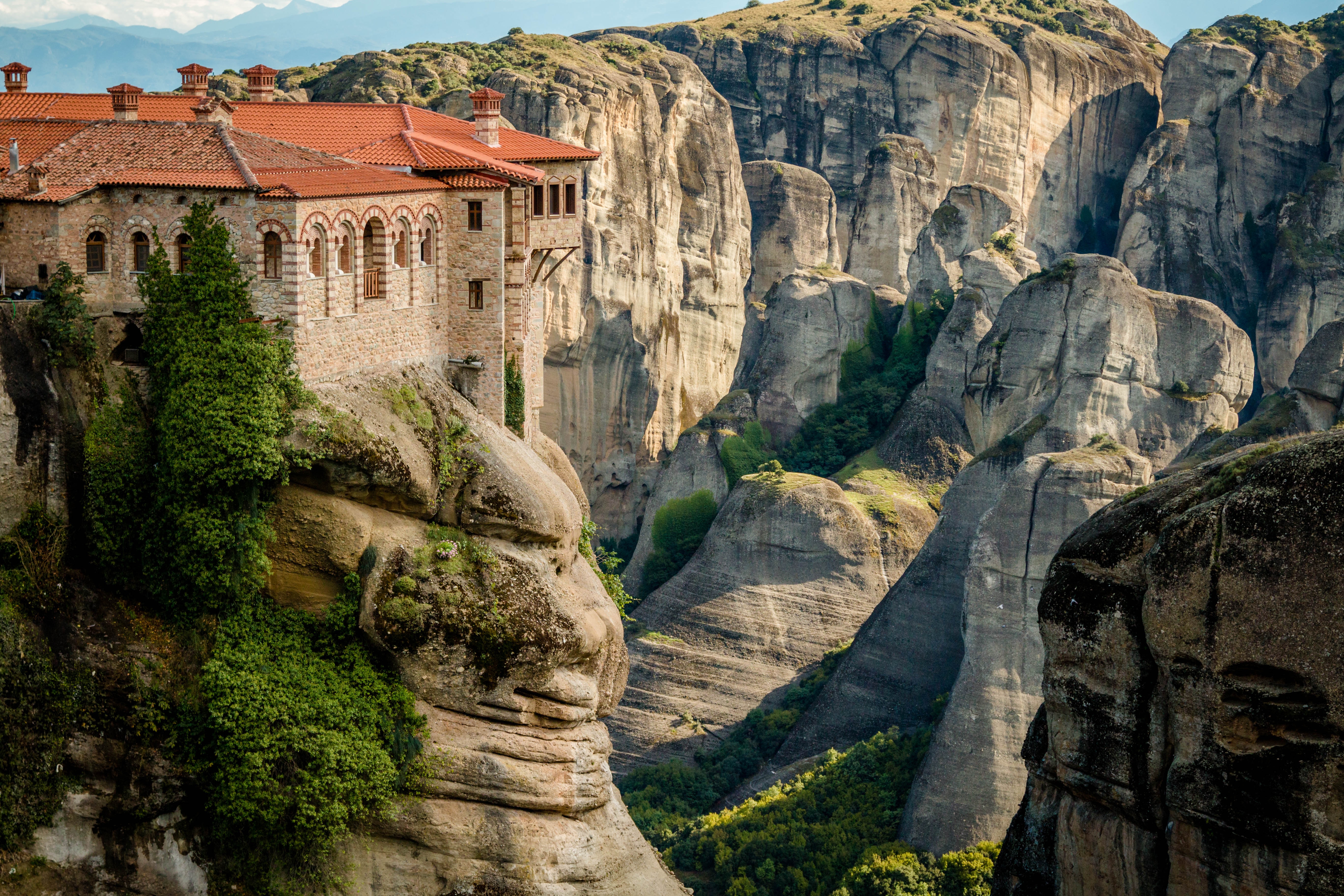
Weather in Meteora in July
Expect hot, mostly dry weather in Meteora in July, the height of summer. Temperatures typically peak at around 34°C / 92°F in the afternoon and fall to about 19°C / 65°F at night. With no sea to cool things down, there's a big swing between the heat of the afternoon and the cooler night. Rain falls on around 3 days, adding up to about 20 mm over the month. Meteora's rock pillars rise above the town of Kalambaka at the edge of the Thessalian plain, where summers are hot and winters cold. Far from any sea breeze, the inland plains are among the hottest places in Greece in summer. You get about 14½ hours of daylight a day, leaving long, light evenings. Pack light, breathable clothes, a sun hat, high-factor sunscreen and sunglasses. Plan sightseeing for the early morning or evening, and keep the midday hours for shade and a long lunch.
Swimming in Meteora in July
There's no sea in Meteora, so swimming means a trip to the Aegean coast, about two hours' drive away. The coast there averages around 26°C / 78°F in July, so the water there is warm enough for a proper swim. For the best swimming, aim for July and August, when the sea is at its warmest. A seafood lunch by the water makes the drive worthwhile. Go early to beat the traffic and find space on the beach.
Crowds & Prices in Meteora in July
July is peak season in Meteora, and the busiest spots are crowded. Hotel prices are at their highest of the year. The crowds concentrate at the biggest monasteries by mid-morning, so for a calmer experience, start early, before the tour buses arrive. Staying slightly outside the main town usually means better value and more space. Book early, as the best-value rooms go first.
What's Open in Meteora in July
Kalambaka, below Meteora, keeps running in July, with buses and trains from Athens and Thessaloniki. Everything is open, from hotels and tavernas to beach bars and boat trips. Museums and sites are open on extended summer hours. Shops in tourist areas often stay open into the evening. Opening hours are long, with many tavernas serving until late. Most attractions run on their full seasonal schedules.
Festivals & Holidays in Meteora in July
Saint days such as Prophet Elias on 20 July bring feasts to chapels across the country, often on hilltops. July is the start of the panigyri season, when villages celebrate their saints' days with music, dancing and long tables of food, often late into the night. In Meteora, as across Greece, these traditions are very much alive. Summer evenings are the time for festivals, open-air cinemas and late dinners outdoors.
Is July a Good Time to Visit Meteora?
July is fine for Meteora if you can handle the heat. Expect highs of around 34°C / 92°F, lows near 19°C / 65°F and rain on around 3 days. Inland temperatures peak in summer, so plan sightseeing for early morning and evening and rest at midday. It suits travelers combining the area with a trip to the coast. For more comfortable conditions, May, June, September or October would be better.
Frequently Asked Questions
What time does the sun set in Meteora in July?
In early July, the sun sets in Meteora at around 9:05 pm. By mid-month it's around 9:00 pm, and by the end of July around 8:50 pm. All times are Greek local time. The long evenings leave plenty of daylight after the heat of the day.
How hot does Meteora get in July?
Very hot at times. Inland areas away from sea breezes are among the hottest parts of Greece in July, and heatwaves are common. Midday can be too hot for sightseeing, so start early, rest in the shade in the afternoon and head out again in the evening.
Can I visit the Meteora monasteries in July?
Yes, but July is busy and hot. Go early, before tour groups arrive, and check the opening days. Dress modestly, with shoulders and knees covered. Each monastery closes on one or two days a week, and not all on the same day.
Do I need a car to visit Meteora in July?
Not strictly. Kalambaka, the town below the rocks, is easy to walk around, but the monasteries are spread along a winding road above it, so a car or taxi makes them far easier to reach. Walking paths from Kalambaka and Kastraki are another option. In July, start early, before the heat and the tour buses.
Is July or August better for visiting Meteora?
There's little to choose between them, as both are hot inland, with frequent heatwaves. August may bring the odd cooling thunderstorm late in the month, and many Greeks return to their home towns and villages around 15 August, which makes it a lively time for local festivals.

Meteora Weather by Month
