


Saint Nicholas Cathedral of Pittsburgh
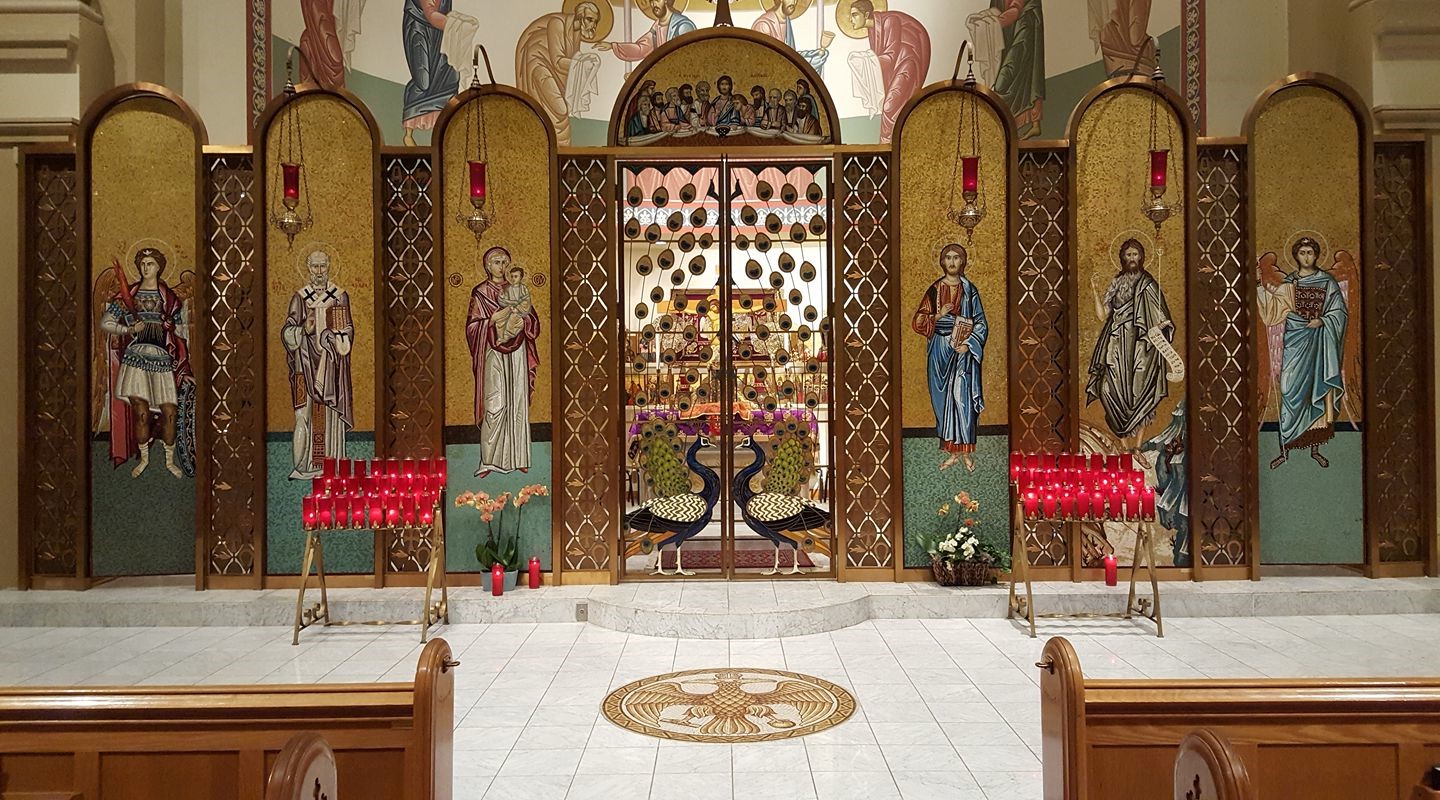
Saint Nicholas Cathedral of Pittsburgh serves the Orthodox Christian community of Pittsburgh, Pennsylvania, offering regular worship services and preserving Greek Orthodox faith, traditions, and community life in the region.
Clergy:
Rev. Economos Eleftherios Constantine, Dean; Rev. Deacon Robert Lykos
Church Type:
Cathedral
Denomination:
Greek Orthodox
Metropolis:
Metropolis of Pittsburgh
Affiliation:
Greek Orthodox Archdiocese of America
Ecumenical Patriarch:
Bartholomew I of Constantinople
Clergy Information updated Jan 2026
History
Saint Nicholas Greek Orthodox Cathedral of Pittsburgh traces its membership to the turn of the twentieth century, when the first Greek immigrants made their way to the city. Among them were men enlisted by Pittsburgh's early industrialists to paint the buildings and smokestacks of the iron and steel mills. The Greek Orthodox faithful of Pittsburgh began worshipping together as early as 1906, moving through a succession of temporary quarters: the second floor of a building at 512 Court Place in Downtown Pittsburgh, a church building at 95 Fullerton Street in Uptown, and another second floor hall at 645 Sixth Avenue. In September 1918, a merger with the Annunciation Church united the city's Greek Orthodox faithful under a single name, the Greek Community of Allegheny County, Saint Nicholas Greek Orthodox Church, founded with the explicit purpose of setting firm the foundations for the future perpetuation of the faith and heritage by establishing Greek and Sunday schools.
The parish's permanent home came in 1923, when the congregation purchased the building at 419 South Dithridge Street in Pittsburgh's Oakland neighborhood, a Neo-Classical structure designed by architect Thomas Hannah and built in 1904 for the First Congregational Church, which had vacated it in 1921. The coincidence of the building's Ionian columns delighted many of the young Greek immigrants, who found it entirely fitting that their Greek Orthodox church should have a Greek facade. Archbishop Iakovos, in one of his many visits to the Cathedral in later years, remarked that no other Greek Orthodox church in the United States had a comparable location, situated within blocks of Pittsburgh's great cultural, educational, and medical institutions. A World War II memorial standing in front of the Cathedral attests to the large contribution the congregation made to the war effort.
In 1955, under Archbishop Michael of North and South America, Pittsburgh became the seat of the Sixth Archdiocesan District, and Saint Nicholas was elevated to the rank of Cathedral, a status it has held ever since. The Cathedral was designated a Pittsburgh Historic Landmark in 1982, and its interior, rich with paintings and mosaics, is one of the most distinguished Orthodox ecclesiastical interiors in western Pennsylvania.
Saint Nicholas Greek Orthodox Cathedral at 419 South Dithridge Street in the Oakland neighborhood serves the Orthodox Christian faithful of greater Pittsburgh as the mother church and seat of the Greek Orthodox Metropolis of Pittsburgh within the Greek Orthodox Archdiocese of America, the oldest and largest Greek Orthodox parish in the region and the center of Orthodox Christian life in western Pennsylvania for more than a century.
This page serves as a reference resource for Saint Nicholas Cathedral of Pittsburgh, providing essential information such as location, contact details, clergy, and church affiliation. It is intended to help visitors and members of the Orthodox Christian community easily find accurate parish information in one place.
How to Get To Saint Nicholas Cathedral

Frequently Asked Questions
How do I register as a member at a Greek Orthodox parish?
Parish membership is generally established by registering with the church office. Each parish may have its own process for enrollment and participation in parish life.
Can I attend services if I am not a registered member of the parish?
Greek Orthodox churches welcome visitors and non-members to attend services. Participation in sacraments may require coordination with the parish and priest.
How do I contact the parish priest for pastoral matters?
Pastoral requests are typically handled by the parish priest. The parish office can assist with contact details and help coordinate appointments or inquiries.
How do I register to baptize my child in the Greek Orthodox Church?
Baptism requests are handled by the local parish. The church will usually require documentation from the parents and godparent, along with coordination with the priest to schedule the baptism.
How do I request a wedding date at my Greek Orthodox church?
Wedding dates are scheduled through the parish office and priest. Availability depends on the church calendar, fasting periods, and parish guidelines, so it is recommended to inquire well in advance.
How do I obtain a copy of my Greek Orthodox marriage certificate?
Marriage certificates are typically issued by the church where the sacrament took place. To request a copy, contact the parish office directly and ask what information or identification is required.
How do I obtain a copy of my Greek Orthodox baptismal certificate?
Baptismal certificates are typically issued by the church where the baptism took place. To request a copy, contact the parish office directly and ask what information or identification is required.
Explore Greek Orthodox churches by Metropolis
Nearby Churches
by State
Nearby Churches
by
Metropolis
