


Annunciation Cathedral of Baltimore
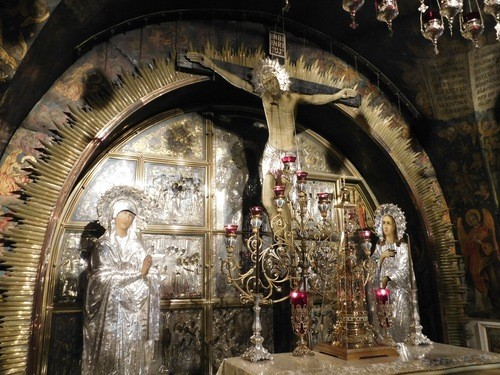
Annunciation Cathedral of Baltimore serves the Orthodox Christian community of Baltimore, Maryland, offering regular worship services and preserving Greek Orthodox faith, traditions, and community life in the region.
Clergy:
Rev. Economos George Mastakas, Presiding Priest; Rev. Deacon Julian Kollias
Church Type:
Cathedral
Denomination:
Greek Orthodox
Metropolis:
Metropolis of New Jersey
Affiliation:
Greek Orthodox Archdiocese of America
Ecumenical Patriarch:
Bartholomew I of Constantinople
Clergy Information updated Jan 2026
History
The Greek Orthodox Cathedral of the Annunciation in Baltimore, Maryland holds the distinction of being the oldest Greek Orthodox parish in the state, with roots stretching back to the final years of the 19th century. Greek immigrants began arriving and settling in Baltimore during the 1890s, drawn by the promise of economic opportunity and seeking to preserve their Orthodox faith in the New World. In the spring of 1906, their community took formal shape with the establishment of the Greek Orthodox Church "Evangelismos," initially gathering at Union Hall on East Fayette Street with a visiting priest.
The arrival of Reverend Constantine A. Douropoulos in 1907, traveling aboard the S.S. Sofia Hohenberg, marked a turning point for the young parish. The congregation finally had its first full-time priest, and the community's foundation grew steadily stronger. By 1909, Father Douropoulos and eleven charter members officially incorporated the parish and acquired a permanent house of worship at the corner of Homewood Avenue and Chase Street, purchasing the building from the Greenmount Avenue Methodist Episcopal Church for $12,000. A Greek language school followed in 1913, and the parish's first youth group, the Greek American Athletic Association, was formed in 1915, reflecting a community intent on planting deep roots.
By the mid-1930s, the congregation at Homewood Avenue had outgrown its home. In early 1937, the community took decisive action, purchasing the historic Associate Congregational Church on Preston Street for $40,500, saving the magnificent edifice from demolition. A historic procession from Homewood Avenue to Preston Street took place, and the first Divine Liturgy was held at the new church on April 23, 1937. The following year, Archbishop Athenagoras consecrated the Preston Street church on May 8, 1938. In 1966, the parish name was officially changed from "Evangelismos" to "Annunciation," and in 1975 the parish was elevated to Cathedral status.
The Cathedral's commitment to its neighborhood and heritage has only deepened over the decades. Between 1978 and 2001, the parish acquired nine historic townhouses adjacent to the Cathedral, renovating the first five into the Annunciation Orthodox Center in 1984 for community and educational purposes. In 1992, the Cathedral building received historic designation by the Commission on Historic and Architectural Preservation, a testament to both its architectural significance and its enduring place in the life of Baltimore. In 1997, Ecumenical Patriarch Bartholomew paid a visit to the Cathedral, underscoring its standing within the broader Orthodox world.
Today, the Greek Orthodox Cathedral of the Annunciation stands at 24 West Preston Street as the spiritual home of Baltimore's first Orthodox Christian community, welcoming parishioners and visitors alike into a tradition of faith, fellowship, and service that has flourished in Maryland for over 120 years.
This page serves as a reference resource for Annunciation Cathedral of Baltimore, providing essential information such as location, contact details, clergy, and church affiliation. It is intended to help visitors and members of the Orthodox Christian community easily find accurate parish information in one place.
How to Get To Annunciation Cathedral

Upcoming Greek Events Closest to Baltimore
Oysters, pit beef and raffles with AHEPA at Greektown Square Platea.
Nov 14, 2026

AHEPA dinner dance with Palko Greek Music Band at Saint Sophia, DC.
Oct 24, 2026

Black tie OXI Day banquet and awards at Washington National Cathedral.
Oct 28, 2026

Homemade Greek food and pastries, dine in or take out, Nov 6-8.
Nov 6, 2026

Frequently Asked Questions
How do I register as a member at a Greek Orthodox parish?
Parish membership is generally established by registering with the church office. Each parish may have its own process for enrollment and participation in parish life.
Can I attend services if I am not a registered member of the parish?
Greek Orthodox churches welcome visitors and non-members to attend services. Participation in sacraments may require coordination with the parish and priest.
How do I contact the parish priest for pastoral matters?
Pastoral requests are typically handled by the parish priest. The parish office can assist with contact details and help coordinate appointments or inquiries.
How do I register to baptize my child in the Greek Orthodox Church?
Baptism requests are handled by the local parish. The church will usually require documentation from the parents and godparent, along with coordination with the priest to schedule the baptism.
How do I request a wedding date at my Greek Orthodox church?
Wedding dates are scheduled through the parish office and priest. Availability depends on the church calendar, fasting periods, and parish guidelines, so it is recommended to inquire well in advance.
How do I obtain a copy of my Greek Orthodox marriage certificate?
Marriage certificates are typically issued by the church where the sacrament took place. To request a copy, contact the parish office directly and ask what information or identification is required.
How do I obtain a copy of my Greek Orthodox baptismal certificate?
Baptismal certificates are typically issued by the church where the baptism took place. To request a copy, contact the parish office directly and ask what information or identification is required.
Explore Greek Orthodox churches by Metropolis
Nearby Churches
by State
Nearby Churches
by
Metropolis
