


Holy Trinity Greek Orthodox Church of Raleigh
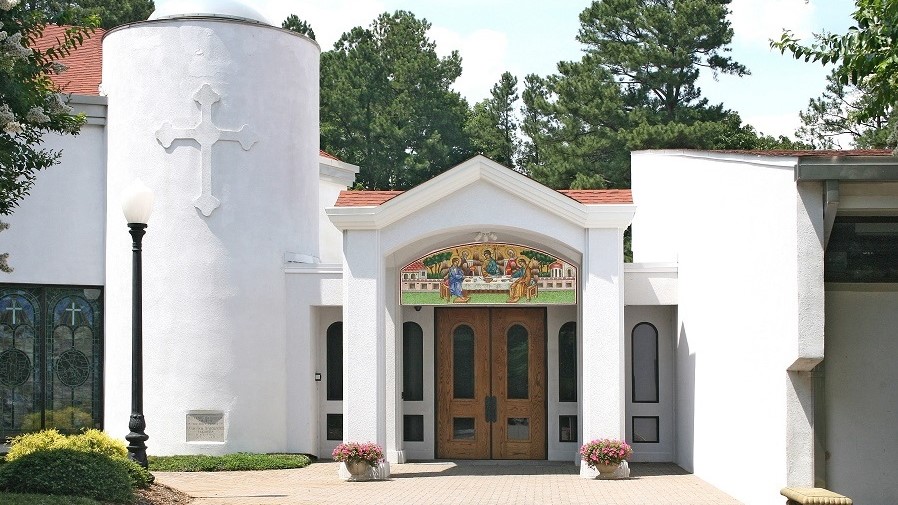
Holy Trinity Greek Orthodox Church of Raleigh serves the Orthodox Christian community of Raleigh, North Carolina, offering regular worship services and preserving Greek Orthodox faith, traditions, and community life in the region.
Clergy:
Rev. Protopresbyter of the Ecumenical Throne Paul Christy, Presiding Priest
Church Type:
Parish
Denomination:
Greek Orthodox
Metropolis:
Metropolis of Atlanta
Affiliation:
Greek Orthodox Archdiocese of America
Ecumenical Patriarch:
Bartholomew I of Constantinople
Clergy Information updated Jan 2026
History
The first Greek to settle in Raleigh, North Carolina arrived in the 1890s. Gus Vurnakes, a young immigrant from Greece, found the capital city to be a thriving but segregated town of approximately 13,000 people and opened the California Fruit Stand on Fayetteville Street, becoming an American citizen in 1898. During the first decade of the 1900s other Greek immigrants joined him, nearly all self-employed, settling into Raleigh's business district and forming an incipient Greek American community.
In April 1924, the Greek families of Raleigh held their first services in a loft on South Salisbury Street, with a membership of approximately ten families. The parish established in that year set its purpose clearly: to retain visiting Orthodox clergy, build or acquire a church building, and eventually retain a permanent priest. Through the following decade, visiting clergymen conducted services in rented premises in the vicinity of Salisbury and South Blount Streets in downtown Raleigh, while the Great Depression slowed the collection of building funds. In 1935, Reverend Elias Skipetarey became the first resident priest, and on November 30, 1937, the cornerstone of the new church building was laid in the presence of Archbishop Athenagoras and many American friends including the Governor of North Carolina. The first Holy Trinity Greek Orthodox Church building, located in the 200 block of Pearson Street, was completed in April 1938.
Under Reverend George Stefanis, who served from 1942 through 1962, the congregation completed the interior of the Pearson Street church, including a beautifully hand-carved iconostasis. By the 1960s the parish had outgrown that building entirely, and a search for a new site began. Parishioners George and Pota Vallas and Steve Serletis donated land on Leadmine Road and French Drive in northern Raleigh, and between 1974 and 1983 the congregation built an entirely new Holy Trinity Greek Orthodox Church complex on that property.
Holy Trinity Greek Orthodox Church serves the Orthodox Christian faithful of the greater Raleigh area as a parish of the Greek Orthodox Metropolis of Atlanta within the Greek Orthodox Archdiocese of America, a community that grew from a handful of immigrant fruit merchants into one of the largest and most active Orthodox Christian parishes in the Carolinas.
This page serves as a reference resource for Holy Trinity Greek Orthodox Church of Raleigh, providing essential information such as location, contact details, clergy, and church affiliation. It is intended to help visitors and members of the Orthodox Christian community easily find accurate parish information in one place.
How to Get To Holy Trinity

Frequently Asked Questions
How do I register as a member at a Greek Orthodox parish?
Parish membership is generally established by registering with the church office. Each parish may have its own process for enrollment and participation in parish life.
Can I attend services if I am not a registered member of the parish?
Greek Orthodox churches welcome visitors and non-members to attend services. Participation in sacraments may require coordination with the parish and priest.
How do I contact the parish priest for pastoral matters?
Pastoral requests are typically handled by the parish priest. The parish office can assist with contact details and help coordinate appointments or inquiries.
How do I register to baptize my child in the Greek Orthodox Church?
Baptism requests are handled by the local parish. The church will usually require documentation from the parents and godparent, along with coordination with the priest to schedule the baptism.
How do I request a wedding date at my Greek Orthodox church?
Wedding dates are scheduled through the parish office and priest. Availability depends on the church calendar, fasting periods, and parish guidelines, so it is recommended to inquire well in advance.
How do I obtain a copy of my Greek Orthodox marriage certificate?
Marriage certificates are typically issued by the church where the sacrament took place. To request a copy, contact the parish office directly and ask what information or identification is required.
How do I obtain a copy of my Greek Orthodox baptismal certificate?
Baptismal certificates are typically issued by the church where the baptism took place. To request a copy, contact the parish office directly and ask what information or identification is required.
Explore Greek Orthodox churches by Metropolis
Nearby Churches
by State
Nearby Churches
by
Metropolis
