


Holy Trinity Greek Orthodox Church of San Francisco
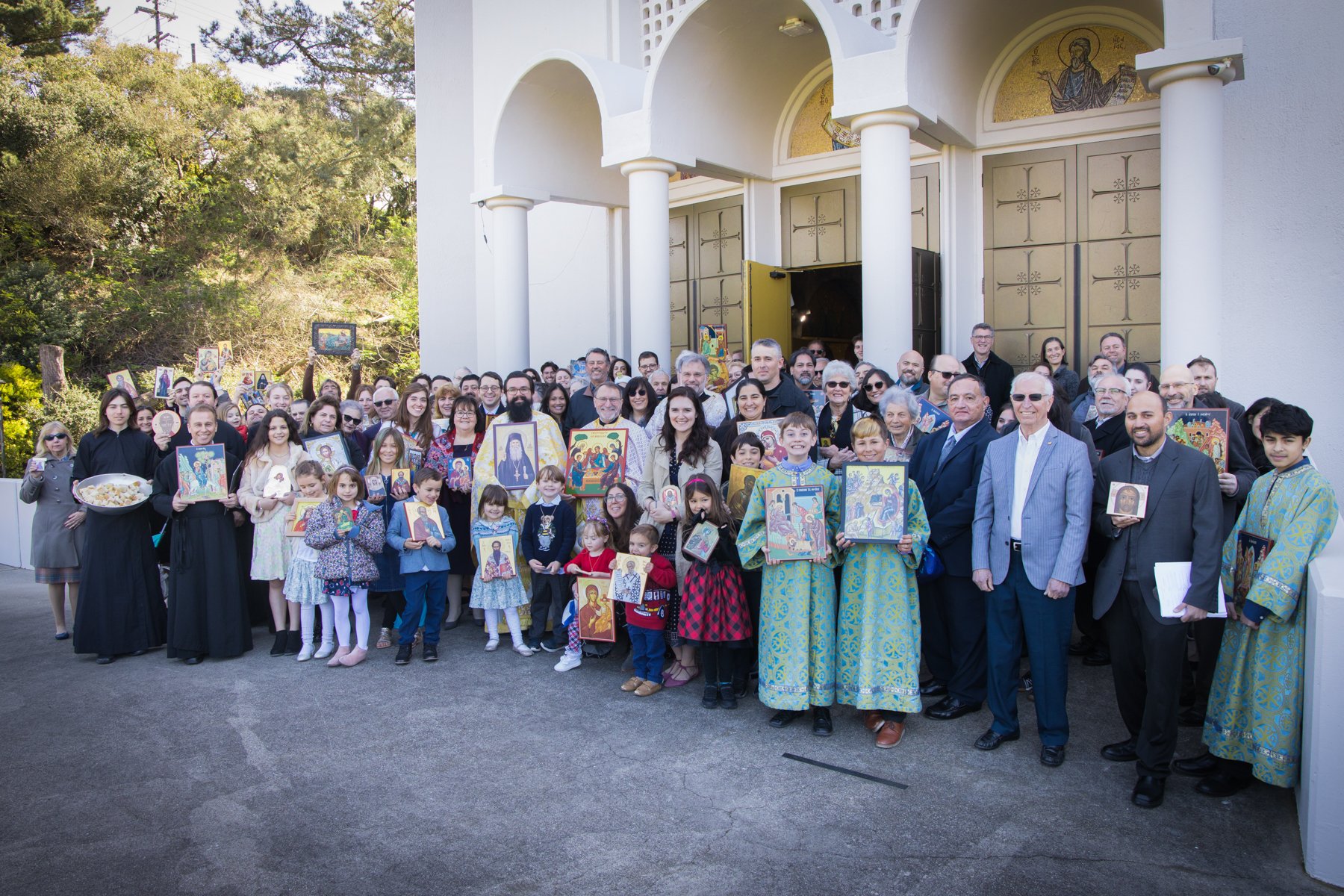
Holy Trinity Greek Orthodox Church of San Francisco serves the Orthodox Christian community of San Francisco, California, offering regular worship services and preserving Greek Orthodox faith, traditions, and community life in the region.
Clergy:
Rev. Protopresbyter of the Ecumenical Throne Aris Metrakos, Presiding Priest; Rev. Presbyter Nicholas Metrakos, Assistant Priest; Rev. Deacon William Callas
Church Type:
Parish
Denomination:
Greek Orthodox
Metropolis:
Metropolis of San Francisco
Affiliation:
Greek Orthodox Archdiocese of America
Ecumenical Patriarch:
Bartholomew I of Constantinople
Clergy Information updated Jan 2026
History
The roots of the Annunciation Greek Orthodox Cathedral stretch back to the earliest waves of Greek immigration to the Bay Area. Greek immigrants began arriving in San Francisco as early as the 1880s, with their numbers growing significantly after the 1906 earthquake and fire, as new workers were needed to help rebuild the city.
The precursor to Annunciation Cathedral, known as St. Sophia, came into being in June 1921, when a group of parishioners from Holy Trinity Greek Orthodox Church established a second Greek Orthodox community in San Francisco. Land was acquired at Hayes and Pierce Streets, and ground was broken on June 26, 1921, with His Eminence Metropolitan Meletios Metaxakis laying the cornerstone of the Cathedral. The St. Sophia community grew rapidly, requiring larger facilities, and in April 1928 the community acquired the historic Valencia Street Theater, built in 1908 and known as the grandest, most beautiful theater of the West, the very stage where entertainer George Burns got his start.
In 1935, in the wake of financial difficulties brought on by the Great Depression, the Saint Sophia community declared bankruptcy, and the Bank of Italy, later Bank of America, foreclosed and purchased the church property at auction. In 1936, the community was reorganized and renamed the United Greek Orthodox Community of San Francisco, the Annunciation, and subsequently repurchased the church building for the original auction price of $25,000, largely due to the efforts of Chris Katon. That same year, the old theater was completely transformed into an all-in-one building housing the sanctuary, hall, classrooms, meeting rooms, offices, and kitchen.
In 1962, Annunciation was named Cathedral for the Diocese of San Francisco. The Cathedral grew to become the spiritual anchor of the Greek community on the West Coast, until the evening of October 17, 1989, when everything changed. At 5:04 PM, the devastating Loma Prieta Earthquake struck, effectively destroying the entire Cathedral building. While the congregation suffered no loss of life or personal injuries, structural engineers noted that a portion of the building was in imminent danger of collapse, and the city closed it entirely. It remains the only Greek Orthodox church in the United States ever to have been destroyed by an earthquake.
After two years of searching for an alternate site, parishioners voted unanimously in 1991 to rebuild on the same location, in part out of a commitment to the neighborhood where the church had long served as a community anchor. Ground for Phase 1 was broken on November 22, 1992. Groundbreaking for the new Cathedral itself was performed by His All-Holiness Ecumenical Patriarch Bartholomew during his visit to San Francisco in 1997, and construction officially began after the City of San Francisco granted the building permit on October 17, 2013, exactly twenty-four years after the earthquake that destroyed the original building.
The architectural design of the new Cathedral draws inspiration from Hagia Eirene in Constantinople, one of the great Byzantine churches built during the reign of Emperor Justinian in the sixth century. The building features a majestic central dome rising approximately 67 feet high with a 50-foot diameter, symbolizing the heavens, and includes approximately 14,000 square feet of sacred and liturgical space. Today, the Annunciation Greek Orthodox Cathedral stands as the seat of the Greek Orthodox Metropolis of San Francisco, shepherding parishes across the seven western states and serving as a living testament to more than a century of faith, resilience, and community.
This page serves as a reference resource for Holy Trinity Greek Orthodox Church of San Francisco, providing essential information such as location, contact details, clergy, and church affiliation. It is intended to help visitors and members of the Orthodox Christian community easily find accurate parish information in one place.
How to Get To Holy Trinity

Frequently Asked Questions
How do I register as a member at a Greek Orthodox parish?
Parish membership is generally established by registering with the church office. Each parish may have its own process for enrollment and participation in parish life.
Can I attend services if I am not a registered member of the parish?
Greek Orthodox churches welcome visitors and non-members to attend services. Participation in sacraments may require coordination with the parish and priest.
How do I contact the parish priest for pastoral matters?
Pastoral requests are typically handled by the parish priest. The parish office can assist with contact details and help coordinate appointments or inquiries.
How do I register to baptize my child in the Greek Orthodox Church?
Baptism requests are handled by the local parish. The church will usually require documentation from the parents and godparent, along with coordination with the priest to schedule the baptism.
How do I request a wedding date at my Greek Orthodox church?
Wedding dates are scheduled through the parish office and priest. Availability depends on the church calendar, fasting periods, and parish guidelines, so it is recommended to inquire well in advance.
How do I obtain a copy of my Greek Orthodox marriage certificate?
Marriage certificates are typically issued by the church where the sacrament took place. To request a copy, contact the parish office directly and ask what information or identification is required.
How do I obtain a copy of my Greek Orthodox baptismal certificate?
Baptismal certificates are typically issued by the church where the baptism took place. To request a copy, contact the parish office directly and ask what information or identification is required.
Explore Greek Orthodox churches by Metropolis
Nearby Churches
by State
Nearby Churches
by
Metropolis
