


Fournoi
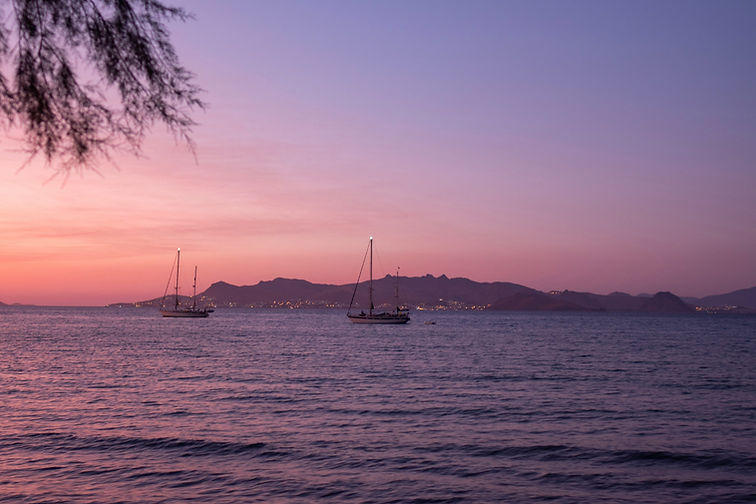
A secluded archipelago of sun-drenched fishing coves, wild thyme, and the unhurried soul of old-world Greece.
Intro
Fournoi is a tranquil archipelago in the North Aegean that serves as a sanctuary for those who value simplicity and the traditions of the sea. Once a notorious pirate lair, the main island is now defined by its traditional fishing fleet, which is one of the largest in the Aegean and ensures the local tavernas are always stocked with fresh lobster. With its jagged coastline, secluded fjords, and the fascinating history of dozens of ancient shipwrecks resting in its depths, Fournoi remains a quiet haven where the pace of life is dictated by the arrival of the daily catch.
Who It’s Best For
Fournoi is a sanctuary for authentic travelers and seafood lovers who want to experience the Aegean as it was decades ago. It is the ideal choice for off-the-beaten-path explorers who prefer the sound of fishing boat engines to beach bar music. Because the archipelago is characterized by its jagged coastline and hidden fjords, it suits sailing enthusiasts and kayakers looking for calm, secluded waters to explore. While the main village is charming and hospitable, the island’s lack of luxury infrastructure makes it best for couples and solo travelers who value simplicity, fresh lobster dinners, and the quiet rhythm of a working fishing port over polished tourism.
Who It’s Best For: A Quick Breakdown
Traveler Type | Why They’ll Love Fournoi |
Seafood Connoisseurs | Known for having one of the largest fishing fleets in Greece, offering the freshest lobster and fish in the Aegean. |
Peace Seekers | Perfect for those wanting a slow-paced holiday away from the noise of more developed islands. |
Sailing & Kayaking Fans | The complex coastline and nearby islets create a playground of protected coves and turquoise fjords. |
Underwater Explorers | Famous for the high concentration of ancient shipwrecks found in its surrounding waters. |
Traditionalists | For those who love the classic "plateia" (village square) culture with mulberry trees and local cafes. |
Things to Know
The most important thing to understand about Fournoi is that it is a working fishing island first and a tourist destination second. This means the local rhythm is dictated by the sea rather than the holiday season. While you will find incredible seafood at lower prices than on more famous islands, the infrastructure is quite basic. There is no bus service on the island and only one or two taxis in total, so be prepared to walk or rent a scooter to reach the more secluded bays. Many of the best beaches like Kampi are accessible by foot from the main town, but for the remote northern coves, you will need to negotiate a ride with a local water taxi at the harbor.
Because the island was historically a pirate haven, the main settlement is built in a way that is hidden from the open sea, with narrow streets that can feel like a labyrinth. You should also note that the ferry schedule can be highly sensitive to the meltemi winds because the channel between Fournoi and Ikaria is known for its strong currents. It is a good idea to leave a buffer day in your itinerary if you have a flight to catch from a neighboring island. Lastly, do not miss out on the local orange soda called Lagos, which is bottled right on the island and has a cult following among visitors.
Things To Do
Hike to the Acropolis of Hill Ai Giorgis to explore the remains of the ancient walls and temple foundations while taking in a panoramic view of the entire archipelago and the coast of Asia Minor.
Swim at Kampi Beach by walking down the stone steps from the main town to reach a sheltered cove with turquoise water and a handful of traditional seaside tavernas.
Visit the Ancient Marble Quarry at Petrokopio to see half-finished columns and giant blocks of white marble scattered along the shoreline where they were abandoned thousands of years ago.
Take a boat trip to Thymaina to experience an even more secluded way of life and hike up to the Church of Agios Dimitrios for a stunning view of the narrow channel separating the two islands.
Explore the submerged Roman ruins at Chrysomilia where you can snorkel over the remains of an ancient harbor and building foundations that now sit just below the water's surface.
These activities reflect how Fournoi is experienced through its rugged natural beauty, its ancient maritime history, and the slow, traditional rhythm of a seafaring community.
Beaches or Nature
Fournoi is a complex archipelago of small islands and islets, characterized by a highly irregular coastline that creates an endless series of natural fjords and hidden coves. The landscape is defined by its scenic dry-stone walls, aromatic shrubs like thyme and sage, and a total lack of large-scale development. The beaches are mostly secluded and unorganized, such as Petrokopio, which is set against the backdrop of an ancient marble quarry, and Kampi, which features soft sand and crystalline turquoise water. The sea surrounding the islands is part of a protected marine area, home to significant Posidonia oceanica seagrass meadows and rare monk seals, making it a premier spot for snorkeling. Nature on Fournoi is experienced through the dramatic sea-cliffs, the intricate network of sheltered bays, and the feeling of being on a cluster of mountaintops submerged in the Aegean.
Areas to Explore
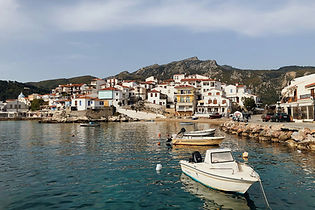
Fournoi Town (Chora) is the island’s main port and largest settlement, where traditional white houses with blue shutters climb the hillside and the waterfront is lined with mulberry trees and fishing boats.
Kampi is a quiet residential settlement located just over the hill from Chora, known for its iconic three windmills overlooking a series of sheltered, pebble-beach coves.
Chrysomilia is a remote and picturesque fishing village on the northern side of the island, accessible by a winding mountain road or by boat, offering a glimpse into a very traditional way of life.
Kamari is a peaceful coastal area on the eastern side of the island featuring a long beach with ancient ruins visible in the shallow water and a handful of authentic seaside tavernas.
Thymaina is the neighboring inhabited islet that feels like a world of its own, with one small village built into the cliffs and a landscape defined by steep stairs and total tranquility.
These areas reflect how Fournoi is split between its busy central fishing hub and its remote, wind-swept outposts where the rhythm of life is dictated entirely by the sea.
Local Cuisine
Fournoi is widely considered the lobster capital of Greece, thanks to the rich fishing grounds that surround its complex coastline. The signature dish here is astakomakaronada, a decadent lobster pasta that is surprisingly accessible and served in almost every seaside tavern. Beyond seafood, the island is famous for its high-quality thyme honey, which has a distinct, intense aroma due to the abundance of wild herbs on the hillsides. You should also try ladotyri, a local cheese preserved in olive oil, and the small, sweet amygdalota almond cookies. Dining on Fournoi is a laid-back affair centered around the main harbor, where tables are set just inches from the water and the atmosphere is defined by the slow rhythm of the fishing boats.
History
Fournoi, known in antiquity as Korassiai, has a history inextricably linked to the sea and the shifting fortunes of Aegean trade. For centuries, the island’s jagged coastline and hidden fjords made it a notorious pirate haven, strategically positioned along the vital shipping lanes between Samos, Ikaria, and Patmos. Its most significant archaeological contribution was discovered recently: the surrounding waters host a massive underwater graveyard of over 50 ancient and medieval shipwrecks, proving Fournoi was a major maritime crossroads for the Roman, Byzantine, and Ottoman Empires. While never a dominant political power, the island served as a crucial supply station for sailors. Today, the ruins of the ancient Acropolis at Agios Georgios and the scattered marble remnants found throughout the hills stand as silent witnesses to Fournoi's long-standing role as a silent guardian of the Aegean's merchant routes.
Best Time to Visit
Fournoi is a quintessential "slow travel" destination that is at its best from late June through early September. During these peak summer months, the island’s seafaring soul comes alive. The main harbor is bustling with fishing boats and small yachts, and the local tavernas serve the day's catch right by the water's edge. This is the ideal time for coastal exploration, as the calm summer seas allow for small boat trips to the hidden emerald coves of the neighboring islet, Thymaina. The island's most vibrant event is the Panigiri of Agia Marina on July 17th, where the village square transforms into a feast of traditional music and dancing that lasts until dawn.
From October through May, Fournoi retreats into a quiet, introspective state. Because the island's economy is primarily based on fishing rather than mass tourism, it doesn't "shut down" as completely as other resort-heavy islands, but the atmosphere becomes decidedly more rugged. The North Aegean winter can be temperamental, with strong winds frequently halting ferry connections, making this a risky time for a short visit. However, for those who don't mind the chill, the spring months of April and May offer a spectacular display of wildflowers across the hills and a chance to experience a traditional Greek Easter, where the community gathers for candlelit processions and festive roasts, offering a glimpse into the authentic heart of the archipelago.
Editors' Insider Tips
Fournoi is widely considered the "fisherman’s secret" of the Aegean, so our top recommendation is to eat lobster here. Because the island has one of the largest fishing fleets in the region, lobster pasta is significantly more affordable and fresher than in Athens or the Cyclades. When dining at the harbor, look for the psarotavernas (fish taverns) where the locals eat; if you see a fisherman delivering his catch directly to the kitchen, you are in the right place.
To find the best swimming spots, don't limit yourself to the main town. Hire a water taxi to take you to the islet of Thymaina. It has a tiny, picturesque harbor and incredibly clear waters at Keramidou beach. Also, keep an eye out for the island's unique herbal honey; the bees feed on local thyme and sage, creating a flavor that is famous across Greece. Finally, because the island is small and mountainous, bring comfortable hiking shoes. Many of the most pristine coves, like Kampi, are reached by descending stone steps or narrow dirt paths that offer breathtaking views of the surrounding archipelago.
Frequently Asked Questions
1. How do I get to Fournoi?
Fournoi (properly known as Fournoi Korseon) does not have its own airport, so you must travel by sea.
By Ferry: The main port is connected to Piraeus (Athens) several times a week. The journey can take 7 to 9 hours depending on the vessel and intermediate stops.
Via Neighboring Islands: Many visitors fly into the airports of Samos or Ikaria and then take a local ferry. From Agios Kirykos in Ikaria, the crossing to Fournoi is a quick 25 to 35 minute trip.
Local Boats: Small "sea buses" also connect Fournoi to the island of Thymaina and various ports in Samos (like Karlovasi and Pythagoreio) throughout the week.
2. Is there an ATM and pharmacy on the island?
Yes, despite its small size, the main town is equipped for basic needs.
ATM: There is an ATM located in the main settlement of Fournoi Town (Chora) near the port.
Pharmacy: There is a pharmacy in the town to handle basic medical supplies.
Payment: While many places now accept cards, it is wise to carry cash for smaller tavernas or boat transfers, as technical glitches can happen in remote areas.
3. Do I need to rent a car?
A car is not strictly necessary if you enjoy walking, but it can be useful for reaching the far ends of the island.
Walking: Most of the popular beaches near Chora, like Kampi and Psili Ammos, are reachable within a 10 to 20 minute walk.
Rentals: There are a few rental shops in the main town offering scooters and small cars. Since the fleet is very limited, you should book in advance during July and August.
Public Transport: There is a single local bus that typically shuttles passengers from the port to the main beaches during the summer season.
4. Which are the best beaches on Fournoi?
Fournoi is famous for its "pirate bay" coastline with many hidden, unorganized coves.
Psili Ammos: A sandy beach with shallow, turquoise water located just a 10 minute walk north of the port. It is the most convenient beach on the island.
Kampi: A scenic bay near the famous trio of stone windmills. It has tamarisk trees for shade and a few traditional tavernas.
Petrokopio: A stunning beach known for its white pebbles and the ruins of an ancient marble quarry. You can see semi-finished ancient columns right on the shore.
Chrysomilia: Located in the north, this is a long sandy beach near a picturesque fishing village. It is about 15 km (a 30 minute drive) from the main town.
5. Can you drink the tap water?
As of 2026, it is generally recommended to drink bottled water on Fournoi.
Safety: The tap water is safe for washing and brushing teeth.
Quality: Because the island relies on desalination and local wells, the water often has a salty or brackish taste. Bottled water is inexpensive and available at all local mini-markets.
6. What should I eat on Fournoi?
Fournoi is widely considered the Lobster Capital of the Aegean.
Lobster Pasta (Astakomakaronada): Because the island has one of the largest fishing fleets in Greece, lobster is more abundant and affordable here than almost anywhere else.
Fresh Seafood: Look for local specialties like crayfish, red mullet, and courgette fritters.
Thyme Honey: The island is covered in wild thyme, and the honey produced here is prized for its intense aroma and high quality.
7. What is the Ancient Quarry of Petrokopio?
This is a fascinating historical site where you can see how ancient industry functioned.
The Ruins: You can see massive marble blocks and half-finished ionic capitals (some over 2 meters long) left behind on the beach.
History: In antiquity, Fournoi was a major supplier of marble to the great temples of Ionia, such as those in Ephesus.
8. What are the main villages?
Fournoi Town (Chora): The main port and heart of the island. It features a beautiful mulberry-lined main street (the "Agora") and traditional white houses.
Chrysomilia: A peaceful fishing village in the north with traditional shipyards and excellent fish tavernas.
Thymaina: The only other populated island in the cluster, reachable by a 10 minute boat ride. It is even quieter than Fournoi and home to the beautiful Keramidou Bay.
9. Where is the best place to stay?
Chora: Best for those who want to be near the tavernas, the port, and the main shops.
Kampi: Best for a quieter stay with a view of the windmills and easy access to the beach.
10. How many days should I stay?
3 to 4 Days: Enough to enjoy the lobster pasta, visit Petrokopio, and take a boat trip to Thymaina.
7 Days: The ideal stay for those looking to truly "unplug" and explore every hidden cove on the island.
Discover the Beaches on this Island
Discover more Greek Islands Nearby



How To Get to More Greece Destinations from Here


