


How to Get Around Greece: Ferries, Flights, Buses, Cars and Everything In Between

Greece is one of the most rewarding countries to explore, and one of the most logistically complex. With many regions, dozens of inhabited islands, and a mainland that stretches from the Macedonian mountains down to the Peloponnese, getting from A to B is rarely as simple as booking a single ticket. But once you understand how the system works, moving around Greece becomes half the adventure, even a long route like Rhodes to Athens.
Here's everything you need to know.
The Golden Rule: Athens is the Hub
Almost every journey in Greece passes through Athens, or more specifically, through Piraeus (the port of Athens) and Athens International Airport (Eleftherios Venizelos). Whether you're island-hopping in the Cyclades, heading to Crete, or crossing to Corfu, there's a good chance your route connects through the capital in some form.
This isn't a flaw in the system. It's just Greece. Plan for it and it becomes easy. Fight it and you'll waste days.
Ferries: The Backbone of Island Travel
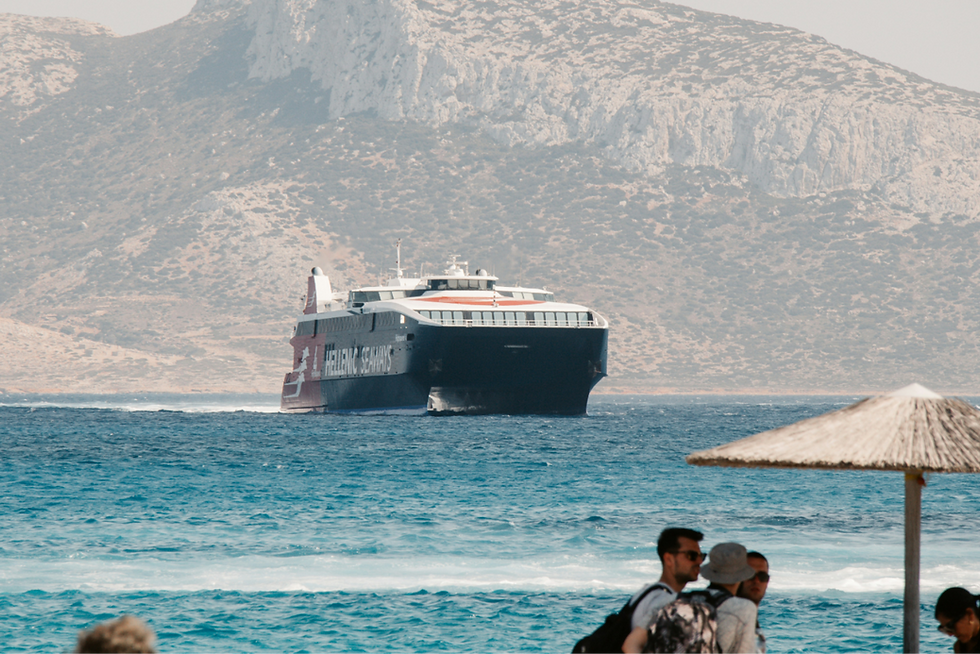
If you're visiting the islands, ferries are your primary mode of transport. Greece has one of the largest ferry networks in Europe, operated by companies like Blue Star Ferries, Hellenic Seaways, Minoan Lines, and ANEK.
What to know:
Piraeus is the main departure port for the Cyclades, Dodecanese, Saronic Gulf islands, and Crete
Rafina (east of Athens) serves the northern Cyclades and Saronic Gulf, including Mykonos, Andros, and Tinos, and is often faster and less crowded than Piraeus
Agios Konstantinos and Volos are the main gateways to the Sporades, including Skiathos, Skopelos, and Alonissos
Patras is the gateway to Corfu and the Ionian islands
Kavala and Alexandroupoli serve the Northern Aegean islands like Thassos and Samothraki
Ferry journey times vary enormously. A fast catamaran from Piraeus to Mykonos takes about 2.5 hours. A standard overnight ferry from Piraeus to Heraklion, Crete takes around 8 to 9 hours. Knowing the difference before you book matters.
For example, if you're planning to travel from Athens to Santorini, you have the choice between a high-speed ferry (around 5 hours) or flying (45 minutes). For a route like Mykonos to Crete, there's no direct ferry, so you'll need to route via Piraeus or consider flying.
Pro tips:
Book ferries in advance in July and August. Cabins and car spaces sell out weeks ahead
Bring layers on deck, the Aegean wind is no joke
Overnight ferries are a great way to save on a hotel night if you book a cabin. A favorite tip from Greece-renowned traveler and influencer Tony Kariotis (@iamgreece), and one that seasoned Greece travelers swear by
Domestic Flights: Fast but Worth Comparing
Greece has a surprisingly robust domestic flight network. Olympic Air and Sky Express connect Athens to most major islands and regional airports, including Heraklion, Rhodes, Corfu, Mykonos, Santorini, Thessaloniki, Ioannina, and more.
Flights are often 40 to 60 minutes and can be surprisingly affordable if booked early, sometimes cheaper than a fast ferry when you factor in travel time.
The tradeoff is flexibility. You're tied to airport schedules, luggage rules, and the journey from airport to town center (which on some islands adds 30 to 45 minutes). Ferries drop you right at the port, often in the heart of things.
For routes like Rhodes to Thessaloniki or Athens to Corfu, flying is almost always the most practical option. Ferry connections for those routes are either non-existent or impractically long.
Buses (KTEL): The Unsung Hero of the Mainland
If you're exploring mainland Greece, the KTEL intercity bus network is reliable, affordable, and surprisingly comfortable. Buses connect Athens to Thessaloniki, Patras, Ioannina, Kalamata, Nafplio, Delphi, and most other major mainland destinations.
The Athens KTEL terminal at Kifissos handles routes to northern and western Greece. Liosion handles central Greece. It's not glamorous, but it works, and for routes like Athens to Nafplio or Athens to Delphi, it's often the most sensible option if you don't have a car.
On the islands, local buses (also KTEL) connect main towns to beaches and villages. Coverage varies wildly. On Crete they're excellent. On smaller islands they may run twice a day.
Renting a Car: Essential for Some Places, Pointless for Others
A rental car transforms your experience on the larger islands: Crete, Rhodes, Corfu, Kefalonia, Lefkada, Naxos. These islands have spread-out coastlines, hidden villages, and beaches that no bus will take you to. Having wheels means you can leave the tourist trail entirely.
On smaller or more compact islands like Santorini, Mykonos, Hydra, and Paros, a car is less necessary and sometimes impractical. Santorini's roads are narrow and parking is a nightmare in high season. Hydra bans motorized vehicles entirely.
On the mainland, a car is invaluable if you want to explore the Peloponnese, Epirus, or Macedonia at your own pace. The road network is generally good, though mountain roads in the north require confidence and a good map.
Trains: Limited but Scenic
Greece's rail network is limited compared to the rest of Europe. The main line runs Athens to Thessaloniki and is operated by Hellenic Train (formerly TrainOSE). It's comfortable, scenic, and takes about 4 to 5 hours, making it a genuine alternative to flying for that particular route.
Beyond Athens to Thessaloniki, train options are sparse. The Peloponnese line is mostly suspended, and most Greek destinations simply don't have rail connections. Don't plan a Greece trip around trains.
Planning Your Route
One of the trickiest parts of traveling Greece is figuring out whether a direct connection even exists between two places, and if not, what's the best way to get there. Can you go directly from Kalamata to Mykonos? Is there a ferry from Heraklion to Kefalonia? How do you get from Rhodes to Corfu?
At GetGreece we have you covered in our travel section. Find the combination you need for the most effective solution to your journey, whether you're planning a trip from Santorini to Thessaloniki or figuring out how to get from Mykonos to Kalamata.
The Bottom Line
Getting around Greece rewards patience and a little planning. The ferry system is a joy once you understand it. Domestic flights save time when the distances are long. Buses are your friend on the mainland. And a rental car unlocks the best of the big islands.
The key is knowing your options before you arrive, and now you do.
Explore the GetGreece routes section: getgreece.com/routes
Hundreds of routes are already live and we add new ones every day. If your route isn't up yet, check back soon.
Additional Travel Resources
Build your own custom itinerary with the help of AI: plan your perfect Greece trip with a personalized AI trip creator
Browse travel packages curated by GetGreece: handpicked packages for every type of traveler
Browse Greece day tours and excursions: explore the best day trips and guided experiences across Greece


