


Aristotle
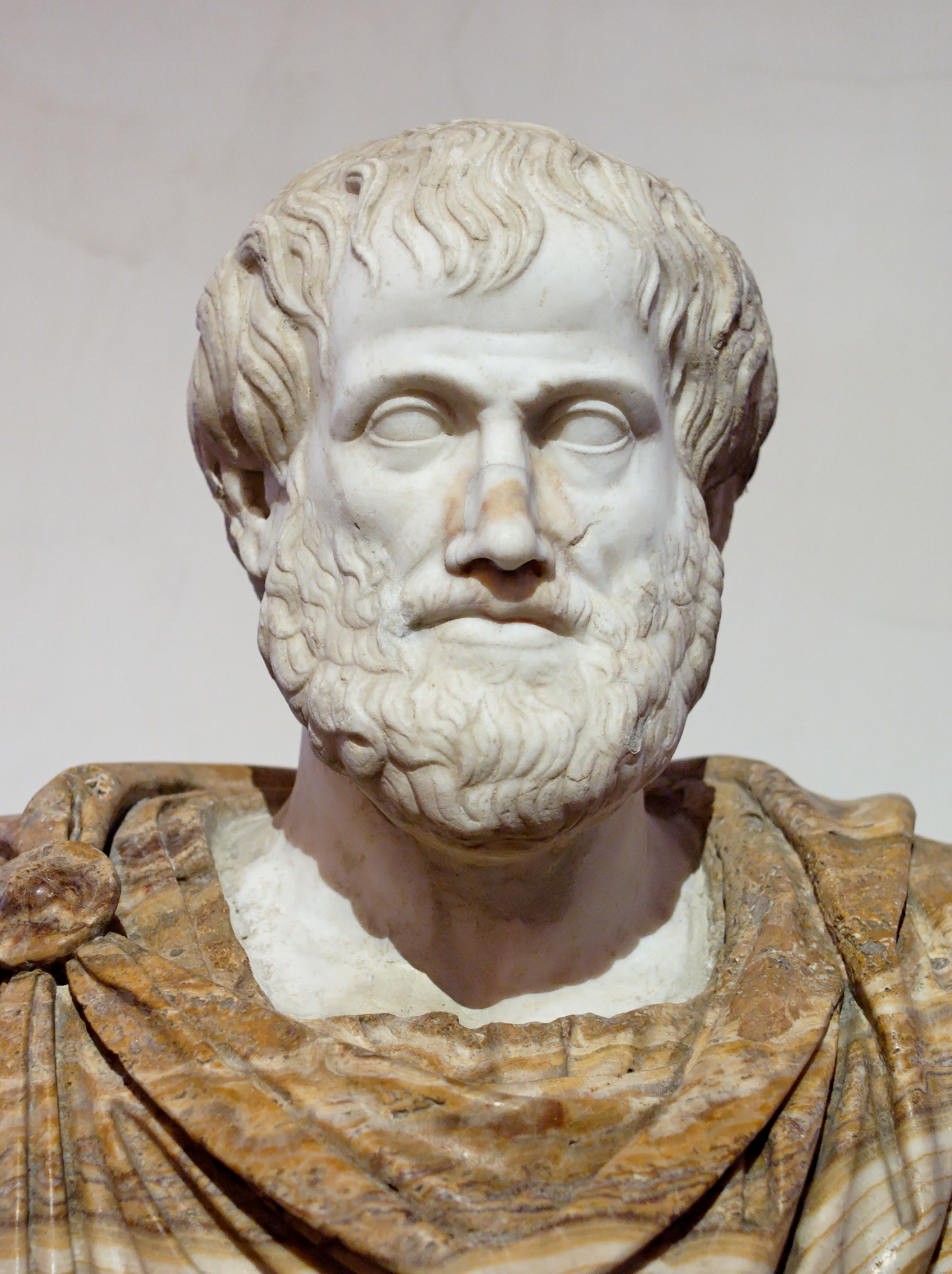
Photo: Public Domain via Wikimedia Commons
Aristotle, Ancient Greek Philosopher and Founder of the Lyceum
Aristotle was one of the most important philosophers in ancient Greek history and one of the most influential thinkers in Western civilization. He lived during the fourth century BC and made major contributions to many fields, including philosophy, science, logic, politics, and ethics. His ideas shaped intellectual thought for more than two thousand years and continue to influence modern philosophy and science.
Early Life
Aristotle was born in 384 BC in the city of Stagira, located in northern Greece on the Chalcidice peninsula. His father, Nicomachus, served as a physician to the Macedonian royal court. Because of this connection, Aristotle grew up in an environment that valued knowledge, medicine, and scientific observation.
Little is known about his childhood, but his father’s work likely influenced Aristotle’s later interest in biology and the natural world.
At the age of about 17, Aristotle traveled to Athens, which was the intellectual center of the Greek world. There he joined the famous philosophical school founded by Plato, known as the Academy.
Student of Plato
Aristotle remained at Plato’s Academy for roughly 20 years, first as a student and later as a teacher. During this time he studied philosophy, mathematics, science, and political theory.
Although Aristotle respected Plato greatly, he eventually developed ideas that differed from his teacher’s views. Plato believed that reality was based on ideal forms that existed beyond the physical world. Aristotle, however, focused more on studying the natural world and understanding things through observation and evidence.
This difference in approach helped shape Aristotle’s method of learning and scientific thinking.
Tutor of Alexander the Great
After Plato died in 347 BC, Aristotle left Athens and spent several years traveling and conducting research. Around 343 BC, he was invited by King Philip II of Macedon to tutor his young son, who would later become Alexander the Great.
Aristotle taught Alexander subjects such as philosophy, literature, medicine, and political thought. The education likely influenced Alexander’s respect for Greek culture and learning.
Although the exact details of their relationship are not fully known, Aristotle’s role as Alexander’s teacher connected him to one of the most powerful figures of the ancient world.
Founding of the Lyceum
In 335 BC, Aristotle returned to Athens and founded his own philosophical school known as the Lyceum. The school became one of the most important centers of learning in ancient Greece.
Unlike Plato’s Academy, Aristotle’s Lyceum focused heavily on research and observation. Aristotle and his students collected information about animals, plants, political systems, and many other subjects.
Because Aristotle often taught while walking with his students around the school grounds, his followers became known as the Peripatetic School, a term meaning “walking philosophers.”
Contributions to Philosophy and Science
Aristotle wrote extensively on a wide range of topics. His works covered areas such as logic, metaphysics, ethics, politics, biology, physics, and rhetoric.
One of his most important contributions was the development of formal logic, a system for reasoning and drawing conclusions. His ideas about logical argument remained the standard method of reasoning in Europe for many centuries.
Aristotle also studied the natural world carefully. He observed and described many types of animals and plants, making him one of the earliest pioneers of biology. His work included attempts to classify living organisms and understand how they function.
In ethics, Aristotle believed that the goal of human life was to achieve eudaimonia, often translated as happiness or human flourishing. According to Aristotle, people reach this state by practicing virtue, which means developing good habits such as courage, honesty, and moderation.
In politics, Aristotle studied different types of government and argued that the best system was one that balanced stability with the needs of the people.
Writings and Influence
Many of Aristotle’s writings were originally lecture notes used for teaching his students. Some of his most well known works include Nicomachean Ethics, Politics, Metaphysics, Poetics, and Rhetoric.
His writings became extremely influential in later centuries. During the Middle Ages, scholars in the Islamic world and later in Europe studied and preserved Aristotle’s works. Philosophers such as Thomas Aquinas used Aristotle’s ideas to shape medieval philosophy and theology.
Even though some of his scientific conclusions were later replaced by modern discoveries, Aristotle’s approach to learning through observation and reason helped lay the foundation for the scientific method.
Later Life and Death
After the death of Alexander the Great in 323 BC, political tensions increased in Athens, especially toward those connected with Macedonia. Because Aristotle had ties to the Macedonian royal family, he became a target of criticism.
Rather than face possible trial, Aristotle chose to leave Athens. He reportedly said he did not want the Athenians to “sin twice against philosophy,” referring to the earlier execution of the philosopher Socrates.
Aristotle moved to the city of Chalcis on the island of Euboea, where he died in 322 BC at the age of 62.
Legacy
Aristotle’s influence on philosophy and science has been enormous. His ideas shaped intellectual thought in Europe, the Middle East, and other parts of the world for more than two thousand years.
He helped establish logic as a structured discipline, advanced the study of ethics and politics, and contributed greatly to early scientific investigation. Because of the breadth of his work and the depth of his ideas, Aristotle is often regarded as one of the greatest thinkers in human history.
Frequently Asked Questions About Aristotle
Who was Aristotle?
Aristotle was one of the most influential philosophers of ancient Greece. He made major contributions to philosophy, science, politics, logic, and ethics. His ideas shaped Western thought for centuries and influenced fields ranging from biology to political theory.
When and where was Aristotle born?
Aristotle was born in 384 BC in the city of Stagira in northern Greece. At the time, the region was part of the kingdom of Macedon.
Who were Aristotle’s teachers?
Aristotle studied under the famous philosopher Plato at the Platonic Academy in Athens. He remained at the academy for about 20 years, where he studied philosophy, science, and mathematics.
Did Aristotle teach Alexander the Great?
Yes. Aristotle became the tutor of Alexander the Great, the future king of Macedon. He taught Alexander subjects such as philosophy, politics, literature, and science during the prince’s early education.
What subjects did Aristotle study?
Aristotle wrote about many subjects including logic, ethics, politics, biology, metaphysics, and rhetoric. His works attempted to explain how the natural world functions and how humans should think and live.
What school did Aristotle found?
Aristotle founded a school in Athens known as the Lyceum. There, he and his students conducted research and taught philosophy and science.
What are Aristotle’s most famous works?
Some of Aristotle’s best known works include Nicomachean Ethics, Politics, Metaphysics, Poetics, and Rhetoric. These writings explored topics such as virtue, government, literature, and the nature of reality.
What were Aristotle’s ideas about logic?
Aristotle developed the first formal system of logic, known as syllogistic logic. This system used structured arguments to determine whether conclusions logically follow from premises.
When did Aristotle die?
Aristotle died in 322 BC in the city of Chalcis on the island of Euboea.
What is Aristotle’s legacy?
Aristotle’s work laid the foundations for many branches of knowledge in the Western world. His writings influenced philosophy, science, education, and political thought for more than two thousand years.
Discover more Historic Greek People








Browse Greece Articles


