


Eleftherios Venizelos
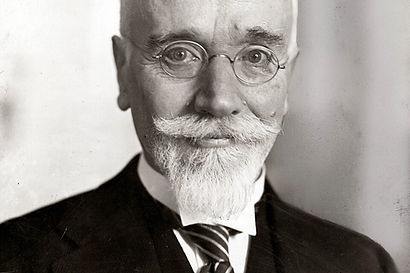
Photo: Public Domain via Wikimedia Commons
Eleftherios Venizelos, Greek Statesman and Architect of Modern Greece
Eleftherios Venizelos was one of the most important political leaders in modern Greek history. Serving several terms as Prime Minister of Greece, he played a central role in expanding the Greek state, reforming government institutions, and shaping the country’s foreign policy in the early twentieth century. His leadership during the Balkan Wars and his efforts to modernize the Greek political system made him one of the most influential figures in the formation of modern Greece.
Early Life
Eleftherios Venizelos was born on August 23, 1864, in Mournies, near Chania, on the island of Crete. At the time, Crete was still under the rule of the Ottoman Empire, and the island experienced frequent uprisings by Greeks seeking union with Greece.
Venizelos grew up in a family involved in political and revolutionary activity. His father had participated in earlier Cretan revolts, which shaped Venizelos’s early understanding of politics and national identity.
He studied law at the University of Athens and later returned to Crete to practice as a lawyer.
Political Career in Crete
Venizelos became involved in the political movement that sought autonomy and eventual union of Crete with Greece. During the Cretan Revolt of 1897, he emerged as one of the leading political figures advocating reform and self government.
Following international intervention, Crete became an autonomous state under Ottoman sovereignty in 1898. Venizelos served as an important government official in the new administration and helped develop the island’s political institutions.
However, disagreements with the island’s leadership eventually led him to resign from his government position.
Rise to Power in Greece
Venizelos gained national attention in 1909 after a group of Greek military officers known as the Goudi League called for political reform in Greece. Recognizing his reputation as a capable reformer, they invited Venizelos to Athens.
In 1910, Venizelos was elected Prime Minister of Greece, beginning a long and influential political career.
Government Reforms
As prime minister, Venizelos introduced a series of reforms designed to modernize Greece. These reforms included improvements to the legal system, public administration, and military organization.
He also worked to strengthen the country’s armed forces in preparation for possible regional conflicts.
These reforms helped Greece become better prepared for the political and military developments that soon followed in the Balkans.
The Balkan Wars
Venizelos played a key role in forming alliances with other Balkan states against the Ottoman Empire. These alliances led to the First Balkan War in 1912.
During the Balkan Wars of 1912 to 1913, Greece achieved major territorial gains, including the regions of Macedonia, Epirus, and many islands in the Aegean Sea.
These victories significantly expanded the size of the Greek state and increased Venizelos’s popularity.
The National Schism
During World War I, Venizelos supported joining the Allied Powers, believing this would benefit Greece and strengthen its position in the region.
However, King Constantine I favored neutrality and had closer ties to Germany. This disagreement led to a deep political division in Greece known as the National Schism.
The conflict between supporters of the king and supporters of Venizelos divided the country politically and socially for many years.
Treaty of Sèvres and the Asia Minor Campaign
After World War I ended, Venizelos represented Greece at the Paris Peace Conference. His diplomatic efforts led to the Treaty of Sèvres in 1920, which awarded Greece new territories in Thrace and control over the city of Smyrna in Asia Minor.
However, the Greek military campaign in Asia Minor eventually failed, leading to the Asia Minor Catastrophe of 1922, which forced large Greek populations to leave their homes in what is now Turkey.
Although Venizelos was not in power during the final stage of this conflict, the event had a major impact on Greek politics and society.
Later Political Career
Venizelos returned to power several times during the 1920s and 1930s. During these years he focused on rebuilding the country after the refugee crisis and strengthening Greece’s international relationships.
He also worked to improve relations with neighboring countries, including signing agreements with Turkey to reduce tensions following the conflicts of the previous decade.
Death and Legacy
Eleftherios Venizelos died on March 18, 1936, in Paris, France, at the age of 71.
Today he is widely regarded as one of the most important political leaders in Greek history. His leadership helped transform Greece into a larger and more modern state, and his reforms influenced the country’s political institutions for decades.
Because of his role in shaping modern Greece, Venizelos is often remembered as one of the nation’s most influential statesmen.
Frequently Asked Questions About Eleftherios Venizelos
Who was Eleftherios Venizelos?
Eleftherios Venizelos was one of the most important political leaders in modern Greek history. He served several terms as Prime Minister and played a major role in shaping Greece’s political institutions and expanding the country’s territory in the early 20th century.
When and where was Eleftherios Venizelos born?
Eleftherios Venizelos was born on August 23, 1864, in Chania on the island of Crete, which was then under the rule of the Ottoman Empire.
How did Venizelos first become involved in politics?
Venizelos first became active in Cretan politics and supported movements seeking autonomy and eventual union with Greece. His leadership during the Theriso revolt in 1905 helped establish his reputation as a national political leader.
When did Eleftherios Venizelos become Prime Minister of Greece?
Venizelos became Prime Minister of Greece in 1910 after being invited to lead the government during a period of political reform and national transformation.
What role did Venizelos play in the Balkan Wars?
During the Balkan Wars of 1912 to 1913, Venizelos helped lead Greece through major military and diplomatic successes that significantly expanded Greek territory.
What was the National Schism?
The National Schism was a deep political division in Greece during World War I between supporters of Venizelos and supporters of Constantine I of Greece, the king at the time.
Did Venizelos help shape Greece’s borders?
Yes. Through diplomacy and negotiations following the Balkan Wars and World War I, Venizelos helped secure new territories for Greece, including regions of Macedonia, Epirus, and several Aegean islands.
When did Eleftherios Venizelos die?
Eleftherios Venizelos died on March 18, 1936, in Paris, France.
What is Eleftherios Venizelos’s legacy?
Eleftherios Venizelos is widely regarded as one of the most influential statesmen in Greek history. His leadership modernized Greece’s political system and played a major role in shaping the country’s modern borders and international position.
Discover more Historic Greek People







Browse Greece Articles


