


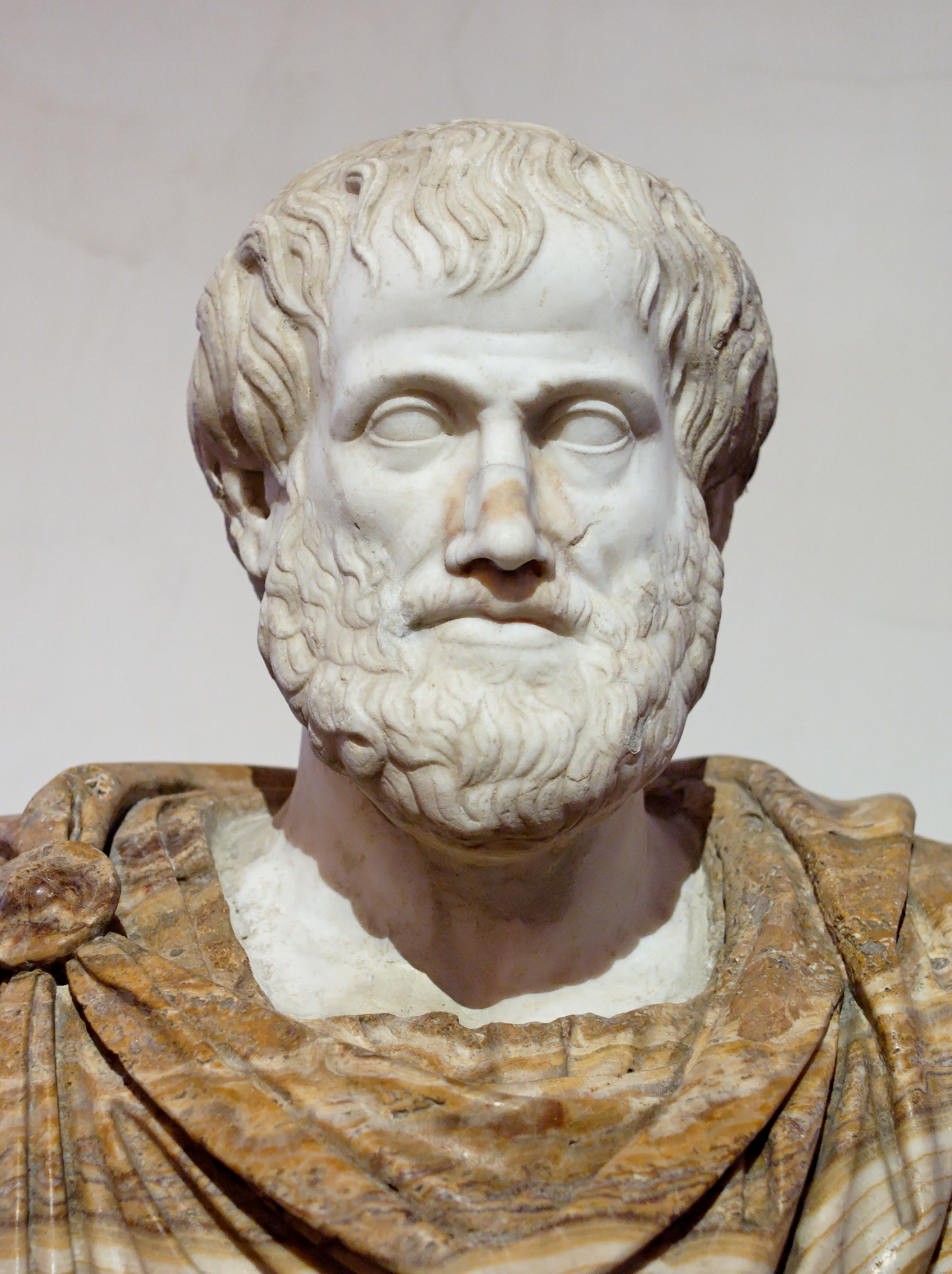
Thales of Miletus

Photo: Public Domain via Wikimedia Commons
Thales of Miletus, Ancient Greek Philosopher and One of the First Thinkers of Western Science
Thales of Miletus was an ancient Greek philosopher, mathematician, and early scientist who lived in the sixth century BC. He is often considered the first philosopher in Western history because he attempted to explain the natural world using observation and reason rather than myth or religion. Thales is also remembered for his contributions to mathematics and astronomy, and he is traditionally counted among the Seven Sages of Greece.
Early Life
Thales was born around 624 BC in the city of Miletus, located on the western coast of Asia Minor in what is now Turkey. Miletus was an important trading city with strong connections to other parts of the Mediterranean and the Near East.
Because of these international contacts, scholars in Miletus were exposed to knowledge from other civilizations, including Egyptian and Babylonian science and mathematics.
Little is known about Thales’s personal life, but ancient writers describe him as a curious and thoughtful thinker who was deeply interested in understanding nature.
Philosophy and Natural Thought
Thales is famous for proposing that water was the fundamental substance of the universe. According to his theory, everything in the world ultimately came from water and could return to it.
Although modern science does not accept this idea, Thales’s approach was revolutionary for its time. Instead of explaining natural events through mythology or the actions of gods, he tried to find natural explanations based on observation.
This method of questioning and investigating the natural world became the foundation of later scientific thinking.
Contributions to Mathematics
Thales is also known for several important ideas in geometry. Ancient sources credit him with introducing mathematical knowledge from Egypt to the Greek world.
One of the most famous geometric principles associated with him is the idea that a triangle inscribed in a semicircle forms a right angle, which later became known as Thales’ theorem.
He is also said to have used geometry to measure the height of pyramids in Egypt by comparing their shadows with the shadows of objects of known height.
Astronomy and Scientific Observation
Thales showed interest in astronomy and the movement of celestial bodies. According to ancient historians, he successfully predicted a solar eclipse that occurred in 585 BC, which temporarily stopped a battle between two rival armies.
Although modern historians debate exactly how precise his prediction was, the story reflects the respect later generations had for his scientific thinking.
Thales also studied the movement of stars and may have helped introduce astronomical knowledge from Babylon to the Greek world.
Practical Knowledge and Reputation
Ancient stories describe Thales not only as a philosopher but also as a practical thinker. One famous story claims that he once predicted a strong olive harvest and temporarily secured the rights to many olive presses, later renting them out for profit.
The story was used to show that philosophers could succeed in business if they wished, even though their main interest was knowledge rather than wealth.
These stories helped shape his reputation as both a wise thinker and a clever observer of the world.
Influence on Greek Philosophy
Thales’s ideas inspired later philosophers who continued exploring natural explanations for the universe. Thinkers such as Anaximander and Anaximenes, who also lived in Miletus, expanded on his ideas and formed what historians call the Milesian school of philosophy.
This early tradition of questioning the nature of reality helped lead to the development of Greek philosophy and scientific thought.
Legacy
Thales of Miletus likely died around 546 BC, although the exact details of his death are uncertain.
Despite the limited information available about his life, his intellectual influence was enormous. By encouraging people to observe nature and seek rational explanations for natural events, Thales helped lay the foundations for philosophy, mathematics, and science.
For this reason, he is widely regarded as one of the earliest pioneers of scientific thinking in Western civilization.
Frequently Asked Questions About Thales of Miletus
Who was Thales of Miletus?
Thales of Miletus was an ancient Greek philosopher, mathematician, and astronomer who is often considered the first philosopher in Western history. He was one of the earliest thinkers to try to explain natural phenomena using reason rather than mythology.
When and where was Thales of Miletus born?
Thales was born around 624 BC in the city of Miletus in the region of Ionia, located on the western coast of Asia Minor.
What is Thales of Miletus known for?
Thales is known for his contributions to philosophy, mathematics, and astronomy. He is often credited with introducing logical reasoning and observation as tools for understanding the natural world.
Did Thales make discoveries in mathematics?
Yes. Thales made important contributions to geometry and is associated with several geometric principles. One famous result known as Thales' theorem relates to angles in a circle.
Did Thales study astronomy?
Thales also studied the stars and natural phenomena. Ancient sources say he predicted a solar eclipse that occurred in 585 BC, demonstrating early attempts to understand celestial events scientifically.
What did Thales believe about the nature of the universe?
Thales believed that water was the fundamental substance from which everything in the universe originated. This idea was an early attempt to identify a single underlying principle behind the natural world.
Did Thales found a philosophical school?
Thales is often associated with the Milesian School, a group of early Greek thinkers who sought natural explanations for the structure of the universe.
When did Thales of Miletus die?
Thales is believed to have died around 546 BC, though exact details about his death are uncertain.
What is Thales of Miletus’s legacy?
Thales is remembered as one of the earliest pioneers of philosophy and science. His efforts to explain the world through observation and reasoning laid the groundwork for later Greek philosophers and the development of scientific thought.
Discover more Historic Greek People








Browse Greece Articles


